

Streetwear and casualwear compete for space in the closets of young men across cities from Tokyo to New York. For style seekers who value eco-friendly choices and crave individuality, understanding the split between these looks is more than a fashion question. With streetwear acting as bold self-expression rooted in urban youth culture and casualwear delivering trusted comfort for any setting, personal identity through clothing takes center stage for every modern, conscious dresser.
Table of Contents
- Defining Streetwear And Casualwear Fashion
- Key Characteristics And Influences Explained
- Streetwear Categories And Most Popular Styles
- Casualwear Types And Essential Wardrobe Items
- Sustainability Trends In Streetwear And Casualwear
- How To Choose Between Styles For Urban Life
Key Takeaways
| Point | Details |
|---|---|
| Streetwear vs. Casualwear | Streetwear prioritizes cultural expression and individuality, while casualwear emphasizes practicality and universal comfort. |
| Impact on Identity | Wearers of streetwear express personal stories and affiliations, whereas casualwear promotes a more general approach suitable for various settings. |
| Sustainability Trend | Both fashion categories are increasingly integrating sustainable practices, with a focus on eco-friendly materials and ethical manufacturing. |
| Wardrobe Flexibility | A successful urban wardrobe blends elements of both streetwear and casualwear for expression and functionality in daily life. |
Defining Streetwear and Casualwear Fashion
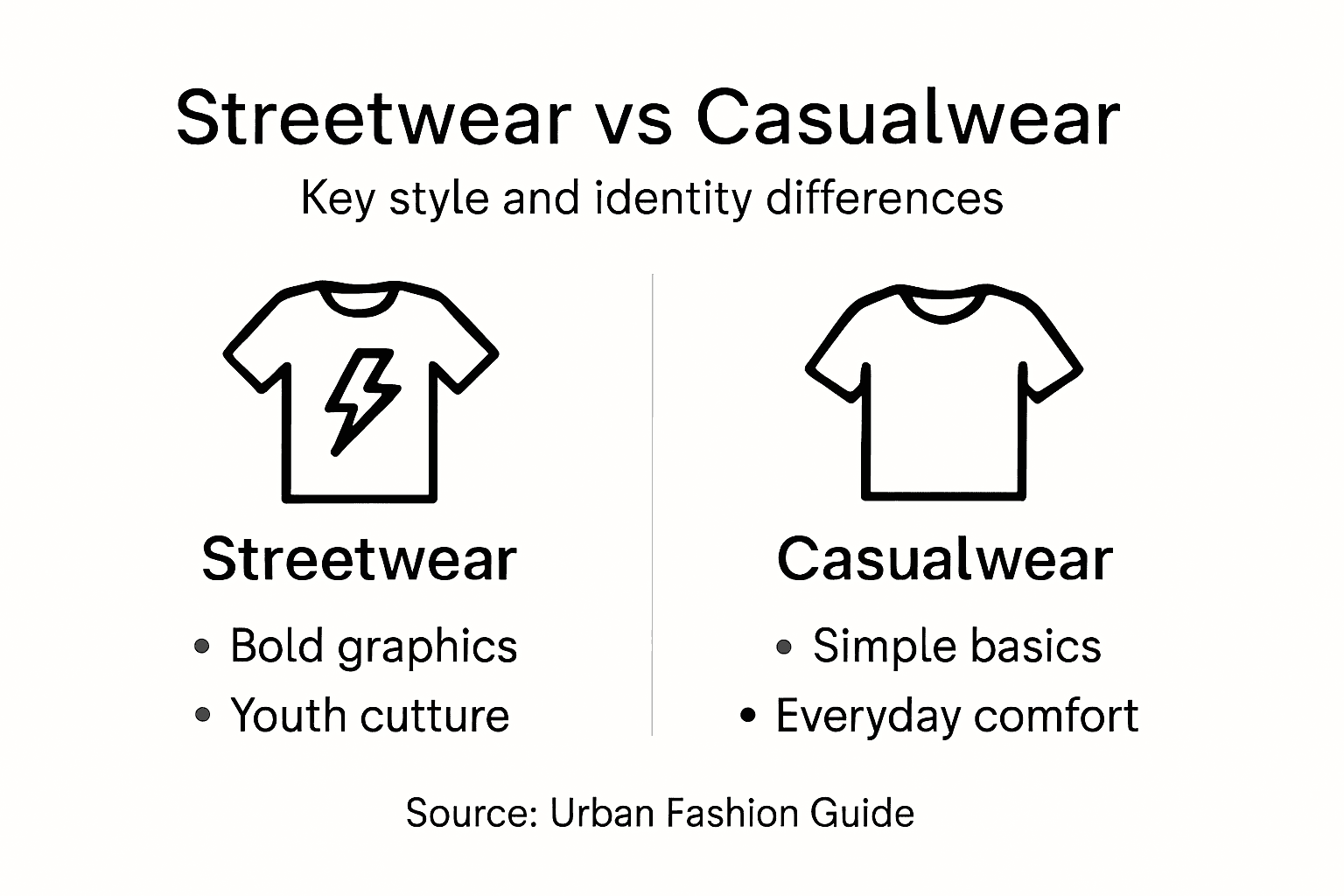
Streetwear is more than just clothing - it’s a cultural statement deeply rooted in urban identity and self-expression. Emerging from youth subcultures, streetwear represents a unique fashion genre that transcends traditional clothing boundaries.
At its core, streetwear is characterized by bold styling and strong cultural connections, particularly within hip-hop and skate communities. Unlike traditional casual wear, streetwear isn’t just about comfort - it’s a form of personal branding and social communication. Urban authenticity drives its design, with each piece telling a story about the wearer’s background, interests, and attitude.
Casualwear, in contrast, focuses primarily on practicality and universal comfort. Its design philosophy prioritizes versatility and simplicity across different environments. Where streetwear demands cultural context, casualwear embraces broad accessibility, making it suitable for diverse settings from office to weekend leisure.
Key differences between streetwear and casualwear include:
- Cultural specificity vs. universal appeal
- Bold, statement-driven designs vs. neutral, adaptable styles
- Strong brand identification vs. functional clothing choices
- Niche community connections vs. mainstream wearability
Understanding these nuanced distinctions helps fashion enthusiasts make more intentional style choices that reflect their personal identity and social narrative.
Here’s a quick overview highlighting how streetwear and casualwear impact wearer identity and daily life:
| Aspect | Streetwear | Casualwear |
|---|---|---|
| Influence on Identity | Expression of unique background | Emphasizes universal comfort |
| Social Signal | Affiliates with niche groups | Suitable for diverse audiences |
| Flexibility | Statement pieces, trend-driven | Adaptable for many settings |
| Daily Function | Prioritizes self-expression | Focuses on practicality and ease |
Pro tip: Experiment with mixing streetwear elements into casualwear to create a unique, personalized style that bridges cultural expressions.
Key Characteristics and Influences Explained
Streetwear emerges as a powerful cultural phenomenon, deeply rooted in countercultures of the 1980s and 1990s. Originating from urban subcultures, it represents more than fashion - it’s a statement of identity and rebellion against traditional style norms.
The genre draws significant inspiration from multiple artistic and social movements, particularly hip-hop, skateboarding, and graffiti cultures. These influences shape streetwear’s core characteristics, which include:
- Emphasis on individual self-expression
- Comfort-driven design
- Bold, unconventional aesthetic
- Strong connection to youth identity
- Rejection of mainstream fashion rules
Streetwear’s evolution has dramatically transformed fashion landscapes, blurring traditional boundaries between casual and luxury styles. What began as a niche urban expression has now become a global phenomenon, influencing high-end designer collections and challenging conventional fashion hierarchies.
The demographic driving streetwear remains predominantly young, with brands strategically targeting audiences under 25. These consumers seek clothing that communicates personal narrative, social belonging, and cultural authenticity. Streetwear isn’t just about looking good - it’s about telling a story through fabric, design, and attitude.
Pro tip: When building your streetwear wardrobe, focus on pieces that reflect your personal narrative and cultural connections rather than blindly following trends.
Streetwear Categories and Most Popular Styles
Streetwear categories represent more than just clothing - they’re a complex ecosystem of cultural expression and personal identity. The landscape of streetwear is diverse, encompassing several key garment types that define urban fashion.
The primary streetwear categories include:
- Graphic Tees: Bold statement pieces featuring artistic designs
- Hoodies: Versatile layering items symbolizing urban comfort
- Sneakers: Collector’s items with cultural significance
- Caps and Headwear: Accessories that complete the streetwear aesthetic
- Oversized Outerwear: Loose silhouettes reflecting youth culture
Limited Edition Culture drives streetwear’s appeal, with youth subcultures defining style trends through scarcity and distinctive design. Brands strategically release limited quantities, transforming clothing into collectible art pieces that communicate social status and individual creativity.
The most popular streetwear styles emerge from music, social media, and urban cultural movements. These styles prioritize individualism, rejecting traditional fashion hierarchies and celebrating personal narrative through clothing choices. Loose fits, unconventional color combinations, and statement graphics define the contemporary streetwear aesthetic.
Pro tip: Build your streetwear collection by focusing on pieces that tell your unique story, not just following temporary trends.
Casualwear Types and Essential Wardrobe Items
Casualwear represents the foundation of everyday fashion, emphasizing practicality, comfort, and timeless design. Unlike streetwear’s bold statements, casualwear focuses on versatile pieces that seamlessly transition between different settings and activities.
The essential casualwear wardrobe typically includes:
- Plain T-Shirts: Neutral colors and simple designs
- Chinos: Versatile pants suitable for multiple occasions
- Casual Shirts: Button-downs and relaxed-fit options
- Comfortable Footwear: Sneakers, loafers, and comfortable walking shoes
- Lightweight Jackets: Easy layering pieces for varying temperatures
Casualwear prioritizes understated elegance and functionality. These garments are crafted from durable materials that withstand daily wear, offering maximum comfort without sacrificing style. The key is creating a flexible wardrobe that can be mixed and matched effortlessly.

The philosophy behind casualwear revolves around simplicity and adaptability. Unlike streetwear’s cultural statements, these pieces are designed to provide maximum utility while maintaining a clean, refined aesthetic. From office environments to weekend outings, casualwear ensures you look put-together without appearing overly formal or trying too hard.
Below is a summary of popular categories in both streetwear and casualwear, clarifying each category’s core purpose:
| Wardrobe Category | Streetwear Role | Casualwear Role |
|---|---|---|
| T-Shirts | Canvas for graphic art | Simple, neutral base layer |
| Outerwear | Showcases trends and status | Provides comfort and weather protection |
| Footwear | Culture-defining, collectible | All-day wearability, support |
| Accessories | Completes urban look | Occasional, functional use |
Pro tip: Invest in high-quality, neutral-toned basics that can be easily layered and combined for multiple outfit combinations.
Sustainability Trends in Streetwear and Casualwear
Sustainability has become a critical driver in modern fashion, transforming how brands approach design, production, and consumer engagement. The fashion industry is experiencing a profound shift, with streetwear and casualwear brands increasingly prioritizing environmental consciousness and ethical manufacturing practices.
Key sustainability trends in contemporary fashion include:
- Recycled Materials: Using recovered plastics and textiles
- Transparent Supply Chains: Providing complete production transparency
- Ethical Manufacturing: Ensuring fair labor practices
- Low-Impact Dyes: Reducing chemical pollution
- Carbon Neutral Production: Minimizing environmental footprint
Fashion brands are responding to Gen Z’s environmental demands, integrating sustainability without compromising their unique aesthetic. Streetwear particularly excels at blending cutting-edge design with eco-friendly innovations, creating garments that are both stylish and environmentally responsible.
The evolution of sustainable fashion goes beyond material choices. It represents a fundamental reimagining of how clothing is conceived, produced, and consumed. Brands are now judged not just on style, but on their commitment to environmental stewardship and social responsibility.
Pro tip: Research brands’ sustainability certifications and look for transparent supply chain information before making fashion purchases.
How to Choose Between Styles for Urban Life
Urban fashion requires strategic wardrobe planning that balances personal expression with practical functionality. The key is understanding how different styles serve various aspects of your dynamic city lifestyle.
Consider your style selection based on these critical urban contexts:
- Work Environment: Professional settings demand more casualwear
- Social Events: Streetwear offers bold personal statements
- Weekend Activities: Mix of comfortable and expressive pieces
- Transportation Modes: Layerable, adaptable clothing
- Climate Considerations: Versatile, functional garments
Successful urban dressing isn’t about choosing between streetwear and casualwear, but strategically integrating both. Streetwear communicates individual identity through statement pieces, while casualwear provides the foundational comfort necessary for navigating daily urban challenges.
The most effective urban wardrobe allows seamless transitions between different life scenarios. By understanding the nuanced differences between streetwear and casualwear, you can curate a flexible collection that reflects your personality while meeting practical demands of city living.
Pro tip: Invest in versatile, high-quality pieces that can be styled multiple ways, allowing maximum outfit flexibility across different urban scenarios.
Elevate Your Style with Sustainable Streetwear and Casualwear Essentials
Navigating the subtle yet powerful differences between streetwear and casualwear can be a challenge when curating a wardrobe that truly reflects your identity while remaining comfortable and eco-conscious. The article highlights how streetwear demands boldness and cultural expression while casualwear centers on versatility and timeless comfort. At MEXESS, we understand these core needs and provide a thoughtfully curated collection that bridges bold streetwear elements with sustainable casualwear basics made from organic fabrics. Our pieces focus on authentic self-expression, comfort-driven design, and environmentally responsible materials to help you build a wardrobe that tells your story while caring for the planet.

Discover the latest organic sweatshirts, hoodies, and T-shirts designed for young, fashion-forward consumers who value both style and sustainability. Explore our new arrivals and experience easy shopping with free shipping on multiple items, a 30-day return policy, and trusted customer reviews. Don’t wait to make your fashion statement with conscious choices. Visit MEXESS, explore our full range at https://mexess.com, and embrace a look that fits your urban lifestyle and ethical values today.
Frequently Asked Questions
What is the main difference between streetwear and casualwear?
Streetwear is a cultural, statement-driven style often tied to urban youth identity, while casualwear focuses on practicality and universal comfort suitable for various occasions.
How does streetwear influence a person’s identity?
Streetwear allows individuals to express their unique backgrounds and affiliations with niche cultural communities, serving as a medium for personal branding and social communication.
What are some essential items in a casualwear wardrobe?
Key pieces in a casualwear wardrobe typically include plain t-shirts, chinos, casual shirts, comfortable footwear, and lightweight jackets that promote versatility and ease.
Are sustainability practices important in streetwear and casualwear?
Yes, sustainability has become crucial in both styles, with brands increasingly using recycled materials, ethical manufacturing, and transparent supply chains to meet the environmental demands of consumers.


0 comments