

You want streetwear that makes a statement without compromising your values, but navigating the world of sustainable fashion while maintaining your urban edge can feel overwhelming. The good news is that building a stylish, eco-friendly streetwear wardrobe is easier than you think when you know the right pieces to choose and how to style them. This guide will walk you through selecting sustainable basics, mastering layering techniques, avoiding common mistakes, and creating looks that turn heads while supporting the planet. You’ll learn how to build outfits that reflect both your personal style and your commitment to conscious consumption.
Table of Contents
- Building Your Sustainable Streetwear Foundation
- Styling Techniques For An Eco Streetwear Look
- Common Mistakes And How To Avoid Them
- Verifying Your Sustainable Streetwear Style And Impact
- Incorporating Sustainable Accessories To Complete Your Look
- Discover Sustainable Streetwear Essentials At MEXESS
- FAQ
Key takeaways
| Point | Details |
|---|---|
| Foundation pieces matter | Sustainable basics like organic tees and recycled joggers form the core of versatile eco streetwear looks |
| Layering creates depth | Mixing textures and weights transforms simple sustainable pieces into dynamic urban outfits |
| Quality beats quantity | Investing in fewer premium eco pieces delivers better style and longer wear than fast fashion alternatives |
| Certifications guide choices | GOTS and Fair Trade labels help verify genuine sustainability claims from streetwear brands |
| Accessories complete looks | Eco-friendly hats, bags, and shoes elevate minimal outfits while supporting ethical production |
Building your sustainable streetwear foundation
Your eco streetwear journey starts with selecting the right core garments. Focus on pieces made from organic cotton and recycled materials, which form the backbone of any sustainable wardrobe. These fabrics offer the comfort and durability you need for daily urban wear while significantly reducing environmental impact compared to conventional textiles.
Start with these essential sustainable basics:
- Graphic tees in organic cotton that showcase your personality
- Heavyweight hoodies made from recycled polyester blends
- Joggers and pants crafted from hemp or sustainable cotton
- Versatile outerwear pieces that work across seasons
The key is choosing items that mix and match effortlessly. A capsule approach means each piece should work with at least three others in your rotation. This creates maximum outfit combinations from minimal items, reducing both consumption and decision fatigue.
Sustainable accessories deserve equal attention. Look for hats made from organic cotton or recycled materials, bags constructed from cork or recycled nylon, and sneakers featuring plant-based or recycled components. These finishing touches complete your look while maintaining your eco commitment.
| Eco Fabric | Key Benefits | Styling Tips |
|---|---|---|
| Organic Cotton | Soft, breathable, pesticide-free | Perfect for everyday tees and hoodies |
| Recycled Polyester | Durable, moisture-wicking, diverts waste | Ideal for outerwear and activewear pieces |
| Hemp | Strong, antimicrobial, low water use | Best for structured pants and jackets |
| Tencel/Lyocell | Silky, drapes well, sustainable production | Great for layering pieces and lighter tops |
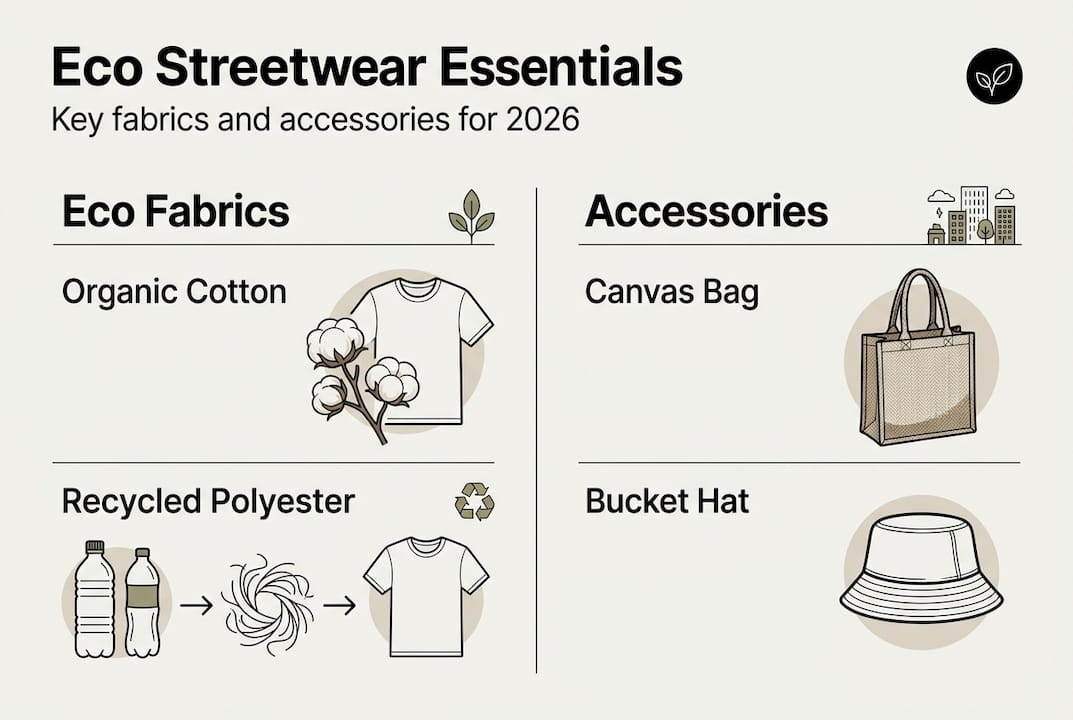
Pro Tip: Invest in three to five high-quality sustainable staples rather than ten mediocre pieces. Premium eco garments last three to five times longer and maintain their shape and color better, giving you superior style impact and lower long-term costs.
Styling techniques for an eco streetwear look
Mastering layering transforms basic sustainable pieces into head-turning urban outfits. The secret lies in understanding how to combine textures and colors while maintaining visual balance. Start with a fitted base layer, add a statement mid-layer, and finish with outerwear that ties the look together.
Follow this seasonal layering approach:
- Spring/Fall: Organic cotton tee plus lightweight recycled hoodie under a sustainable denim jacket
- Summer: Breathable hemp tee with relaxed organic cotton shorts and minimal accessories
- Winter: Base layer tee, heavyweight recycled fleece hoodie, insulated sustainable parka
- Year-round: Keep one versatile jacket that works across three seasons to maximize utility
Texture mixing adds visual interest without requiring more pieces. Pair smooth organic cotton with textured recycled knits, or combine matte hemp pants with a slightly shiny recycled polyester jacket. These subtle contrasts create depth that catches the eye while keeping your outfit cohesive.
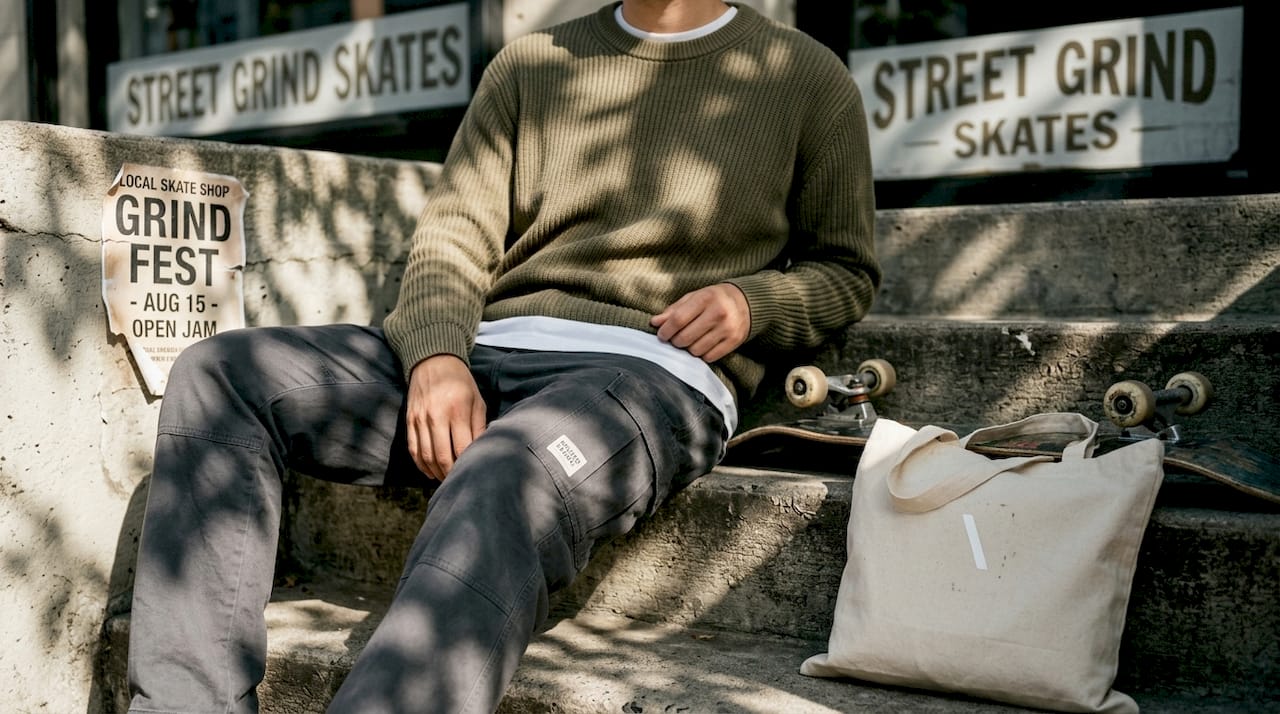
Color coordination in eco streetwear follows the same principles as conventional styling but with an earth-conscious twist. Build around a neutral base of black, white, gray, or beige sustainable pieces, then add one or two accent colors that reflect your personality. Earthy tones like olive, rust, and navy work particularly well with sustainable fabrics’ natural textures.
Consider these color palette strategies:
- Monochromatic: Different shades of one color create a sleek, minimalist urban look
- Complementary: Pair opposite colors like navy and rust for bold contrast
- Neutral plus pop: Build on black, white, and gray with one bright sustainable accent piece
- Tonal: Stay within similar color families for sophisticated, easy-to-style combinations
Pro Tip: Use one statement sustainable accessory like a bold recycled crossbody bag or organic cotton bucket hat to elevate minimal outfits. This approach maximizes style impact while keeping your core wardrobe versatile and interchangeable.
Common mistakes and how to avoid them
Even with the best intentions, styling missteps can undermine your eco streetwear aesthetic. The most frequent error is mixing non-eco items that dilute your sustainable message and create visual inconsistency. While transitioning to a fully sustainable wardrobe takes time, prioritize replacing your most-worn pieces first for maximum impact.
Avoid these common pitfalls:
- Overbuying trendy sustainable pieces you’ll only wear once or twice
- Ignoring fit in favor of sustainability, resulting in unflattering silhouettes
- Neglecting garment care, which shortens lifespan and increases replacement needs
- Choosing pieces solely for eco credentials without considering your actual style
- Mixing too many competing patterns or textures in a single outfit
True eco style balances ethics and aesthetics, creating looks that feel authentic to you while supporting sustainable production.
Fit matters just as much in sustainable fashion as conventional streetwear. A poorly fitting organic cotton hoodie looks sloppy regardless of its environmental credentials. Take time to find brands that match your body type, and don’t hesitate to have pieces tailored for a perfect fit. The investment pays off in how often you’ll actually wear the garment.
Proper maintenance extends your sustainable wardrobe’s lifespan significantly. Wash items in cold water to preserve fabric integrity and reduce energy consumption. Air dry whenever possible to prevent shrinkage and fiber damage. Address minor repairs like loose buttons or small tears immediately before they become major problems requiring replacement.
Silhouette balance prevents the sloppy, thrown-together look that undermines streetwear credibility. If you’re wearing oversized on top, go fitted on bottom, and vice versa. This creates visual interest while maintaining the clean lines that define modern urban style. The same principle applies when mixing sustainable and conventional pieces during your transition period.
Verifying your sustainable streetwear style and impact
Authentic sustainability requires more than marketing claims. Learning to assess garment certifications and brand transparency helps you make informed choices that align with your values. Understanding what different labels mean empowers you to build a wardrobe that delivers genuine environmental and social benefits.
| Certification | What It Verifies | Style Considerations |
|---|---|---|
| GOTS (Global Organic Textile Standard) | Organic fiber content, ethical processing, social criteria | Softer fabrics, natural colors, premium feel |
| Fair Trade | Fair wages, safe conditions, community investment | Often artisan-quality, unique details |
| OEKO-TEX | No harmful chemicals, safe for skin contact | All fabric types, good for sensitive skin |
| Bluesign | Sustainable chemical management, resource efficiency | Technical fabrics, performance wear |
Conduct a wardrobe audit to understand your current sustainability baseline:
- Check care labels for fiber content and country of origin information
- Research brands online to verify their sustainability claims and certifications
- Assess each item’s versatility and how often you actually wear it
- Identify gaps where sustainable replacements would have the highest impact
- Create a replacement plan prioritizing most-worn items and worst environmental offenders
Brand transparency signals genuine commitment to sustainability versus greenwashing. Look for companies that openly share their supply chain, manufacturing processes, and environmental impact data. Brands hiding behind vague marketing language often have something to conceal. Those doing the real work proudly showcase their certifications, factory partnerships, and measurable progress toward sustainability goals.
Your buying decisions create market demand for ethical production. Every purchase from a transparent sustainable brand sends a signal that conscious consumers value environmental and social responsibility. Over time, this collective action shifts industry practices and makes sustainable options more accessible and affordable for everyone.
Incorporating sustainable accessories to complete your look
Accessories provide the finishing touches that transform good outfits into great ones. Sustainable accessories made from innovative eco materials offer the same style impact as conventional options while supporting ethical production practices. The key is choosing versatile pieces that work across multiple outfits rather than trendy items with limited utility.
Eco-friendly accessory materials to look for:
- Cork leather for bags and wallets, offering durability and water resistance
- Recycled ocean plastic transformed into functional backpacks and crossbody bags
- Organic cotton for hats, caps, and small goods like card holders
- Recycled rubber and plant-based materials in sneaker construction
- Reclaimed metal and sustainable wood in jewelry and watches
Matching accessories to your streetwear outfit requires balance and restraint. Choose one statement piece like a bold sustainable backpack or eye-catching recycled sneakers, then keep other accessories minimal. This prevents visual clutter while ensuring your focal point gets the attention it deserves. The statement piece should complement your outfit’s color palette rather than clash with it.
Multi-functional accessories maximize wardrobe efficiency. A well-designed sustainable crossbody bag works for daily errands, casual outings, and even dressier occasions when styled correctly. Versatile organic cotton caps suit everything from athletic looks to casual streetwear fits. Investing in adaptable pieces reduces the total number of accessories you need, lowering both environmental impact and storage requirements.
Consider the practical demands of urban life when selecting sustainable accessories. Your bag needs adequate capacity for daily essentials plus room for unexpected purchases. Shoes must handle varied terrain from subway platforms to city sidewalks. Hats should provide sun protection during summer months. Functionality and sustainability go hand in hand when you choose quality pieces designed for real-world use.
Discover sustainable streetwear essentials at MEXESS
Ready to put these styling principles into action? MEXESS offers a carefully curated selection of premium organic cotton streetwear and modern urban essentials designed for conscious consumers who refuse to compromise on style. Every piece combines minimalist aesthetics with sustainable materials, giving you the foundation for versatile, eco-friendly outfits that work across your urban lifestyle.

Shop confidently knowing that quality, comfort, and environmental responsibility drive every design decision. From heavyweight organic cotton hoodies to versatile everyday tees, MEXESS delivers the sustainable basics you need to build a wardrobe that reflects your values. Enjoy free shipping on qualifying orders, hassle-free 30-day returns, and transparent product details that help you make informed choices.
Pro Tip: Browse the MEXESS blog for ongoing styling inspiration, trend analysis, and practical tips to refine your sustainable streetwear approach as your wardrobe evolves.
FAQ
What defines eco streetwear clothing?
Eco streetwear uses sustainable, recycled, or organic materials produced under ethical working conditions that respect both people and the planet. These garments minimize environmental impact through reduced water consumption, lower chemical use, and decreased carbon emissions compared to conventional fashion. The style maintains streetwear’s urban aesthetic while incorporating responsible production practices.
How can I mix traditional streetwear with sustainable pieces?
Focus on pairing high-impact sustainable basics like organic cotton tees and recycled hoodies with select traditional items you already own to enhance longevity and reduce waste. Prioritize sustainable pieces in your core wardrobe rotation, the items you wear most frequently, for the greatest environmental effect. This gradual transition approach makes sustainable streetwear accessible without requiring immediate wholesale wardrobe replacement.
What are easy care tips to extend eco streetwear lifespan?
Wash garments in cold water and air dry whenever possible to preserve fabric integrity and reduce energy consumption. Address minor damages like loose seams or small tears promptly to avoid early replacement and maximize each piece’s useful life. Proper care can double or triple a garment’s lifespan, significantly reducing your overall environmental footprint.
Where can I find trusted eco streetwear brands?
Look for certifications like GOTS, Fair Trade, and OEKO-TEX that verify genuine sustainability claims backed by third-party auditing. Research brand transparency by checking if companies openly share supply chain information, manufacturing processes, and measurable environmental commitments. Refer to curated guides such as those offered on MEXESS’s blog for reliable brand recommendations and styling inspiration.


0 comments