

TL;DR:
- Biodegradable fabrics require specific environmental conditions to break down fully, which are often unavailable in landfills.
- Many natural or bio-based fibers are biodegradable, but treatments and blends can hinder decomposition.
- Prioritize durable, certified natural fibers and ask brands for transparency to make truly sustainable fashion choices.
Most people assume that buying a “natural” or “biodegradable” fabric means it will quietly return to the earth after use. That assumption is mostly wrong, and it’s costing eco-conscious shoppers real clarity when building a sustainable wardrobe. The truth is that biodegradable fabrics operate under specific conditions that most closets, landfills, and disposal systems simply don’t provide. This guide breaks down what biodegradable fabric actually means, which fibers genuinely qualify, where the marketing often misleads, and how to make smarter choices for your streetwear wardrobe and the planet.
Key Takeaways
| Point | Details |
|---|---|
| Biodegradable isn’t always fast | Many fabrics degrade only in specific environments or need industrial composting facilities. |
| Natural fibers aren’t foolproof | Treatments, dyes, or landfill conditions can prevent even pure cotton or hemp from breaking down. |
| Certifications matter | Seek credible marks like EN 13432 or ASTM D6400 to ensure your material choice is genuinely biodegradable. |
| Focus on durability | Long-lasting, reusable clothing may reduce waste more than relying on end-of-life biodegradation promises. |
What makes a fabric biodegradable?
Let’s get clear on the science behind biodegradable fabrics before we go any further. The word gets thrown around constantly in fashion marketing, but it has a specific meaning that matters.
Biodegradable fabrics are textile materials composed primarily of natural or bio-based polymers that microorganisms can break down into simpler substances. Think bacteria, fungi, and other tiny organisms consuming the fiber and converting it back into water, carbon dioxide, and organic matter. That process sounds clean and simple, but it depends heavily on the environment around the fabric.
For biodegradation to actually happen, four conditions need to line up: moisture, oxygen, the right microorganisms, and adequate temperature. Remove any one of those, and the process slows down dramatically or stops altogether. A cotton T-shirt buried in a sealed landfill with no oxygen might persist for decades.
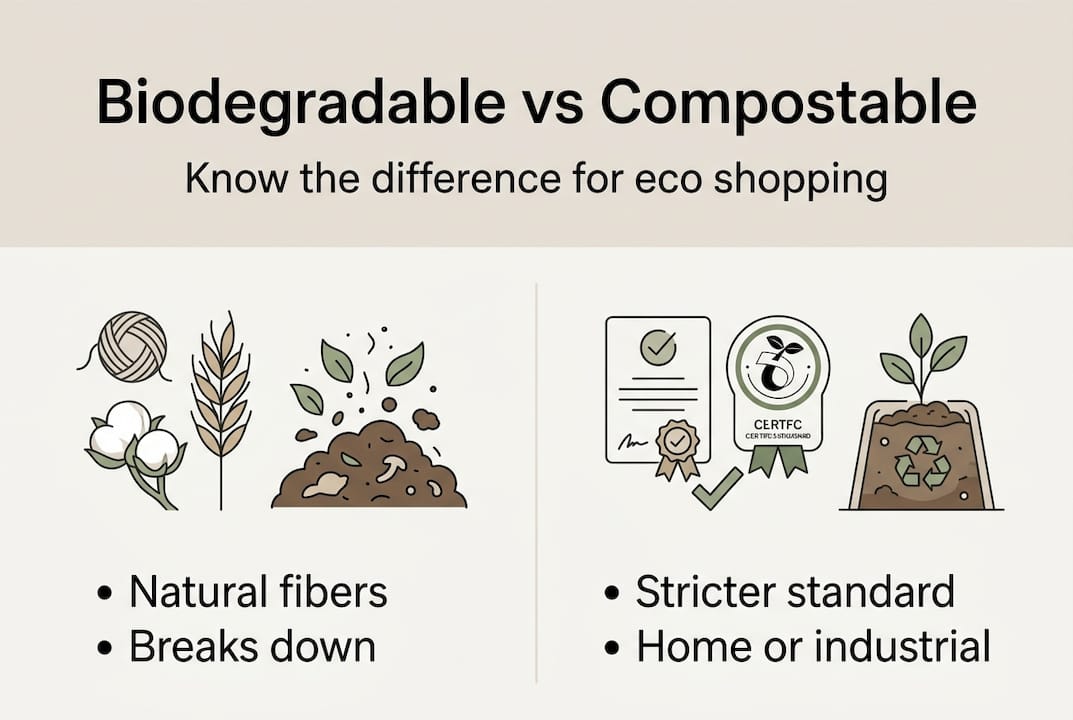
It’s also worth separating two terms that get used interchangeably but mean different things:
- Biodegradation means a material returns to natural elements over time, but the timeline and byproducts aren’t regulated.
- Compostability means a material breaks down without leaving toxic residue, within a defined timeframe, under specific conditions.
Compostable is actually the stricter standard. Not every biodegradable fabric is compostable, but every compostable fabric is biodegradable.
Regulatory standards reflect this distinction. EU standards require 90% degradation to CO2, water, and minerals within 6 months, while the US FTC requires complete breakdown within 1 year for a product to make biodegradability claims. These aren’t just technical footnotes. They’re the baseline you should expect brands to meet before trusting their sustainability messaging.
When you’re choosing eco-friendly fabrics for your wardrobe, understanding this distinction is the first filter you should apply.
Pro Tip: If a brand says a fabric is “biodegradable” without specifying conditions or certifications, that claim is almost meaningless. Ask what standard they’re referencing.
Types of biodegradable fabrics used in fashion
Now that you understand what “biodegradable” means, let’s explore which fabrics fit the definition and how they actually perform in the real world.
Common biodegradable fabrics include natural fibers like cotton, wool, linen, hemp, silk, and jute; semi-synthetics like lyocell and viscose/rayon; and bio-based synthetics like PLA (polylactic acid), which is derived from corn starch or sugar cane.
Here’s a breakdown of how they compare:
| Fabric | Source | Degradation speed | Best conditions |
|---|---|---|---|
| Hemp | Plant fiber | 2 weeks to months | Soil or compost |
| Linen | Flax plant | 2 to 3 months | Compost |
| Organic cotton | Cotton plant | 1 to 5 months | Compost or soil |
| Lyocell (Tencel) | Wood pulp | ~55 days | Soil burial |
| Viscose/Rayon | Cellulose | 2 to 3 months | Compost |
| PLA | Corn starch/sugar | Months to years | Industrial compost only |
| Wool | Animal fiber | 1 to 5 years | Soil |
Empirical benchmarks confirm that hemp breaks down in as little as 2 weeks under optimal conditions, cotton and linen reach 100% breakdown in roughly 2 months in compost, and lyocell nonwovens degrade in about 55 days in soil burial tests.
A few key takeaways for streetwear shoppers:
- Hemp and linen are the fastest to biodegrade and require the least processing.
- Lyocell (often sold as Tencel) is a strong semi-synthetic option with fast soil degradation.
- PLA sounds impressive but needs industrial composting infrastructure that most people don’t have access to.
- Wool biodegrades but slowly, and its environmental footprint during production is worth factoring in.
For eco-friendly apparel advantages that go beyond end-of-life, organic cotton remains one of the most balanced choices for urban streetwear because it’s widely certified, soft, and performs well across multiple sustainability metrics. You can also explore types of sustainable fabrics to compare options side by side before making a purchase.
The realities and limitations: Biodegradability in practice
So do all biodegradable fabrics live up to the hype? Not always, and here’s why.
The biggest misconception is that buying a natural fiber garment means it will disappear harmlessly after you’re done with it. That’s not how most disposal systems work. Even natural fibers may not biodegrade in landfills because landfill conditions are largely anaerobic, meaning no oxygen, which slows breakdown and can produce methane instead of clean decomposition.
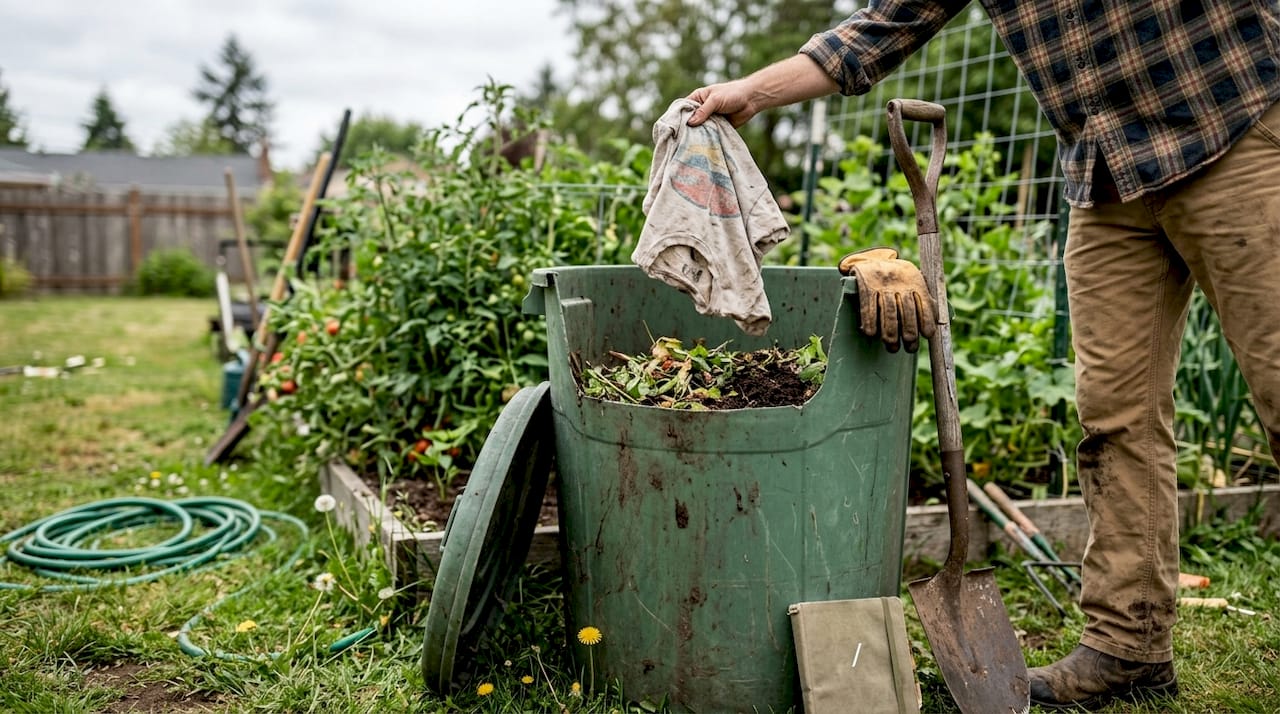
Dyes, chemical finishes, and fabric treatments add another layer of complexity. A cotton shirt treated with synthetic dyes or wrinkle-resistant coatings may not biodegrade cleanly, even in ideal compost conditions. The coating essentially seals the fiber from the microorganisms that would otherwise break it down.
Blended fabrics are another trap. A 60/40 cotton-polyester hoodie is not biodegradable. The polyester component will persist in the environment for hundreds of years, and as the cotton breaks down, it can release microfibers that contaminate soil and water.
“Biodegradable” on a label means very little without knowing the fiber blend, the finishing treatments, and the disposal conditions the product was designed for.
PLA is a case study in overpromised sustainability. PLA needs industrial composting at high heat and humidity to break down, and it persists in ocean water, soil, and backyard compost piles. Brands that market PLA-based products as eco-friendly without disclosing this are engaging in greenwashing, which is when a company uses vague environmental claims to appear more sustainable than they are.
When you’re deciding how to choose eco-friendly fabrics, these limitations should be part of your evaluation, not an afterthought.
Pro Tip: Flip the garment inside out and check the care label. If it lists multiple fiber types or doesn’t specify 100% natural content, it’s likely a blend that won’t biodegrade cleanly.
How to choose better: Practical tips for eco-conscious shoppers
Understanding limitations is key. Now here’s how to put that knowledge to work and actually shop smarter.
Choosing genuinely biodegradable streetwear doesn’t require a chemistry degree. It requires asking the right questions and knowing what to look for before you buy.
- Read care labels carefully. Look for “100%” followed by a natural fiber name. Organic cotton, hemp, and linen are your safest bets. If the label lists multiple fibers, it’s likely a blend.
- Seek out certifications. Look for EN 13432 or ASTM D6400 compostability marks, GOTS (Global Organic Textile Standard) for organic fibers, or OEKO-TEX certifications that confirm no harmful chemicals were used in processing.
- Avoid synthetic blends marketed as eco-friendly. “Recycled polyester” and “eco fleece” are not biodegradable. They reduce waste in production but still persist in the environment after disposal.
- Ask brands about dye and finish transparency. A truly sustainable brand should be able to tell you what dyes and treatments were used and whether they interfere with biodegradation.
- Prioritize durability first. A well-made organic cotton hoodie that lasts 5 years is more sustainable than a biodegradable fabric that falls apart in 18 months and ends up in a landfill anyway.
For eco-conscious streetwear shoppers, prioritizing untreated natural fibers certified compostable under EN 13432 and avoiding synthetic blends gives you the best chance of a garment that actually delivers on its environmental promise.
Exploring sustainable streetwear fabrics in more depth can help you match the right fiber to your lifestyle, climate, and how you typically dispose of worn-out clothing.
Pro Tip: Before discarding an old garment, check if your city has a textile composting or take-back program. Some brands now offer end-of-life return options that route garments to proper industrial composting facilities.
Why focusing on durability and informed choices trumps end-of-life promises
With practical tips in hand, let’s step back and look at what truly matters for sustainability in fashion.
Here’s an uncomfortable truth: the entire conversation about biodegradable fabrics often distracts from a more important question. Should the garment exist in the first place, and will it last long enough to justify its production footprint?
Biodegradability depends heavily on environment. Compost conditions allow fast breakdown; landfills do not. The infrastructure to support proper biodegradation simply doesn’t exist at scale in most cities. Relying on end-of-life claims to justify a purchase is a form of wishful thinking that fashion brands have been happy to encourage.
The smarter frame is this: buy less, buy better, and push brands for transparency about what their products can and cannot do. A premium organic cotton tee that you wear 200 times has a far lower per-wear environmental cost than a “biodegradable” fast-fashion piece worn 10 times before it’s tossed. Durability and thoughtful use are the real sustainability metrics.
We believe the benefits of eco-friendly apparel are real, but they only materialize when shoppers are given honest information and choose accordingly. Brands owe you that clarity.
Discover modern streetwear that’s truly sustainable
Ready to make better choices? Here’s where to find authentic, sustainable fashion that actually delivers on its promises.
At MEXESS, every collection is built around materials and transparency that eco-conscious shoppers can trust. From premium organic cotton tees to clean-cut hoodies designed for city life, the focus is on pieces that feel great, last long, and align with your values. No vague claims, no confusing blends.

Whether you’re building a minimal wardrobe or refreshing your everyday streetwear rotation, MEXESS makes it easy to shop with confidence. Explore the full collection and find pieces that work as hard on sustainability as they do on style. Your wardrobe choices matter, and we’re here to make the right ones easier to find.
Frequently asked questions
Do all natural fabrics biodegrade quickly?
Not always. Even natural fibers can take years to break down in a landfill, especially when treated with dyes or finishes that block microbial activity.
What certifications prove a fabric is biodegradable?
Standards like EN 13432, ASTM D6400, and US FTC regulations confirm that a fabric genuinely biodegrades within defined timeframes and conditions.
Is PLA fabric a good choice for home composting?
No. PLA requires industrial composting at high heat and humidity and does not break down in soil, water, or typical backyard compost setups.
How can shoppers avoid greenwashing with ‘biodegradable’ claims?
Always check for third-party certifications and ask brands about fiber blends and chemical finishes, since misleading biodegradable claims are common in fashion marketing without proper disclosure.


0 comments