

Choosing what to wear is no longer just about style for many eco-conscious young adults. The idea of ethical fashion is reshaping how you think about streetwear, calling attention to more than just surface trends. With real concerns over worker rights, environmental impact, and cultural respect, the fashion world now demands deeper understanding of what ‘ethical’ really means. This guide breaks down the key concepts, clears up common misconceptions, and explains how ethical fashion can empower your choices without sacrificing authenticity or quality.
Table of Contents
- Defining Ethical Fashion And Common Misconceptions
- Ethical Fashion Types And Key Distinctions
- Core Practices In Ethical Streetwear
- Labor Rights, Certifications, And Transparency
- Risks, Costs, And The Problem Of Greenwashing
Key Takeaways
| Point | Details |
|---|---|
| Ethical Fashion is Comprehensive | It prioritizes environmental sustainability, worker welfare, and social responsibility across the entire lifecycle of garments. |
| Common Misconceptions Exist | Ethical fashion is not only for the wealthy; it also includes affordable options that challenge systemic issues in the textile industry. |
| Types of Ethical Fashion | Four primary categories—Slow Fashion, Circular Fashion, Green Fashion, and Socially Responsible Fashion—each focus on unique elements of sustainability and ethics. |
| Beware of Greenwashing | Consumers should critically evaluate brands’ environmental claims and seek transparency in their production processes to avoid misleading marketing. |
Defining Ethical Fashion and Common Misconceptions
Ethical fashion represents a holistic approach to clothing production that prioritizes environmental sustainability, worker welfare, and social responsibility. Unlike traditional fashion models that prioritize profit and speed, ethical fashion considers the entire lifecycle of garments, from raw material sourcing to manufacturing and final disposal.
Contrary to popular belief, ethical fashion isn’t just about organic materials or expensive products. Complex social-ecological perspectives reveal it’s a dynamic system addressing multiple interconnected challenges:
- Environmental impact reduction
- Fair labor practices
- Transparent supply chains
- Minimizing waste and pollution
- Respecting cultural origins of design
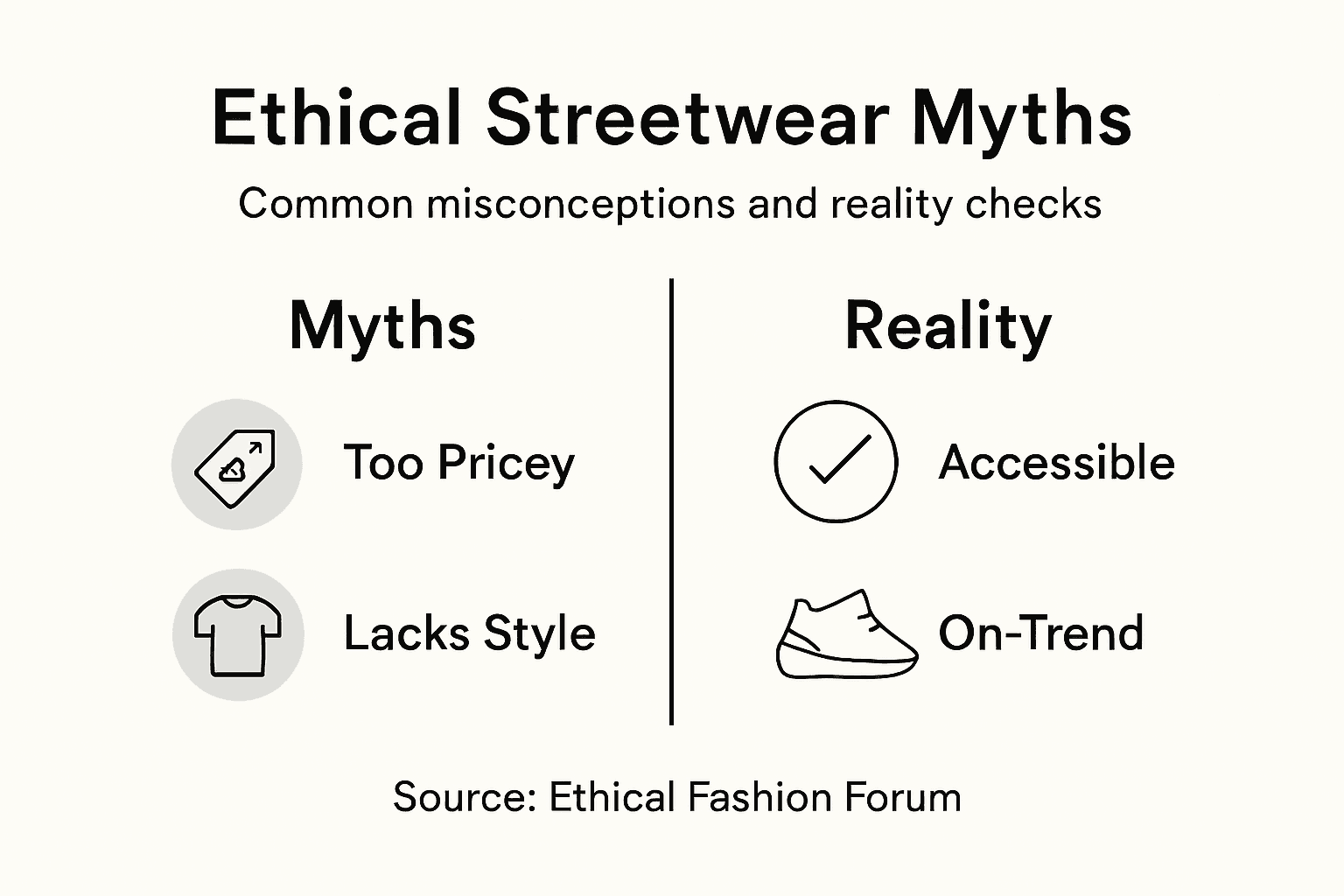
Many consumers misunderstand ethical fashion as a luxury concept reserved for wealthy individuals. In reality, it’s a comprehensive approach that challenges systemic problems within the global textile industry. Ethical issues span multiple domains including labor exploitation, environmental degradation, and cultural appropriation.
The most pervasive misconception is that ethical fashion compromises style or quality. Modern sustainable streetwear proves this wrong by demonstrating that responsible production can coexist with cutting-edge design and superior craftsmanship.
Pro tip: Start your ethical fashion journey by researching brands that transparently share their production processes and commitment to worker welfare.
Ethical Fashion Types and Key Distinctions
Ethical fashion encompasses several nuanced approaches, each addressing different aspects of environmental and social responsibility. Sustainable fashion categories reveal complex global dynamics that challenge traditional manufacturing paradigms and consumer expectations.
Four primary types of ethical fashion distinguish themselves through unique priorities:
- Slow Fashion: Emphasizes quality, durability, and timeless design
- Circular Fashion: Focuses on regenerative production cycles and waste reduction
- Green Fashion: Prioritizes environmental sustainability and reduced carbon footprint
- Socially Responsible Fashion: Centers on fair labor practices and worker welfare
Sustainable fashion approaches represent multifaceted social-ecological systems that extend beyond simple material choices. Each type addresses different dimensions of ethical production, challenging consumers to think critically about their clothing’s entire lifecycle.
Streetwear has increasingly embraced these ethical fashion models, demonstrating that responsible design can coexist with cutting-edge style. Brands are now integrating sustainable materials, transparent supply chains, and innovative recycling techniques to create clothing that respects both environmental and social considerations.

Pro tip: Research clothing brands that transparently communicate their specific ethical fashion approach and provide detailed information about their production processes.
Here’s a quick overview of the main types of ethical fashion and how they differ:
| Type | Primary Focus | Unique Approach | Typical Examples |
|---|---|---|---|
| Slow Fashion | Quality & durability | Timeless designs, low production | Limited-edition releases |
| Circular Fashion | Waste reduction | Regenerative cycles and recycling | Upcycled or recycled garments |
| Green Fashion | Sustainability | Low-impact materials, carbon cuts | Organic cotton tees |
| Socially Responsible | Worker welfare | Fair labor, wage transparency | B Corp certified streetwear |
Core Practices in Ethical Streetwear
Emerging streetwear practices demonstrate profound commitments to social and environmental responsibility, challenging traditional fashion industry norms. Modern ethical streetwear goes beyond simple material selection, integrating comprehensive approaches that transform how clothing is conceived, produced, and consumed.
Core practices in ethical streetwear encompass multiple critical dimensions:
- Sustainable Material Sourcing: Using organic, recycled, and low-impact fabrics
- Supply Chain Transparency: Providing detailed information about production processes
- Fair Labor Practices: Ensuring safe working conditions and living wages
- Minimal Environmental Impact: Reducing carbon footprint and waste generation
- Cultural Authenticity: Respecting design origins and preventing appropriation
Consumer behavior increasingly shapes ethical streetwear brand strategies, with identity expression becoming as important as the physical product. Brands now recognize that ethical commitments are not just production choices, but powerful statements of cultural alignment and social consciousness.
The intersection of style and ethics has transformed streetwear from a fashion statement to a platform for social change. Innovative brands are demonstrating that responsible design can be simultaneously cutting-edge, culturally relevant, and environmentally conscious.
Pro tip: Research streetwear brands that provide complete transparency about their production processes and actively demonstrate their commitment to ethical practices.
Labor Rights, Certifications, and Transparency
Global fashion supply chain transparency represents a critical mechanism for protecting worker rights and ensuring ethical production practices. Beyond surface-level reporting, true transparency demands comprehensive disclosure of working conditions, wage structures, and manufacturing processes.
Key certifications and transparency mechanisms include:
- Fair Trade Certification: Guarantees minimum wage and safe working conditions
- Global Organic Textile Standard (GOTS): Validates organic material and social responsibility
- Worldwide Responsible Accredited Production (WRAP): Monitors labor standards and human rights
- Social Accountability International (SAI): Assesses workplace conditions and worker treatment
- B Corp Certification: Evaluates overall social and environmental performance
Fashion transparency indexes reveal significant industry gaps in reporting labor practices and wage equity. Most brands provide limited information, with few disclosing comprehensive details about worker compensation, gender pay differences, and supply chain working conditions.
Ethical streetwear brands are increasingly recognizing that transparency isn’t just a marketing strategy, but a fundamental commitment to human rights and social justice. By publicly sharing detailed information about production processes, worker treatment, and wage structures, these brands are setting new standards for accountability in the fashion industry.
Pro tip: Always request detailed documentation about labor practices and certifications before purchasing from fashion brands committed to ethical production.
To better understand transparency, here’s how major labor certifications compare:
| Certification | Scope of Coverage | Key Benefit | Popular in Streetwear |
|---|---|---|---|
| Fair Trade | Wages & safe conditions | Verifies ethical worker treatment | Sometimes |
| GOTS | Organic materials & labor | Ensures sustainability | Growing |
| WRAP | Labor standards & rights | Monitors factory practices | Frequently |
| SAI | Social accountability | Focuses on worker protection | Limited |
| B Corp | Social & environmental score | Evaluates holistic performance | Increasingly |
Risks, Costs, and the Problem of Greenwashing
Consumer vulnerability to environmental marketing deception has become a significant challenge in the ethical fashion landscape. Greenwashing represents a sophisticated marketing strategy where brands misleadingly portray their products as more environmentally responsible than they actually are, exploiting consumers’ genuine desire for sustainable choices.
Key risks and warning signs of greenwashing include:
- Vague environmental claims without substantive evidence
- Misleading imagery suggesting ecological responsibility
- Partial sustainability efforts used to mask broader environmental harm
- Disproportionate marketing of minimal green initiatives
- Lack of transparent, verifiable sustainability metrics
Textile industry greenwashing poses complex regulatory challenges that extend beyond simple marketing manipulation. The environmental and economic consequences include reduced consumer trust, undermined genuine sustainability efforts, and potential long-term damage to brands’ reputations.
Ethical streetwear consumers must develop critical awareness, demanding comprehensive documentation and transparent supply chain information. Brands committed to authentic sustainability should welcome rigorous scrutiny and provide clear, verifiable evidence of their environmental and social responsibility practices.
Pro tip: Always cross-reference brands’ sustainability claims with independent certification bodies and detailed environmental impact reports.
Embrace Ethical Streetwear That Makes a Real Difference
The challenge of navigating ethical fashion can feel overwhelming because greenwashing and unclear labor practices blur what is truly sustainable and fair. This article highlights the importance of transparency, authentic labor rights, and responsible material sourcing—a commitment you deserve in every purchase. If you want streetwear that matches your values for environmental sustainability, fair labor, and cutting-edge style all in one place explore MEXESS where organic, eco-conscious streetwear is curated for the mindful consumer.

Discover sweatshirts, hoodies, and T-shirts crafted from organic fabrics with full transparency you can trust. Act now to join a movement where your style becomes a statement about respect for people and planet. Start your journey with us today by visiting MEXESS and experience fashion that truly reflects your ethical standards. Take the next step toward responsible streetwear and see why more consumers choose genuine sustainability over empty claims.
Frequently Asked Questions
What is ethical fashion?
Ethical fashion is an approach to clothing production that prioritizes environmental sustainability, worker welfare, and social responsibility throughout the entire lifecycle of garments.
How does ethical fashion impact streetwear?
Ethical fashion has transformed streetwear by integrating sustainable materials, transparent supply chains, and fair labor practices, allowing brands to reflect social consciousness while maintaining style.
What are the main types of ethical fashion?
The primary types of ethical fashion include slow fashion, circular fashion, green fashion, and socially responsible fashion, each focusing on different aspects of sustainability and worker welfare.
What are the key risks of greenwashing in fashion?
Greenwashing involves misleading marketing practices that exaggerate a brand’s environmental efforts. Key risks include vague claims, misleading imagery, and lack of transparency in sustainability metrics.
Recommended
- 7 Versatile T-Shirt Outfit Ideas for Eco-Friendly Streetwear – MEXESS
- 7 Versatile T-Shirt Outfit Ideas for Eco-Friendly Streetwear – MEXESS
- 7 Versatile T-Shirt Outfit Ideas for Eco-Friendly Streetwear – MEXESS
- 7 Versatile T-Shirt Outfit Ideas for Eco-Friendly Streetwear – MEXESS
- 7 Powerful Examples of Fashion Brand Storytelling to Inspire - Corrado Manenti
Leave a comment