

Every streetwear brand seems to have a “sustainable” collection now. But when you’re standing in a store or scrolling through product pages, it’s genuinely hard to separate real environmental progress from clever marketing. Greenwashing is everywhere, and the stakes are higher than a bad purchase. This guide cuts through the noise with evidence-backed criteria, certification know-how, and a practical framework so you can build an urban wardrobe that looks sharp and actually does less harm.
Key Takeaways
| Point | Details |
|---|---|
| Certifications matter | Always check for GOTS and OEKO-TEX labels to verify real sustainability. |
| Know the best fabrics | Organic cotton, hemp, and TENCEL offer style, comfort, and authentic eco impact. |
| Durability is crucial | Choose dense, quality fabrics for lasting performance that reduces overall footprint. |
| Beware of greenwashing | Question generic ‘eco’ labels and always seek specific evidence for claims. |
| Start with one switch | Begin by upgrading a single staple item, then expand as you learn more. |
Understanding the impact of fabric choice
Fabric is where most of a garment’s environmental damage happens. Water consumption, chemical runoff, carbon emissions, and waste all trace back to the fiber you’re wearing. But here’s what most shoppers miss: the impact doesn’t stop at the factory gate. Lifecycle thinking means you also consider how a fabric holds up through dozens of washes, and what happens when you’re done with it.
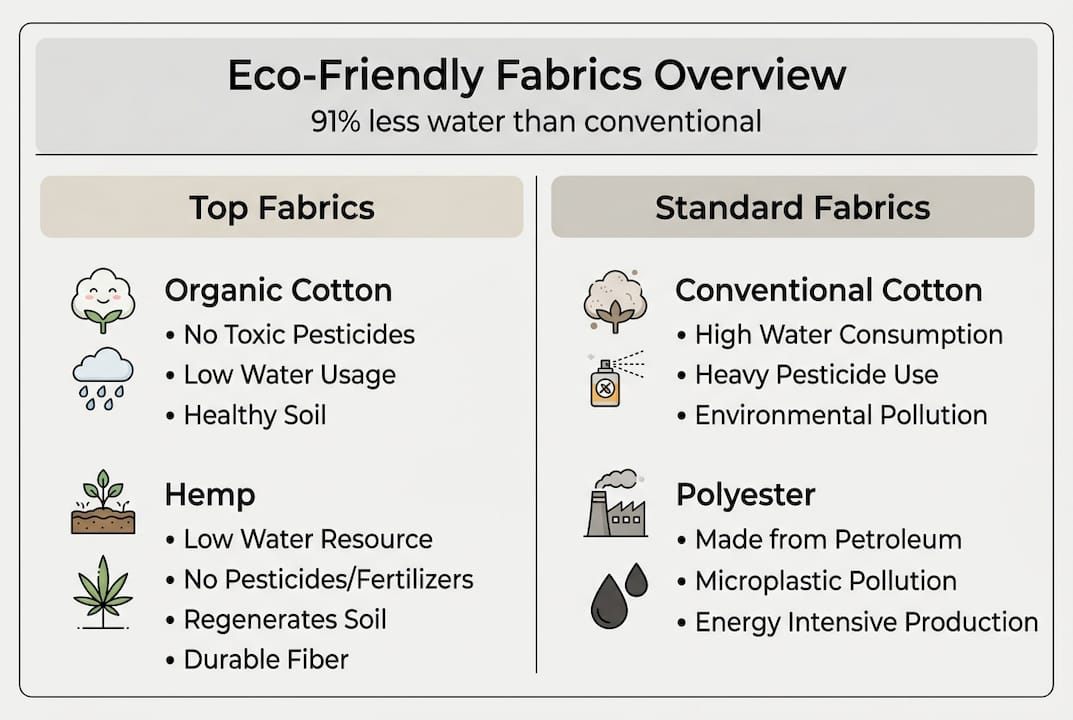
One of the clearest examples is organic cotton versus conventional cotton. Organic cotton uses 91% less water, 62% less energy, and produces 45% less CO2 than its conventional counterpart. That’s not a marginal difference. It’s a structural one. Yet even organic cotton isn’t perfect, which is why no single fabric wins on every metric. Durability matters more than most people realize. A hoodie that lasts five years beats a “green” one that pills after six months.

Common myths are worth addressing head-on. Bamboo sounds natural and low-impact, but most bamboo fabric on the market is processed into viscose using harsh chemicals. “All-natural” doesn’t mean low-impact. That’s why certifications like GOTS (Global Organic Textile Standard) and OEKO-TEX are so valuable. GOTS covers the full supply chain, from fiber to finished product. OEKO-TEX certifies that the finished item is free from harmful chemicals. Together, they offer the strongest assurance available.
Here’s a quick breakdown of what to look for:
- Organic certification: GOTS-certified fibers only
- Chemical safety: OEKO-TEX Standard 100 label
- Durability: Dense knit or weave, not flimsy construction
- End-of-life: Natural fibers biodegrade; synthetics don’t
- Transparency: Brand publishes supply chain info
For a broader look at types of sustainable fabrics and how they compare, it helps to understand the fabric sustainability basics before you shop.
Certifications and labels to trust
Certifications are your shortcut to verified claims. Without them, you’re relying on brand marketing, which is exactly where greenwashing thrives. The two most credible certifications for streetwear shoppers are GOTS and OEKO-TEX, but they cover different things.
GOTS certifies organic fibers across the full supply chain, including social criteria like fair wages and safe working conditions. OEKO-TEX Standard 100 focuses on chemical safety in the finished product. Both matter, and ideally you want both on any piece you buy.
Here’s a quick-reference table for the certifications worth knowing:
| Certification | What it covers | Scope |
|---|---|---|
| GOTS | Organic fiber + full supply chain | Fiber to finished product |
| OEKO-TEX Standard 100 | Chemical safety | Finished product |
| Bluesign | Resource efficiency + chemical safety | Manufacturing process |
| Fair Trade Certified | Worker wages and conditions | Supply chain labor |
| Cradle to Cradle | Circularity and material health | Full lifecycle |
Labels to be skeptical of include vague terms like “eco-conscious,” “green,” “natural,” or “responsible” with no third-party backing. These are marketing words, not standards. A brand can legally print “sustainable” on a tag with zero verification.
When shopping online, look for certification logos in product descriptions or brand transparency pages. In-store, check the garment tag for fiber content and any certification numbers. You can verify GOTS and OEKO-TEX certificates directly on their official websites using a brand or product name.
Pro Tip: If a brand lists a certification but doesn’t provide a license number or link to verification, treat it as unconfirmed. Legitimate certifications are always traceable.
For a deeper breakdown of how these apply to specific garments, the streetwear fabric guide walks through real-world examples.
Best eco-friendly fabrics for streetwear staples
Not every sustainable fabric works equally well for every streetwear piece. A fabric that’s perfect for a summer tee might be wrong for a heavyweight hoodie. Here’s how the top options stack up.
Organic cotton and hemp are the strongest choices for tees and hoodies. Both are breathable, durable, and GOTS-certifiable. Hemp is particularly impressive: it’s rain-fed, requires minimal inputs, and gets softer with every wash. Linen and hemp rank among the lowest-impact fibers available, largely because they need so little water and no synthetic pesticides.
TENCEL (Lyocell) is worth knowing for lighter urban layers. It’s made from wood pulp in a closed-loop process that recaptures and reuses solvents, making it far cleaner than conventional viscose. It drapes beautifully and feels silky, though it’s less rugged than cotton or hemp for heavy daily wear.
Recycled polyester (rPET) is a common choice for performance streetwear and outerwear. It does reduce greenhouse gas emissions versus virgin polyester, but it sheds microplastic fibers with every wash. If you buy rPET pieces, use a microfiber filter bag or washing machine filter to reduce that impact.
“No one fabric does it all. Durability and context matter more than trends. The most sustainable garment is the one you actually wear for years.”
Pro Tip: For hoodies and sweatshirts, look for a GSM (grams per square meter) of at least 280 to 320. Heavier, denser knits last longer and hold their shape through repeated washing, which is the single biggest factor in long-term sustainability.
Here’s a comparison of the top fabrics for common streetwear pieces:
| Fabric | Best for | Pros | Cons |
|---|---|---|---|
| Organic cotton | Tees, hoodies | Soft, breathable, GOTS-certifiable | Higher cost than conventional |
| Hemp | Tees, casual pants | Ultra-durable, low water use | Can feel stiff initially |
| TENCEL/Lyocell | Lightweight layers | Closed-loop process, silky feel | Less durable for heavy use |
| Recycled polyester | Outerwear, performance | Lower GHG than virgin poly | Microfiber shedding |
| Linen | Summer tees, shirts | Rain-fed, biodegradable | Wrinkles easily |
For more on how these fabrics translate to specific fabric types for urban style, the differences become clearer when you see them applied to real garments.
How to assess fabric sustainability: step by step
Having the right framework makes every shopping decision faster and more confident. Use this checklist whether you’re in a store or browsing online.
- Read the garment label. Is the fiber content fully listed? Vague labels like “mixed fibers” are a red flag. You want exact percentages.
- Check for third-party certifications. Look for GOTS, OEKO-TEX, or Bluesign logos. Verify them if possible.
- Assess construction quality. Is the knit or weave dense? Does it feel substantial? Thin, flimsy fabric won’t last, and short garment life is one of the biggest sustainability problems in fashion.
- Research the brand’s transparency. Does the brand publish where and how its garments are made? Opacity is a warning sign.
- Avoid high-impact materials without certification. Conventional cotton, virgin polyester, and uncertified viscose are the three to avoid unless there’s clear certification or recycled content.
- Think about end-of-life. Natural fibers like cotton, hemp, and linen biodegrade. Synthetics don’t. If you care about circularity, factor this in.
Pro Tip: Use the brand’s “About” or “Materials” page as a trust signal. Brands that are genuinely committed to sustainability tend to over-explain their choices. Brands that aren’t tend to keep it vague.
For a ready-to-use eco-friendly fabrics checklist, you can cross-reference these steps against specific fabric types before you buy.
Common pitfalls and edge cases
Even well-informed shoppers get tripped up by a few recurring misconceptions. These are the ones worth knowing before you spend.
- Recycled cotton sounds great but shorter fibers reduce durability, meaning recycled cotton blends often wear out faster than virgin organic cotton.
- Bamboo fabric is almost always conventional viscose. The plant itself is low-impact, but the chemical processing to turn it into fabric largely cancels that out.
- Wool is natural and biodegradable, but it’s methane-intensive at the farming stage. Regenerative wool from certified farms is a different story, but standard wool carries a real climate cost.
- Recycled polyester is better than virgin, but synthetics remain “less bad” rather than truly sustainable. The use phase, specifically washing, is a major ongoing impact.
- Regional production matters more than most labels show. The same fiber grown or processed in different countries can have wildly different water and energy footprints depending on local infrastructure.
“Sustainability is complex. The right question isn’t ‘is this green?’ It’s ‘what specifically makes this better, and can you prove it?’”
For a more detailed look at more on material pitfalls in streetwear specifically, the nuances go deeper than most brand pages will tell you.
Making informed choices for your eco-streetwear wardrobe
Building a genuinely sustainable wardrobe doesn’t require replacing everything at once. Start with one upgrade: swap your next hoodie or tee for a GOTS-certified organic cotton version. Then apply the same framework to the next piece.
The core principles stay consistent: prioritize certifications over claims, favor durability over novelty, and think about the full lifecycle of what you buy. Materials science is evolving fast, so it’s worth revisiting your criteria every year or two as new options emerge.
Here’s a quick-reference summary of the key takeaways:
| Factor | What to look for | Red flag |
|---|---|---|
| Fiber content | Organic, recycled, or certified natural | “Mixed fibers” with no detail |
| Certification | GOTS, OEKO-TEX, Bluesign | Vague “eco” or “green” labels |
| Durability | Dense knit, high GSM, quality construction | Thin, flimsy fabric |
| Brand transparency | Published supply chain info | No materials or sourcing page |
| End-of-life | Biodegradable or recyclable | Non-recyclable synthetic blends |
The goal isn’t perfection. It’s progress. Every informed purchase you make shifts demand toward better materials and more accountable brands. You can shop sustainable options with this framework in hand and feel confident you’re making a real difference.
Discover sustainable streetwear with proven materials
If you’ve made it this far, you already know more about fabric sustainability than most shoppers. The next step is putting that knowledge to work. At MEXESS, every piece in our collection is built around the exact principles covered here: GOTS-certified organic cotton, transparent sourcing, and construction quality that’s designed to last.

We don’t do fast fashion or vague green claims. Our tees, hoodies, and sweatshirts are made for people who want their wardrobe to reflect their values without sacrificing style or comfort. Browse the shop sustainable streetwear collection and find pieces that meet the certification and durability standards you’ve just learned to look for. Free shipping, 30-day returns, and full material transparency included.
Frequently asked questions
Which fabric is most eco-friendly for streetwear?
Organic cotton, hemp, and TENCEL/Lyocell are the top choices, with hemp and TENCEL ranking lowest-impact due to minimal water use and closed-loop processing respectively.
How can I tell if a fabric is truly sustainable?
Look for GOTS and OEKO-TEX certifications on the label or product page, check for full fiber content disclosure, and verify the certification number directly on the certifying body’s website.
Is recycled polyester actually better for the environment?
Recycled polyester lowers GHG emissions compared to virgin poly, but it sheds microfibers during washing. Use a microfiber filter bag to reduce that impact.
What fabrics should I avoid when shopping for sustainable clothing?
Skip conventional cotton, virgin polyester, and uncertified viscose unless the product carries a credible third-party certification or clearly states recycled content.


0 comments