

You probably think cotton is automatically eco-friendly just because it’s natural. Not quite. The truth is, many so-called green textiles hide complex environmental footprints behind their natural labels. Green textiles aim to minimize harm from fiber sourcing through finished fabric, but understanding which materials and processes truly deliver on sustainability requires looking beyond surface claims. This guide breaks down what green textiles actually are, which materials matter, how certifications verify claims, and what to look for when building a sustainable streetwear wardrobe that aligns style with environmental values.
Table of Contents
- Key takeaways
- Understanding what green textiles really are
- Key materials used in green textiles and their benefits and pitfalls
- Sustainable manufacturing methods and certifications explained
- Comparing environmental impacts and navigating greenwashing pitfalls
- Practical tips for choosing and caring for green textiles in urban streetwear
- Explore sustainable streetwear options at Mexess
- Frequently asked questions about green textiles
Key Takeaways
| Point | Details |
|---|---|
| Lifecycle thinking | Green textiles aim to minimize ecological impact across the full lifecycle from fiber sourcing to disposal using organic or recycled fibers and low impact production methods. |
| Third party verification | Certifications like GOTS and OEKO-TEX provide measurable criteria and traceability to prevent greenwashing. |
| Natural not automatically green | Organic and natural fibers may still use significant water or involve chemical processing depending on the material and manufacturing choices. |
| Certified durable garments | Selecting certified garments with long lifespans reduces fashion waste and demonstrates real environmental standards. |
Understanding what green textiles really are
Green textiles are fabrics produced to minimize ecological impact throughout their lifecycle, from raw material extraction through manufacturing and eventual disposal. This means using organic, recycled, or sustainably sourced fibers combined with low-impact production methods that reduce water consumption, chemical pollution, and carbon emissions. The key difference from conventional textiles lies in life-cycle thinking, where every stage matters, not just the fiber origin.
Many people assume natural fibers automatically qualify as green, but that’s a misconception. Conventional cotton, while natural, ranks among the most pesticide-intensive crops globally and requires massive water inputs. Similarly, bamboo sounds eco-friendly until you learn most bamboo fabric undergoes chemical-heavy viscose processing that releases toxins into waterways. Processing methods, chemical use, and farming practices determine whether a textile truly earns the green label.
Certifications provide the proof. Without third-party verification, sustainability claims remain just marketing language. Standards like GOTS and OEKO-TEX establish measurable criteria for organic content, chemical restrictions, and social responsibility, giving you confidence that a garment meets real environmental benchmarks rather than vague promises.
Pro Tip: When evaluating green textiles, ask three questions: What’s the fiber source? How was it processed? Is there certification backing the claims? These filters cut through greenwashing fast.
Key characteristics of genuine green textiles include:
- Organic or recycled fiber content verified by certification
- Low-impact dyeing and finishing processes that minimize water and chemical use
- Transparent supply chains with traceability from farm to finished fabric
- Biodegradability or recyclability at end of life
- Social responsibility standards protecting workers throughout production
Key materials used in green textiles and their benefits and pitfalls
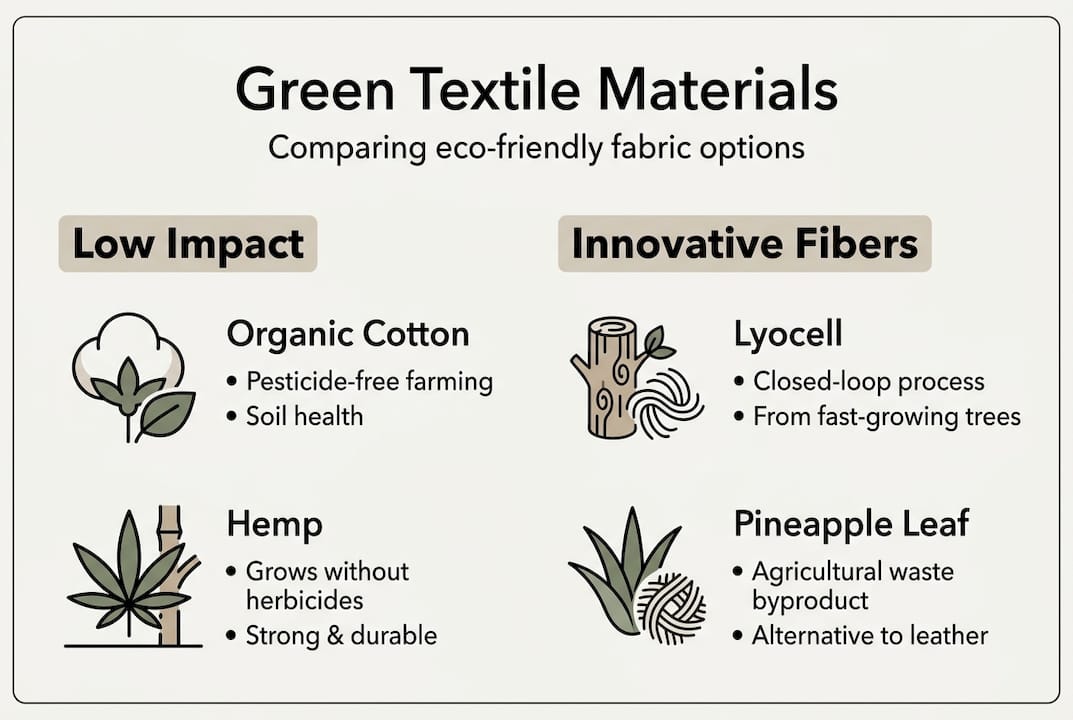
Organic cotton eliminates synthetic pesticides and GMO seeds, reducing soil and water contamination compared to conventional cotton. However, it still requires significant water for irrigation, making it less ideal in drought-prone regions. The organic label addresses chemical inputs but doesn’t automatically solve water scarcity issues.

Hemp stands out for requiring minimal water and naturally resisting pests without chemical intervention. It grows quickly, improves soil health, and produces durable fibers perfect for long-lasting garments. The main challenge is limited processing infrastructure, which can increase costs and availability constraints.
Lyocell, produced from wood pulp through a closed-loop solvent recovery system, offers a more sustainable alternative to conventional rayon. The process recycles over 99% of chemicals, drastically reducing environmental discharge. Brands like Tencel have popularized lyocell for its soft hand feel and lower ecological footprint.
Bamboo presents a tricky case. While bamboo plants grow rapidly without pesticides, most bamboo fabric is actually bamboo viscose, produced through chemical-intensive processing similar to conventional rayon. Unless labeled as mechanically processed bamboo linen, assume bamboo fabric involves toxic solvents. This is classic greenwashing, where the plant’s sustainability doesn’t translate to the finished textile.
Recycled polyester and recycled cotton reduce demand for virgin resources and divert waste from landfills. Recycled polyester cuts energy use by up to 59% compared to virgin polyester. However, recycling still requires energy and water, and polyester sheds microplastics during washing. Blending recycled synthetics with natural fibers can balance durability with reduced environmental impact.
Emerging fibers like nettle, pineapple leaf, and mushroom leather offer innovative alternatives with lower land and water requirements. These remain niche but signal the textile industry’s push toward diversified, regenerative materials.
| Material | Water use | Chemical intensity | Durability | Best for |
|---|---|---|---|---|
| Organic cotton | High | Low | Medium | T-shirts, casual wear |
| Hemp | Low | Very low | High | Durable streetwear, blends |
| Lyocell | Medium | Very low | Medium-high | Soft garments, draping |
| Bamboo viscose | Medium | High | Medium | Avoid unless certified |
| Recycled polyester | Low | Medium | High | Performance blends |
Pro Tip: For urban streetwear that balances comfort and sustainability, look for organic cotton and hemp blends or GOTS-certified lyocell. These materials deliver the soft hand feel and durability you need for everyday wear while minimizing environmental trade-offs. Check out building an eco-friendly wardrobe for more material insights.
Sustainable manufacturing methods and certifications explained
Sustainable farming practices form the foundation of green textiles. Crop rotation, natural pest control, and composting maintain soil health without synthetic inputs. Organic standards prohibit GMO seeds and require buffer zones between organic and conventional fields to prevent contamination. These methods reduce chemical runoff that pollutes waterways and harms ecosystems.
Closed-loop processing, exemplified by lyocell production, captures and recycles solvents instead of releasing them into the environment. This approach dramatically reduces water pollution and chemical waste. Contrast this with open-loop viscose production, where caustic chemicals discharge directly into rivers, and the difference becomes clear.
Green dyeing technologies replace conventional synthetic dyes with lower-impact alternatives. Enzyme-based processes, natural plant dyes, and nanoparticle applications reduce water consumption by up to 90% and eliminate toxic heavy metals like chromium and lead. Some innovative mills use CO2 dyeing, which eliminates water use entirely.
Certifications verify these practices through third-party auditing. GOTS certification covers the entire supply chain, requiring minimum 70% organic fiber content and strict environmental and social criteria at every processing stage. GOTS auditors inspect farms, mills, and factories to ensure compliance with chemical restrictions, wastewater treatment, and fair labor standards.
OEKO-TEX certification focuses on harmful substance testing, screening finished textiles for pesticide residues, heavy metals, formaldehyde, and other toxins. OEKO-TEX Standard 100 ensures the final product is safe for human contact, while OEKO-TEX Organic Cotton verifies organic fiber sourcing.
Bluesign certification takes a systems approach, evaluating input chemicals, energy use, and worker safety at manufacturing facilities. Bluesign-approved fabrics meet stringent criteria for environmental performance and consumer safety.
When buying garments, follow these verification steps:
- Look for certification labels or codes on hangtags and product descriptions
- Cross-reference certification numbers on official registry websites like GOTS or OEKO-TEX databases
- Ask retailers for supply chain documentation or transparency reports
- Prioritize brands that publish detailed sustainability information rather than vague claims
- Check for molecular traceability technologies that verify fiber origin through DNA or isotope testing
Comparing environmental impacts and navigating greenwashing pitfalls
Environmental impacts vary dramatically across fiber types. Research shows organic cotton trousers produce approximately 12.23 kg CO2e, while lyocell and hemp demonstrate lower global warming potential. Spinning and dyeing stages contribute substantial water scarcity impacts regardless of fiber type, highlighting why processing methods matter as much as raw materials.
| Fiber | CO2e per kg | Water use per kg | Biodegradable | Key concern |
|---|---|---|---|---|
| Organic cotton | 2.1 kg | 10,000 L | Yes | High water demand |
| Hemp | 1.8 kg | 2,500 L | Yes | Limited infrastructure |
| Lyocell | 2.0 kg | 6,000 L | Yes | Energy in processing |
| Recycled polyester | 3.0 kg | 1,500 L | No | Microplastic shedding |
| Conventional cotton | 5.9 kg | 20,000 L | Yes | Pesticides, water |
Chemical processing undermines sustainability claims when brands highlight eco-friendly fiber sources but hide toxic manufacturing. Bamboo viscose exemplifies this disconnect. The bamboo plant grows sustainably, but converting it to fabric through viscose processing releases carbon disulfide and other hazardous chemicals. The bamboo fabric deception reveals how marketing exploits consumer confusion between the plant and the finished textile.
Dyes and finishes affect biodegradability and landfill persistence. Synthetic dyes containing heavy metals prevent natural fibers from breaking down properly, turning theoretically biodegradable cotton into long-lasting waste. Formaldehyde-based wrinkle-resistant finishes and PFAS-based water repellents add toxic persistence that contradicts green textile goals.
Certification and molecular traceability are essential tools for identifying genuine green textiles. Without third-party verification, sustainability claims remain unverifiable marketing language. Demand transparency and proof.
Greenwashing traps to avoid:
- Vague terms like “eco-friendly” or “natural” without certification backing
- Highlighting one sustainable attribute while ignoring others, like promoting organic fiber but hiding chemical dyeing
- Misleading imagery of nature and greenery that implies sustainability without substantive claims
- Percentage tricks, such as “made with recycled materials” when only 5% is actually recycled
- Lack of supply chain transparency or refusal to provide certification verification
For practical guidance on spotting authentic sustainable fashion, explore sustainable streetwear styling tips that connect material knowledge with wardrobe building.
Practical tips for choosing and caring for green textiles in urban streetwear
Selecting truly green textiles requires moving beyond marketing claims to verify credentials and prioritize durability. Follow these steps:
- Check for GOTS, OEKO-TEX, or Bluesign certification labels and verify codes through official databases
- Prioritize organic cotton, hemp blends, or certified lyocell for core wardrobe pieces like tees and hoodies
- Evaluate garment construction quality, looking for reinforced seams and durable stitching that extends lifespan
- Choose versatile, timeless designs over trendy pieces that quickly fall out of rotation
- Ask retailers about supply chain transparency and request documentation for sustainability claims
- Consider fiber blends that balance natural content with durability, such as organic cotton with recycled polyester reinforcement
Pro Tip: GOTS-certified organic cotton and hemp blends offer the best combination of comfort, durability, and verified sustainability for streetwear. Look for molecular traceability technologies that use DNA or isotope testing to confirm fiber origin, providing an extra layer of verification beyond traditional certification.
Caring for green textiles sustainably extends their environmental benefits. Wash less frequently, spot-clean when possible, and use cold water to reduce energy consumption. Air drying prevents fiber degradation from high heat and cuts electricity use. When washing is necessary, use eco-friendly detergents free from phosphates and optical brighteners that harm aquatic ecosystems.
Prioritize these traits when building your sustainable streetwear collection:
- Certification from recognized standards, not just brand claims
- Durability that supports years of regular wear
- Versatility for mixing across multiple outfits and occasions
- Timeless style that transcends seasonal trends
- Proper fit that encourages frequent wear rather than closet storage
Urban lifestyles demand practical, low-maintenance clothing that moves seamlessly from campus to coffee shop to creative workspace. Green textiles meet these needs when you choose quality over quantity and prioritize pieces that work hard across your weekly rotation. Avoiding overproduction and trend-chasing delivers more sustainability impact than any single fiber choice.
For comprehensive guidance on building a functional, sustainable wardrobe, visit master streetwear style with an organic wardrobe and how to style sustainable streetwear for outfit inspiration that proves eco-conscious fashion doesn’t compromise on style.
Explore sustainable streetwear options at Mexess
Now that you understand what makes textiles truly green, put that knowledge into action. Mexess specializes in GOTS-certified organic cotton streetwear designed for urban lifestyles that demand both style and sustainability. Every piece meets strict environmental and social standards, giving you confidence that your wardrobe choices align with your values.
Our collections focus on versatile essentials like tees, hoodies, and sweatshirts built for durability and timeless style. We prioritize transparent supply chains and third-party certification over vague eco-claims, so you can shop with clarity instead of confusion.

Explore our eco-friendly streetwear guide for tips on building a sustainable wardrobe foundation, or dive into stylish sustainable streetwear tips for outfit inspiration. Mexess makes it simple to choose certified green textiles without sacrificing the clean, modern aesthetic that defines contemporary streetwear.
Frequently asked questions about green textiles
What makes a textile ‘green’?
A textile qualifies as green when it minimizes environmental impact through organic or recycled fiber sourcing, low-impact processing methods, and reduced chemical use across production. Certified supply chains verify these claims through third-party auditing against measurable environmental and social standards.
Are bamboo fabrics always eco-friendly?
No. While bamboo plants grow sustainably, most bamboo fabric is bamboo viscose produced through chemical-intensive processing that releases toxic solvents. Look for certifications and processing details to assess true sustainability. Mechanically processed bamboo linen offers better eco-credentials but remains rare.
How can I verify if a textile is truly sustainable?
Check for certifications like GOTS, OEKO-TEX, or Bluesign and verify certification numbers through official registry databases. Ask retailers for supply chain documentation or transparency reports. Prioritize brands that provide detailed sustainability information and molecular traceability rather than vague marketing claims.
Do green textiles last as long as conventional ones?
Many green textiles like organic cotton and hemp blends offer durability equal to or exceeding conventional options. Hemp particularly excels in strength and longevity. Choosing certified fabrics with quality construction and following proper care instructions extends garment lifespan regardless of fiber type.
Can recycling polyester reduce environmental impact?
Yes. Recycled polyester lowers virgin resource demand and reduces carbon footprint by up to 59% compared to virgin polyester. However, recycling still requires energy, and polyester sheds microplastics during washing. Balancing recycled synthetics with natural fibers in blends offers durability while minimizing overall environmental trade-offs.
Leave a comment