

Not all ethical fashion labels mean the same thing, and that gap matters more than most shoppers realize. You might grab a hoodie stamped with a vague “responsibly made” claim and assume workers were treated fairly, but that phrase carries zero legal weight. Fair Trade apparel is different. It operates under verified, third-party standards with real accountability. A 2025 evidence mapping report covering 122 studies found that 90% of Fair Trade cooperatives report positive economic outcomes. This guide breaks down exactly what Fair Trade apparel certifies, how it works, and how to use it to build a wardrobe you can actually feel good about.
Key Takeaways
| Point | Details |
|---|---|
| Fair Trade ensures fair labor | Fair Trade apparel means verified fair wages, safe work, and community support for workers. |
| Certification has real impact | Studies show significant wage and living condition improvements for Fair Trade workers and their communities. |
| Not a silver bullet | Limitations remain on wages and organic coverage, so pairing certifications gives better results. |
| Shop with purpose | Look for both Fair Trade and organic labels to align with true eco-conscious streetwear values. |
What is fair trade apparel?
Fair Trade apparel is clothing produced under verified standards set by recognized certifying organizations. These aren’t self-reported claims. Fair Trade certified clothing is verified by bodies like Fair Trade USA, Fairtrade International, or the World Fair Trade Organization (WFTO), each using third-party audits to confirm that workers receive fair wages, operate in safe conditions, and benefit from a community premium fund.
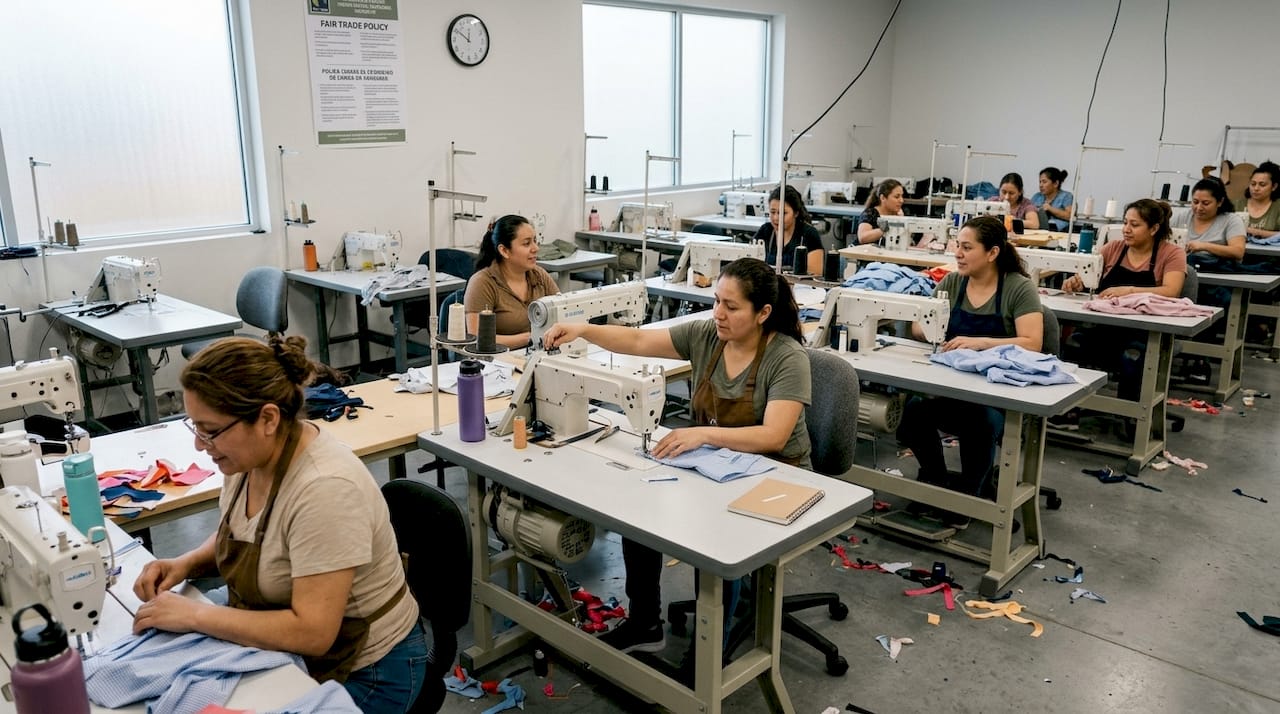
That last part is key. The premium is an extra payment on top of wages, directed into a worker-controlled fund used for things like healthcare, education, or infrastructure. It’s a structural benefit, not a marketing promise.
Here’s what Fair Trade apparel specifically guarantees:
- Fair wages above minimum wage floors set by the certifying body
- Safe working conditions verified through on-site audits
- No child or forced labor as a baseline requirement
- Community premiums paid into worker-managed funds
- Traceability across key parts of the supply chain
What it does not automatically guarantee is organic materials, zero environmental impact, or full supply chain coverage. That distinction matters when you’re comparing labels at checkout.
How does Fair Trade certification work?
Now that you know what Fair Trade apparel means, here’s how a T-shirt or a hoodie actually earns that label. The process is more rigorous than most people expect.
Certification follows a structured path from producer to retailer:
- Producer application — A farm or factory applies to a certifying body and undergoes an initial audit covering wages, labor rights, and working conditions.
- Standards review — The operation must meet minimum price floors and agree to pay the Fairtrade Premium into a community fund.
- Third-party audit — Organizations like FLOCERT conduct annual independent audits covering labor rights, no child or forced labor, traceability, and some environmental standards.
- Certification granted — Once approved, the producer can sell certified goods to licensed brands and retailers.
- Annual renewal — Certification isn’t permanent. Producers are re-audited each year to maintain their status.
Retailers also have obligations. They must pay the minimum price even when market prices drop, which protects producers from volatile commodity swings. That price floor is one of the most meaningful protections in the system.
Pro Tip: When shopping, look for the specific certifier’s seal, not just the words “fair trade.” The FLOCERT-audited Fairtrade International mark and the Fair Trade USA seal have different scope and standards, so knowing which one you’re looking at helps you shop smarter.
What does Fair Trade actually achieve?
With the certification process demystified, let’s see what impact Fair Trade actually has in the real world. The data is more encouraging than skeptics often admit.
A comprehensive evidence mapping study published in 2025 analyzed 122 studies conducted between 2021 and 2024. The findings showed positive effects across price stability (21 studies), higher incomes (10 studies), better labor conditions (26 studies), and community investments. Ninety percent of Fair Trade cooperatives reported positive economic outcomes.
| Impact area | Number of supporting studies | Key finding |
|---|---|---|
| Price stability | 21 | Reduced income volatility for producers |
| Higher incomes | 10 | Measurable wage improvements |
| Better labor conditions | 26 | Safer workplaces, fewer violations |
| Community investment | Multiple | Schools, clinics, infrastructure funded |
“The evidence consistently shows that Fair Trade certification creates real, measurable improvements in the lives of workers and their communities, particularly when cooperatives have autonomy over how premiums are spent.”
Those community premiums are often the most visible outcome. In cotton-producing regions, premium funds have financed clean water access, school construction, and maternal health programs. These aren’t abstract benefits. They’re structural changes that outlast any single harvest or production cycle.
Limitations and critiques: Is Fair Trade always enough?
While evidence supports many benefits, there’s a crucial side of the story that aware shoppers should know. Fair Trade is not a complete solution, and treating it as one can lead to overconfidence at checkout.
One of the most persistent issues is the living wage gap. Even with Fair Trade protections in place, many garment workers still earn below a true living wage. Wage data from Pakistan in 2023 shows an average net wage of $125.62 per month against a living wage gap of 20%. In Cambodia, the basic wage sits at $208 versus a $232 living wage benchmark, with workers relying on overtime to close the gap.
Other real limitations include:
| Limitation | What it means for shoppers |
|---|---|
| Partial certification | Only a fraction of a factory’s output may be Fair Trade certified |
| Environmental gaps | Fair Trade doesn’t require organic materials or restrict all chemicals |
| Small producer burden | Upfront audit costs can be prohibitive for smaller operations |
| Scope limits | Not all supply chain tiers are always covered |
Some critics of Fair Trade also argue that the model can create dependency rather than systemic change, and that premiums sometimes don’t reach the most vulnerable workers. These are valid concerns worth holding alongside the positive data.
Fair Trade vs. organic and other ethical apparel labels
Building on these limitations, shoppers are looking for certifications that address both people and planet. Here’s how Fair Trade stacks up against other major labels.
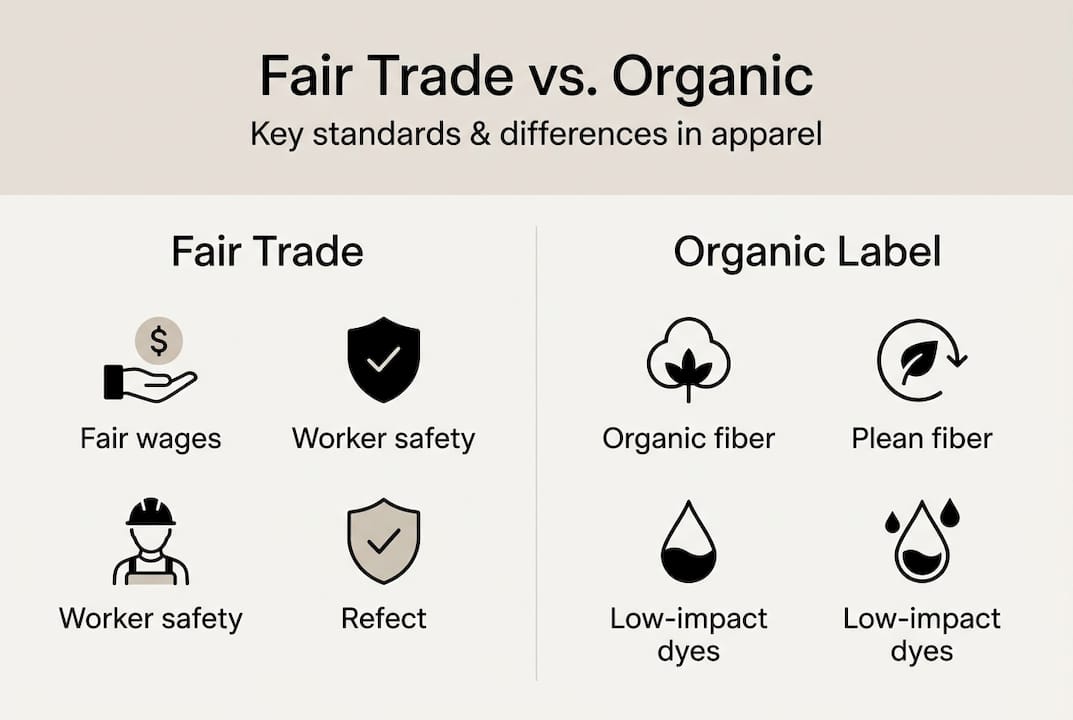
The Global Organic Textile Standard (GOTS) is the most recognized organic certification in fashion. It focuses heavily on chemical safety, water use, and environmental impact throughout the textile supply chain. But its labor standards, while present, are lighter than what Fair Trade requires.
Fair Trade flips that balance. It’s strong on labor protections and community investment but historically lighter on environmental requirements. The Fairtrade Textile Standard does cover the full apparel supply chain, targeting living wages within six years and including chemical management, but it doesn’t match GOTS on environmental depth.
Here’s a quick breakdown:
- Fair Trade: Strong labor rights, community premiums, wage floors, lighter on environmental standards
- GOTS: Rigorous environmental and chemical standards, moderate labor protections
- Fair Trade + GOTS combined: The most complete coverage for both people and planet
- “Sustainable” or “eco-friendly” (unverified): No guaranteed standards, often marketing language
Pro Tip: If you want a hoodie or organic tee that checks every box, look for pieces that carry both a Fair Trade and a GOTS certification. It’s the clearest signal that a brand has done the work on all fronts.
How to shop Fair Trade apparel for stylish, sustainable streetwear
After comparing certifications, here’s how you can apply this knowledge when you build your own sustainable wardrobe. The goal isn’t perfection. It’s making more informed choices, consistently.
Start with these practical steps:
- Check the seal, not just the claim. Look for logos from Fair Trade USA, Fairtrade International, or WFTO. Vague phrases like “ethically sourced” without a certifier mean nothing.
- Research the brand’s supply chain transparency. Brands that publish factory lists and audit results are far more trustworthy than those that don’t.
- Pair certifications for full impact. Combine Fair Trade with GOTS when possible for both labor and environmental coverage.
- Explore certified brands in the streetwear space. AMO Apparel produces 100% organic handmade pieces in Poland, and brands like OecoTag use Fair Trade certified factories with organic cotton. These prove that certified and stylish aren’t mutually exclusive.
- Spot greenwashing fast. If a brand uses sustainability language but can’t name its certifier or auditor, that’s a red flag.
For curated picks that blend organic materials with real style, check out organic T-shirt brands and eco-friendly streetwear guides that cut through the noise and highlight pieces worth wearing.
Discover more about sustainable streetwear
Ready to put these insights into action? Understanding Fair Trade is one piece of the puzzle. The next step is finding brands that actually deliver on both style and substance, without making you choose between the two.

At MEXESS, we build our collections around premium organic cotton and transparent sourcing because we believe your wardrobe shouldn’t cost the planet or the people making it. Whether you’re looking for a clean-cut tee for campus or a relaxed hoodie for city days, our pieces are designed to last and made with materials you can trust. Explore our organic streetwear picks to find styles that align with how you actually live, and shop with the confidence that comes from knowing exactly what’s in your clothes.
Frequently asked questions
Who certifies Fair Trade apparel?
Leading certifiers include Fair Trade USA, Fairtrade International, and the World Fair Trade Organization, each using strict third-party audits to verify compliance across wages, labor rights, and community premiums.
Does Fair Trade apparel guarantee organic materials?
No. Fair Trade focuses primarily on labor standards and community investment. Some Fair Trade products use organic cotton, but the certification itself does not require it.
Is Fair Trade clothing always more expensive?
Fair Trade apparel often carries a higher price point due to minimum pricing and audit costs, but growing consumer demand is pushing more brands to absorb some of those costs, making certified options more accessible.
How does Fair Trade impact worker wages?
Fair Trade raises wage floors and improves conditions, but living wage gaps remain in many producing countries. Pakistan’s 2023 average garment wage was still 20% below a living wage benchmark.
Can I combine Fair Trade and organic certifications?
Absolutely. Pairing Fair Trade with GOTS organic certification gives you the strongest combined coverage for both labor rights and environmental standards in a single garment.


0 comments