

Finding premium basics for city life is not just about style but about making choices that align with your values. For European shoppers who prioritize minimalist fashion and environmental impact, understanding what makes cotton ‘organic’ is crucial. Organic cotton production means no synthetic pesticides, no genetically modified seeds, and robust support for biodiversity. This introduction breaks down how these standards affect not only your comfort but also the planet and people behind your favorite streetwear essentials.
Table of Contents
- What Makes Cotton ‘Organic’ in Fashion
- Environmental Impact of Organic Cotton Production
- Benefits for Skin, Comfort, and Everyday Wear
- Comparing Organic Cotton to Conventional Alternatives
- Supporting Ethical Fashion and Urban Lifestyles
Key Takeaways
| Point | Details |
|---|---|
| Organic Cotton Benefits | Organic cotton eliminates synthetic chemicals, making it safer for sensitive skin and more comfortable to wear. |
| Environmental Impact | Choosing organic cotton supports sustainable farming practices that improve soil health and reduce pollution. |
| Higher Standards of Production | GOTS certification ensures transparency and adherence to strict ecological and social criteria in the supply chain. |
| Ethical Fashion | Purchasing organic cotton helps support fair wages and safe working conditions for farmers and workers globally. |
What Makes Cotton ‘Organic’ in Fashion
Organic cotton isn’t just a marketing label. It’s cotton grown using fundamentally different agricultural practices that shape everything from how the fiber feels on your skin to its environmental impact.
At its core, organic cotton production means no synthetic pesticides, no genetically modified seeds, and no hazardous chemicals during cultivation. Organic cotton is grown without highly toxic substances, relying instead on sustainable farming methods that build soil health and support biodiversity. This isn’t a minor distinction. It changes the entire supply chain.
Here’s what separates organic from conventional cotton:
-
No synthetic pesticides: Conventional cotton uses roughly 16% of global pesticide volume despite occupying only 2.5% of farmland. Organic farming eliminates these chemicals entirely.
-
Non-GMO seeds: Organic cotton uses non-genetically modified plants grown without synthetic agricultural chemicals approved for organic labeling.
-
Biodiversity and soil cycles: Organic farms rotate crops, preserve natural predators, and build living soil instead of depleting it year after year.
-
Strict certification standards: Programs like GOTS (Global Organic Textile Standard) verify that cotton meets rigorous ecological and social criteria from farm to finished garment.
Why This Matters for Your Wardrobe
When you wear organic cotton basics, you’re wearing fiber that was grown with fewer environmental toxins and better labor practices. The difference extends beyond ethics. Organic cotton fibers often have superior softness and durability compared to conventional cotton because the plant develops strength through natural stress rather than chemical shortcuts.
Production standards ensure transparency. A GOTS-certified organic cotton hoodie or tee has been tracked from seed to manufacturing, with each step audited for environmental and social compliance. This matters when you’re investing in pieces designed to last years, not seasons.
Conventional cotton, by contrast, prioritizes yield and cost. The farming practices leave chemical residues in the soil and require intensive water usage. For an urban streetwear enthusiast building a sustainable wardrobe, choosing organic cotton pieces creates compounding value over time—better quality, less environmental guilt, clearer conscience.
Organic certification ensures your cotton underwent rigorous testing at every production stage, from soil quality to worker welfare standards.
Pro tip: When shopping for organic cotton streetwear essentials like hoodies or tees, verify the GOTS certification tag or product description explicitly states “certified organic cotton.” This single detail confirms the entire supply chain meets strict standards, not just the farming stage.
Environmental Impact of Organic Cotton Production
Conventional cotton farming depletes soil, contaminates water, and harms ecosystems at scale. Organic cotton production flips this equation by working with natural systems instead of against them.
The difference starts in the soil. Conventional cotton relies heavily on synthetic fertilizers and pesticides that degrade soil structure over time, reducing its ability to retain water and support microorganisms. Organic farming avoids these chemicals entirely, building soil health through crop rotation, natural composting, and biological pest control.
Organic cotton production uses natural farming methods that improve soil quality and conserve water while reducing the environmental damage caused by chemical-intensive agriculture. This matters because healthy soil acts as a carbon sink, storing carbon that would otherwise contribute to climate change.
Here’s a clear side-by-side view of organic and conventional cotton production impacts:
| Aspect | Organic Cotton | Conventional Cotton |
|---|---|---|
| Soil Health | Improves with rotation | Depletes over time |
| Water Quality | Protected from chemicals | Risk of pollution |
| Worker Safety | Safer, fewer toxins | Hazardous exposure |
| Biodiversity | Enhanced by natural cycles | Reduced by monoculture |
| Certification | Requires strict audits | Rarely audited |
Here’s what changes when cotton is grown organically:
-
Zero synthetic pesticides: Conventional cotton accounts for roughly 16% of global pesticide use despite occupying only 2.5% of farmland. Organic elimination of these chemicals protects groundwater and agricultural worker health.
-
Water conservation: Organic methods improve soil’s natural water retention, reducing irrigation demands compared to chemically depleted conventional soil.
-
Biodiversity restoration: Sustainable crop rotations and natural pest management preserve insect populations and plant diversity that conventional monoculture eliminates.
-
No genetically modified seeds: Organic farming avoids genetically modified seeds, reducing dependency on proprietary breeding and chemical inputs tied to GMO crops.
Real Impact on Ecosystem Resilience
Organic cotton farms build long-term ecosystem health. Conventional cotton leaves the soil depleted after harvesting, requiring increased chemical inputs each season to maintain yields. Organic farms, by contrast, improve over time as soil biology strengthens and natural pest controls establish themselves.
For European streetwear shoppers building sustainable wardrobes, this matters beyond abstract environmental ethics. Organic cotton pieces support farming practices that don’t destroy the agricultural systems future production depends on. You’re not just buying a hoodie—you’re investing in regenerative agriculture.
Organic cotton production eliminates synthetic chemical inputs entirely, protecting soil, water systems, and farm worker health while restoring long-term ecosystem resilience.
Pro tip: Check product descriptions for certifications like GOTS or Organic Content Standard (OCS) labels; these verify the cotton was grown using regenerative methods that actively improve soil health rather than merely avoiding harmful chemicals.
Benefits for Skin, Comfort, and Everyday Wear
Organic cotton feels different on your skin from the moment you put it on. This isn’t just subjective—it’s rooted in how the fiber is grown and processed without chemical residues.

Conventional cotton retains traces of synthetic pesticides and chemical treatments applied during cultivation and manufacturing. Your skin absorbs these residues directly, especially problematic for anyone with sensitivity or conditions like eczema. Organic cotton eliminates this exposure entirely.
Organic cotton is hypoallergenic and free from synthetic chemical residues that trigger irritation on sensitive skin. It’s softer and more breathable, helping regulate temperature and maintain skin moisture balance throughout the day. For urban streetwear basics you wear daily, this matters significantly.
This table summarizes key comfort and skin benefits for daily wear:
| Benefit | Organic Cotton | Conventional Cotton |
|---|---|---|
| Skin Sensitivity | Hypoallergenic, safer | May cause irritation |
| Breathability | High, regulates moisture | Often traps heat/moisture |
| Lasting Softness | Stays soft after washes | Tends to stiffen |
| Chemical Exposure | No residual irritants | Possible chemical traces |
The comfort advantage compounds over time:
-
Zero chemical irritants: No synthetic dyes, finishing agents, or pesticide residues means less inflammation and fewer breakouts for sensitive skin types.
-
Superior breathability: Organic cotton’s natural fiber structure breathes better, wicking moisture away and preventing the clammy feeling conventional cotton can trap against skin.
-
Softness that lasts: Without chemical stiffeners and coatings, organic cotton maintains its softness wash after wash instead of becoming rough or brittle.
-
Temperature regulation: The fabric naturally adapts to your body’s temperature, keeping you comfortable in transitional weather without overheating.
Why This Matters for City Living
You’re wearing your streetwear pieces constantly—commuting, sitting in cafes, moving through dense urban environments. Chemical-treated cotton creates a barrier between your skin and breathable fabric, leading to discomfort during long days. Organic cotton performs better precisely when you need it most.
For anyone dealing with dermatitis, eczema, or simply reactive skin, the difference is immediate. The absence of chemical residues means fewer flare-ups and genuine comfort rather than tolerating mild irritation all day.
Premium minimalist pieces in organic cotton justify their price point through daily wearability. You’re not buying a garment that looks good for a few months—you’re investing in a piece that feels better, breathes better, and performs better throughout years of regular wear.
Organic cotton eliminates chemical irritants entirely, creating a genuinely hypoallergenic fabric that maintains its softness and breathability through countless washes.
Pro tip: If you have sensitive skin or experience irritation from typical streetwear basics, try a small organic cotton piece first—a tee or lightweight hoodie—to experience the comfort difference before committing to a larger wardrobe investment.
Comparing Organic Cotton to Conventional Alternatives
The choice between organic and conventional cotton comes down to what matters most: immediate cost, environmental impact, long-term comfort, or a combination of factors. Neither is perfect, but the trade-offs are worth understanding.
Conventional cotton prioritizes yield and affordability through chemical intervention. Synthetic pesticides, fertilizers, and genetically modified seeds maximize production, keeping prices lower at retail. The downside is systemic—soil degradation, water pollution, and chemical residues in the final garment.
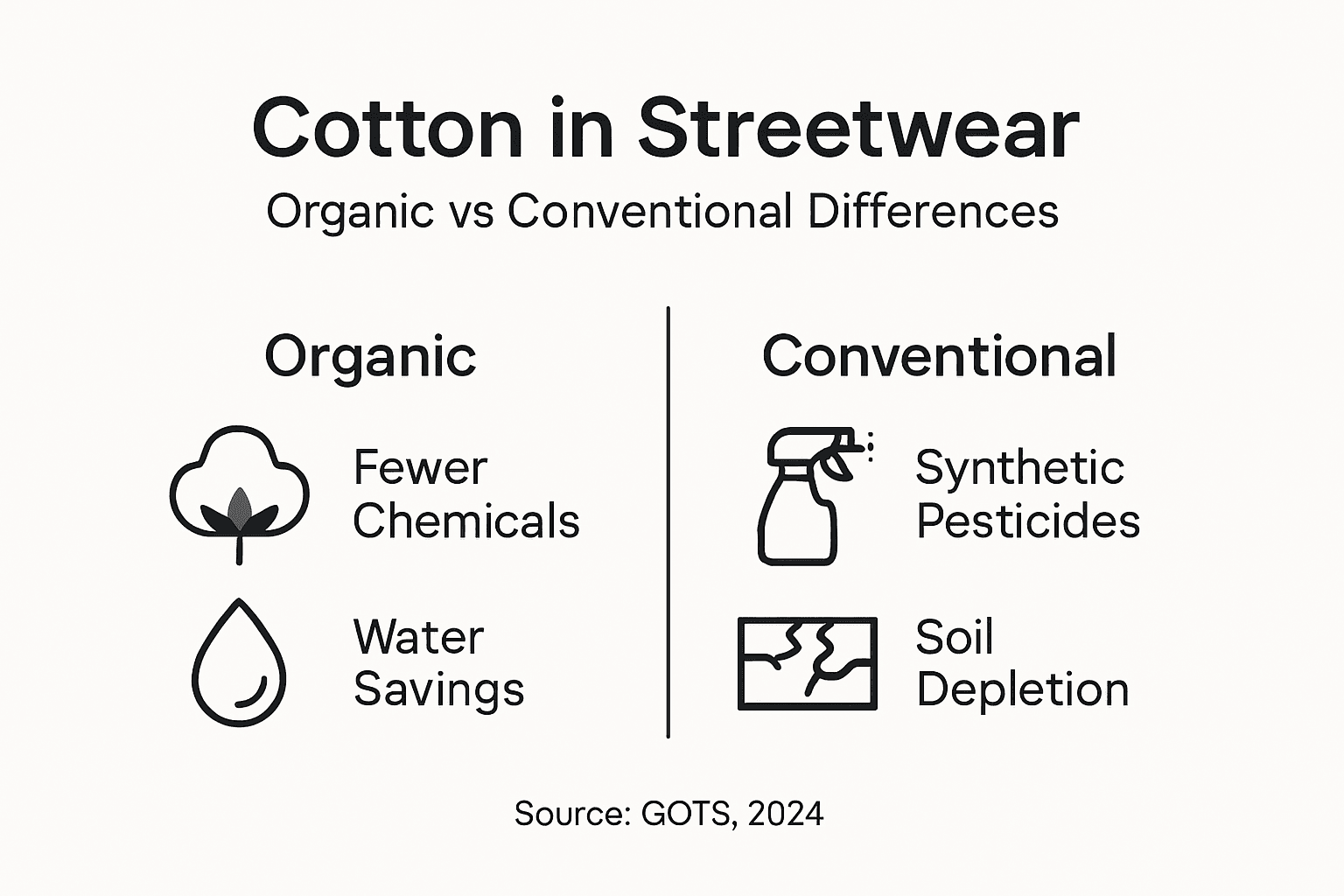
Organic cotton takes the opposite approach. Organic cotton farming uses non-GMO seeds and natural inputs rather than synthetic pesticides and fertilizers, emphasizing soil health, crop rotation, and integrated pest management. The result is cleaner fabric, better environmental outcomes, and superior long-term sustainability—but often at higher upfront cost.
The practical differences break down like this:
-
Yield and cost: Conventional cotton produces more per acre, lowering raw material costs. Organic faces yield gaps, increasing production expenses.
-
Chemical inputs: Conventional relies heavily on synthetic solutions for pest and weed control. Organic uses biological methods and crop diversity.
-
Soil health: Organic cotton significantly reduces pesticide use, building soil quality over time. Conventional depletes soil, requiring increased chemical inputs each season.
-
Fiber quality: Organic cotton is typically softer and more breathable due to absence of chemical stiffeners and residues.
-
Water usage: Water consumption depends on region and climate, not production method—both systems require irrigation in dry areas.
The Real Cost of Each Choice
Conventional cotton appears cheaper initially. A basic tee costs less because production expenses are lower. But that price reflects externalized costs: environmental cleanup, farmer health impacts, and degraded agricultural land future crops depend on.
Organic cotton costs more upfront because regenerative farming requires labor-intensive management and lower yields. You’re paying for soil restoration, chemical elimination, and genuine sustainability practices. For minimalist streetwear designed for years of wear, this investment pays dividends through superior durability and comfort.
For European shoppers building capsule wardrobes, organic cotton basics represent smarter economics. A premium organic tee outlasts three conventional alternatives through better fiber integrity and wearability.
Conventional cotton maximizes short-term yield through chemicals; organic cotton builds long-term soil health and produces superior fiber quality, justifying higher prices through durability and environmental responsibility.
Pro tip: Start your organic cotton transition with bestseller basics like heavyweight tees or essential hoodies; these high-rotation pieces deliver maximum comfort and durability benefits, making the price premium easiest to justify.
Supporting Ethical Fashion and Urban Lifestyles
Choosing organic cotton streetwear is more than a personal comfort choice. It’s a vote for how fashion should work globally—with fair wages, safe conditions, and environmental respect built into every step.
Conventional fashion often hides uncomfortable truths. Cotton farmers in developing nations work without safety equipment, exposure to pesticides causes health problems, and wages barely cover living expenses. Organic cotton farming addresses these issues directly by requiring safer working conditions and sustainable practices.
Ethical fashion initiatives connect artisans and marginalized communities to global markets, providing fair wages and decent working conditions alongside environmental benefits. When you buy organic cotton basics, you’re supporting supply chains that prioritize human dignity alongside sustainability. This matters for urban shoppers who want their wardrobes to reflect their values.
Here’s what ethical organic cotton production includes:
-
Fair wages: Farmers and workers earn sustainable income, not subsistence wages that trap families in poverty.
-
Safe working conditions: No pesticide exposure without protection. No child labor. No exploitative practices.
-
Community investment: Sustainable fashion initiatives promote supply chain transparency and social inclusion, supporting rural economies and women’s empowerment.
-
Long-term partnerships: Ethical brands build relationships with suppliers, ensuring stability instead of extracting profit then abandoning producers.
-
Environmental stewardship: Chemical elimination protects farmer health and community water supplies for generations.
How Urban Streetwear Connects to Global Impact
Your city wardrobe connects you to cotton farmers you’ll never meet—in India, Senegal, or Peru. When you choose organic, those invisible connections support regenerative agriculture and dignified livelihoods instead of exploitation.
Minimalist streetwear built from organic cotton creates less waste and supports better people. A quality tee worn for years creates less environmental damage and supports a farmer earning fair compensation than fast fashion replaced monthly.
European shoppers increasingly recognize this. Your fashion choices reflect your values. Organic cotton pieces signal commitment to ethical consumption without requiring sacrifice or compromise on quality and style.
Ethical organic cotton production ensures fair wages, safe conditions, and environmental protection, creating supply chains that respect both people and planet.
Pro tip: Look for transparency in product descriptions; brands that share supplier information, certification details, and impact stories demonstrate genuine commitment to ethical practices beyond marketing language.
Elevate Your Urban Wardrobe with Premium Organic Cotton Streetwear
The article highlights the challenges of toxic conventional cotton farming and the comfort and ethical benefits of organic cotton for city living. If you want to avoid harmful chemical residues, support regenerative agriculture, and enjoy superior softness and breathability in your streetwear essentials, it is time to make a mindful switch. Your skin and conscience will thank you for choosing sustainably grown fabric that supports fair wages and protects the environment.

Discover how MEXESS makes embracing organic cotton effortless with our curated collections of premium hoodies, tees, and sweatshirts designed for modern urban lifestyles. Every piece blends minimalist design with sustainable materials and transparent sourcing you can trust. Ready to build a wardrobe that reflects your values while delivering lasting comfort and style Look no further than MEXESS where sustainable streetwear meets versatility. Start your journey today and enjoy the confidence of wearing ethically made organic cotton that truly matters.
Explore more about why organic cotton matters and shop your new staples now at MEXESS.
Frequently Asked Questions
What are the key differences between organic cotton and conventional cotton?
Organic cotton is grown without synthetic pesticides, genetically modified seeds, and hazardous chemicals. It focuses on sustainable farming practices that enhance soil health and biodiversity, whereas conventional cotton relies heavily on chemicals that can deplete soil and harm ecosystems.
How does wearing organic cotton benefit my skin?
Organic cotton is hypoallergenic and free from synthetic chemical residues, making it safer for sensitive skin. It offers superior breathability and maintains softness, reducing the risk of skin irritation compared to conventional cotton, which may contain chemical traces.
Why is organic cotton considered more sustainable?
Organic cotton farming practices focus on building soil health, conserving water, and enhancing biodiversity. By eliminating synthetic inputs and promoting regenerative methods, organic cotton contributes to long-term ecosystem resilience and minimizes environmental damage.
How can I verify that the cotton in my clothing is truly organic?
Look for certifications like GOTS (Global Organic Textile Standard) or Organic Content Standard (OCS) on product labels. These certifications ensure that the cotton has been grown and processed following strict environmental and social criteria throughout the supply chain.
Leave a comment