

More than 60% of American Gen Z shoppers now demand eco friendly options in their wardrobes. As sustainability moves from niche to mainstream, finding streetwear that matches your style and values can feel like a challenge. Young consumers worldwide want clothing that looks good and does good. This guide breaks down exactly how to shop smarter for trendy streetwear made with sustainable materials, so every purchase fits your personal vibe and responsible fashion goals.
Table of Contents
- Step 1: Define Your Streetwear Style Preferences
- Step 2: Research Top Sustainable Streetwear Brands
- Step 3: Evaluate Product Details And Materials
- Step 4: Compare Prices And Exclusive Deals
- Step 5: Verify Customer Reviews And Return Policies
- Step 6: Complete Your Streetwear Purchase Securely
Quick Summary
| Key Insight | Explanation |
|---|---|
| 1. Define Your Personal Style | Identify what shapes your streetwear preferences, including cultural influences and personal values. |
| 2. Research Sustainable Brands | Investigate brands committed to ethical practices; check for certifications and ensure transparency. |
| 3. Analyze Materials and Textiles | Evaluate the fabric composition and sourcing to support sustainability and lower environmental impact. |
| 4. Compare Prices Thoughtfully | Consider longevity and quality when assessing prices; look for discounts and unity of value over cost. |
| 5. Check Reviews and Return Policies | Understand customer feedback and return options, ensuring informed purchases and positive experiences. |
Step 1: Define your streetwear style preferences
Defining your streetwear style is about discovering a personal aesthetic that authentically represents your identity and values. When exploring sustainable streetwear, you’ll want to understand how personal values shape fashion choices.
Start by examining your cultural influences, social circles, and the visual aesthetics that resonate with you. Are you drawn to minimalist designs or bold graphic statements? Do you prefer oversized silhouettes or more fitted cuts? Consider how your style reflects not just fashion trends but your personal narrative. The key is understanding that streetwear is more than clothing its a form of self expression that connects to broader cultural contexts.
Take time to research different streetwear subgenres. This might include examining hip hop inspired looks, skate culture aesthetics, or contemporary urban minimalism. Look through social media platforms like Instagram and Pinterest to curate visual inspiration boards that capture your emerging style preferences. Pay attention to how cultural events and influential figures guide individual style decisions.
Pro Tip: Create a digital mood board with screenshots and saved images that capture your ideal streetwear aesthetic to help crystallize your personal style vision.
Step 2: Research top sustainable streetwear brands
Researching sustainable streetwear brands requires strategic exploration of fashion labels committed to ethical and environmental standards. Consumer awareness is driving demand for responsible fashion that aligns with personal values and global sustainability goals.
Start your research by investigating brands that prioritize transparent supply chains, use eco friendly materials, and demonstrate genuine commitment to circular economy principles. Look beyond marketing claims and dig into each brand’s sustainability reports, material sourcing practices, and manufacturing processes. Check for certifications like Global Organic Textile Standard (GOTS), Fair Trade, or B Corp that validate a brand’s environmental and social responsibility.
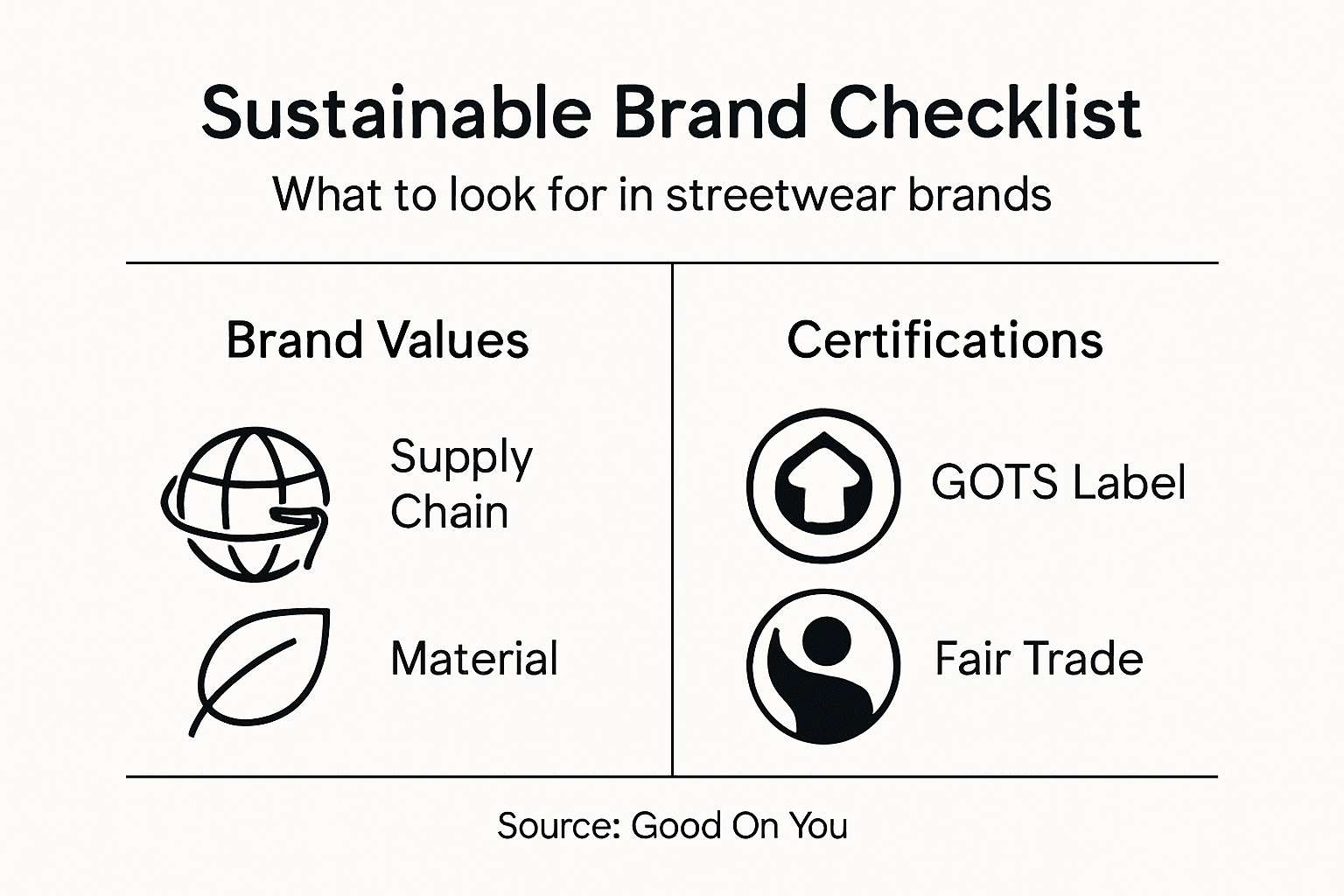
Here’s a summary of key sustainability certifications commonly found in streetwear:
| Certification | Focus Area | Benefits for Consumers |
|---|---|---|
| GOTS (Global Organic Textile Standard) | Organic materials | Assures no harmful chemicals used |
| Fair Trade | Ethical labor practices | Supports fair wages for workers |
| B Corp | Social & environmental | Verifies high standards overall |
| Bluesign | Safe manufacturing | Reduces water and energy use |
| OEKO-TEX Standard 100 | Harmful substance testing | Guarantees textiles are safe for skin |
Utilize online platforms specialized in sustainable fashion to streamline your research. Websites like Good On You, Ethical Fashion Guide, and sustainability focused fashion blogs offer comprehensive brand ratings and detailed insights into streetwear companies’ environmental impact. Cross reference information from multiple sources to ensure you are getting a nuanced understanding of each brand’s actual sustainability practices.
Pro Tip: Create a spreadsheet tracking different sustainable streetwear brands, noting their key environmental practices, price ranges, and style aesthetics to help you make informed purchasing decisions.
Step 3: Evaluate product details and materials
Evaluating sustainable streetwear goes beyond aesthetics into a comprehensive assessment of environmental and ethical impact. Sustainable textile selection requires careful analysis of materials, manufacturing processes, and long term sustainability considerations.
Look closely at the fabric composition and origin. Prioritize materials like organic cotton, recycled polyester, hemp, and bamboo that have lower environmental footprints. Check for specific certifications such as Global Organic Textile Standard (GOTS) or Bluesign that validate sustainable manufacturing practices. Pay attention to details like water usage, chemical treatments, and the overall carbon footprint associated with fabric production. Multicriteria assessment helps understand product sustainability by examining environmental and social dimensions beyond surface level characteristics.

Utilize digital tools and brand transparency reports to dig deeper into material sourcing. Many forward thinking streetwear brands now provide detailed breakdowns of their material origins, including the percentage of recycled content, water savings, and carbon emissions reduction. Dont just accept marketing claims examine the specific data and methodologies behind their sustainability statements.
Below is a comparison of popular sustainable materials for streetwear:
| Material | Environmental Impact | Typical Streetwear Use |
|---|---|---|
| Organic Cotton | Reduces pesticide use | Hoodies, tees, joggers |
| Recycled Polyester | Lowers plastic pollution | Jackets, outerwear, caps |
| Hemp | Minimal water required | T-shirts, hats, sweatshirts |
| Bamboo | Fast renewable growth | Soft tees, basics, socks |
Pro Tip: Download brand sustainability reports and create a comparison matrix to track and compare the environmental credentials of different streetwear materials and manufacturers.
Step 4: Compare prices and exclusive deals
Comparing prices in sustainable streetwear requires a nuanced approach that goes beyond simple cost comparisons. Sustainability impacts streetwear pricing strategies in complex ways that demand careful evaluation of value and long term investment.
Start by creating a comprehensive price tracking system across multiple sustainable streetwear platforms. Look beyond the initial price tag and consider factors like product durability, manufacturing transparency, and potential longevity. Affordable sustainable fashion balances quality and ethics by offering strategic pricing that reflects true production costs. Use price comparison websites, follow brand newsletters, and set up price alerts to catch exclusive drops and limited time sustainable collections.
Develop a strategic approach to identifying genuine value. Check for seasonal sales, student discounts, and loyalty programs that can make sustainable streetwear more accessible. Some brands offer periodic clearance events or bundle deals that can significantly reduce the overall cost of building an eco friendly wardrobe. Pay attention to the full lifecycle cost of the garment not just the upfront price.
Pro Tip: Create a dedicated email folder for sustainable fashion brand newsletters to capture exclusive discount codes and limited time offers without cluttering your primary inbox.
Step 5: Verify customer reviews and return policies
Understanding customer feedback and return policies is crucial in making informed sustainable streetwear purchases. Product returns impact environmental sustainability in ways that go beyond simple consumer satisfaction.
When evaluating reviews, look beyond star ratings and dive deep into detailed customer experiences. Pay attention to comments about fabric quality, sizing accuracy, durability, and how the item compares to the product description. Online fashion return policies influence purchase decisions significantly, so carefully review the brands return guidelines. Check for key details like return window length, condition requirements, who pays return shipping, and whether returned items might be recycled or resold.
Consider creating a systematic approach to reviewing feedback. Use multiple sources like the brands website, third party review platforms, and social media to cross reference customer experiences. Look for patterns in reviews that might indicate consistent quality issues or highlight the brands commitment to sustainability and customer satisfaction.
Pro Tip: Screenshot and organize customer reviews in a digital folder to help track potential issues and compare experiences across different sustainable streetwear brands.
Step 6: Complete your streetwear purchase securely
Finalizing your sustainable streetwear purchase requires careful attention to authentication and transaction security. Secure streetwear transactions involve expert verification processes that protect consumers from potential fraud and ensure product authenticity.
Prioritize platforms with robust security features when completing your purchase. Look for websites that offer multiple payment options, including secure payment gateways like PayPal or credit card processors with strong fraud protection. Verified transactions build consumer trust in the streetwear marketplace, so pay attention to the platforms authentication mechanisms. Double check the websites security indicators like SSL certificates, secure checkout badges, and clear privacy policies before entering any payment information.
Before finalizing the purchase, review all order details meticulously. Verify the exact item specifications, size, color, and shipping details. Take screenshots of your order confirmation and save all transaction records. If purchasing from a new or unfamiliar brand, consider using payment methods that offer additional buyer protection, such as credit cards with robust dispute resolution processes.
Pro Tip: Create a dedicated email address for online shopping to better track purchases and minimize potential security risks from widespread email distribution.
Discover Authentic Sustainable Streetwear Tailored for You
Navigating the complex world of sustainable streetwear can feel overwhelming when you aim to balance style with genuine eco-conscious choices. This guide highlights the challenge of identifying truly ethical brands, understanding materials like organic cotton and recycled polyester, and verifying customer trust through reviews and return policies. If you want to express your unique personal style while supporting transparent, environmentally responsible fashion, finding the right collection is essential.
At MEXESS.com, we make that journey simpler. Our curated selection of streetwear focuses exclusively on organic fabrics and sustainable production methods so you can shop with confidence. Explore detailed product information, real customer reviews, and benefit from free shipping when you buy multiple items. Dive into our latest new arrivals to find hoodies, tees, and sweatshirts that combine comfort with conscious choices.

Ready to elevate your streetwear game with pieces that speak to your values? Visit MEXESS.com now and experience a streamlined, secure shopping experience designed for the eco-conscious fashion enthusiast. Take the step today to wear sustainable style that feels authentic and looks fresh.
Frequently Asked Questions
How can I define my streetwear style preferences?
To define your streetwear style preferences, explore your cultural influences and visual aesthetics that resonate with you. Create a digital mood board by collecting images that represent your ideal aesthetic to clarify your personal style vision.
What should I look for when researching sustainable streetwear brands?
Focus on brands with transparent supply chains, eco-friendly materials, and credible sustainability certifications. Investigate each brand’s sustainability reports to ensure their commitment to ethical practices and environmental responsibility.
How do I evaluate the materials used in sustainable streetwear?
Assess the fabric composition and check for sustainable materials like organic cotton or recycled polyester. Prioritize brands that provide detailed information about their material sourcing and the environmental impact of their production processes.
What factors should I consider when comparing prices of sustainable streetwear?
Look beyond the initial price and consider the durability, ethical production, and potential longevity of each item. Track prices across different platforms and watch for sales or discounts to identify genuine value in your purchases.
How can I understand customer reviews and return policies for sustainable streetwear?
Read detailed customer reviews focusing on fabric quality, sizing, and overall experiences. Pay close attention to the return policies, including the return window and any associated shipping costs, to ensure you can return items if needed.
What steps should I take to complete my streetwear purchase securely?
Ensure that the online platform has robust security features and verify payment methods that protect against fraud. Review your order details carefully and save your transaction records for future reference.
0 comments