

Most people assume cotton is always sustainable, but conventional cotton farming consumes up to 91% more water than organic alternatives and relies heavily on synthetic pesticides. As Gen Z and Millennials demand sustainable streetwear, eco-friendly fabrics like organic and recycled cotton are reshaping how we think about minimalist urban fashion. This guide explores how fabric choices align with environmental values while supporting durable, breathable basics perfect for contemporary city lifestyles.
Table of Contents
- Why Sustainable Streetwear Matters To Gen Z And Millennials
- Organic Cotton: The Sustainable Fabric Core Of Premium Streetwear
- Comparing Organic Cotton With Recycled Cotton For Sustainable Streetwear
- How Technology Enhances Transparency And Trust In Sustainable Fabrics
- Explore Sustainable Fabrics With MEXESS
- FAQ
Key takeaways
| Point | Details |
|---|---|
| Gen Z and Millennials drive demand | Over 60% prefer brands showing environmental responsibility in streetwear production. |
| Organic cotton slashes resource use | Uses 91% less water, 62% less energy, and reduces CO2 emissions by 45% versus conventional cotton. |
| Durability meets urban lifestyle | Breathable, long-lasting organic cotton fits minimalist wardrobe needs perfectly. |
| Blockchain builds trust | Technology ensures transparent supply chains, combating greenwashing in sustainable fashion. |
| Recycled cotton closes the loop | Diverts waste from landfills and conserves resources through circular economy principles. |
Why sustainable streetwear matters to Gen Z and Millennials
Young consumers are voting with their wallets. Over 60% of Millennials and Gen Z prefer brands demonstrating environmental responsibility, pushing streetwear labels to rethink fabric sourcing entirely. This shift stems from genuine ethical concerns about climate change, worker conditions, and pollution.
Transparency has become non-negotiable. Today’s shoppers research production practices before buying, seeking verification beyond marketing buzzwords. They want to know where materials come from, how workers are treated, and what environmental impact their purchase creates.
The slow fashion movement resonates deeply with these demographics. Instead of chasing fast trends, they invest in quality basics that last years, not months. Minimalist urban lifestyles naturally favor versatile, durable pieces that work for campus, creative offices, and weekend hangouts.
Key factors driving sustainable streetwear adoption:
- Documented environmental crisis awareness through social media education
- Desire for wardrobe longevity over disposable fashion cycles
- Personal values alignment with brand ethics and production methods
- Growing availability of stylish, affordable eco-friendly alternatives
Pro Tip: Look beyond marketing claims by checking for legitimate certifications like GOTS (Global Organic Textile Standard) and researching brand transparency reports. Genuine sustainable brands willingly share their supply chain details and environmental metrics.
Understanding types of sustainable fabrics in eco-friendly streetwear helps you make informed choices that match both your style and values.
Organic cotton: the sustainable fabric core of premium streetwear
Organic cotton transforms how we think about everyday basics. Unlike conventional methods, organic farming avoids synthetic pesticides, herbicides, and GMO seeds completely. This approach protects soil biodiversity, prevents chemical runoff into water systems, and creates healthier working conditions for farmers.

Water conservation sets organic cotton apart dramatically. Organic cotton uses up to 91% less water than conventional cotton, relying primarily on rainfall rather than intensive irrigation. In regions facing water scarcity, this difference literally saves communities.
The environmental advantages extend beyond water:
| Factor | Organic Cotton | Conventional Cotton |
|---|---|---|
| Water use | 91% less | Baseline (high irrigation) |
| Energy consumption | 62% less | Baseline (intensive processing) |
| CO2 emissions | 45% lower per hectare | Baseline (chemical production) |
| Pesticide use | Zero synthetic | Heavy reliance |
Organic cotton reduces CO2 emissions by 45% per hectare compared to conventional methods. Chemical fertilizer production is energy-intensive, generating substantial greenhouse gases. Organic farming uses compost and natural methods instead, storing carbon in healthy soil.
Performance matters as much as sustainability. Organic cotton breathability and durability suit minimalist urban lifestyles perfectly. The fabric regulates temperature naturally, keeps you comfortable during long days, and maintains shape after countless washes. These qualities make organic cotton ideal for T-shirts, hoodies, and everyday essentials that see heavy rotation.
Pro Tip: Choose GOTS-certified organic cotton for verified sustainability and quality standards. This certification ensures organic farming practices throughout production, fair labor conditions, and restricted chemical use in processing. It’s the gold standard for truly sustainable cotton products.
Explore the detailed comparison of organic cotton vs conventional methods to understand exactly what you’re supporting with each purchase.
Comparing organic cotton with recycled cotton for sustainable streetwear
Both fabrics advance sustainability, but through different pathways. Organic cotton starts fresh with regenerative farming, while recycled cotton gives existing materials new life. Understanding these differences helps you choose based on your priorities.
Recycled cotton repurposes textile waste from manufacturing scraps or post-consumer garments. Recycled cotton reduces textile waste dramatically, diverting materials from landfills while using far less water and energy than growing new cotton. It embodies circular economy principles by keeping resources in use longer.
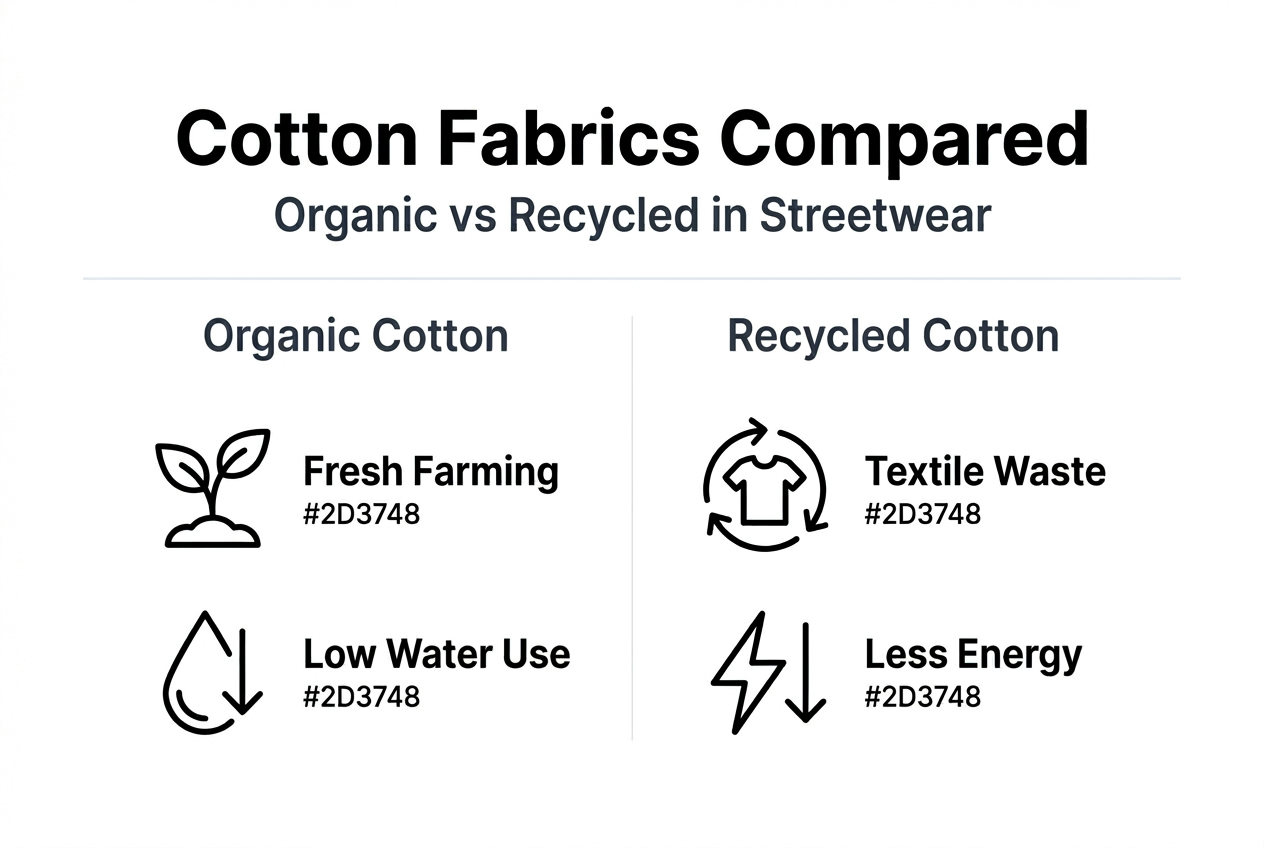
Organic cotton prioritizes natural ecosystems. By avoiding synthetic chemicals and GMOs, it protects biodiversity, builds soil health, and reduces water pollution. The farming practices create positive environmental ripple effects beyond just the cotton itself.
Here’s how they stack up:
| Factor | Organic Cotton | Recycled Cotton |
|---|---|---|
| Environmental focus | Regenerative farming, soil health | Waste reduction, circular economy |
| Water use | Low (rainfall-dependent) | Very low (no farming needed) |
| Energy consumption | Moderate (organic processing) | Low (no cultivation energy) |
| Fiber quality | High, long-lasting | Good, slightly shorter fibers |
| Supply chain transparency | Excellent with GOTS certification | Variable, depends on sourcing |
| Garment longevity | Superior durability | Good, may pill faster |
GOTS-certified organic cotton outperforms recycled cotton in fiber quality and supply chain transparency. The longer, stronger fibers create garments that maintain shape and softness through years of wear. Recycled cotton fibers are slightly shorter from reprocessing, which can affect durability.
Your choice reflects your sustainability values:
- Choose organic if you prioritize farming ecosystem health, chemical-free production, and maximum garment longevity
- Choose recycled if circular economy principles and waste reduction resonate most strongly
- Blend both in your wardrobe for comprehensive sustainable impact
Many premium streetwear brands now combine both materials strategically. They use organic cotton for signature pieces requiring ultimate durability and recycled cotton for trend-responsive items or layering basics.
Dive deeper into the nuances with this comprehensive guide on organic cotton vs conventional production methods.
How technology enhances transparency and trust in sustainable fabrics
Skepticism about sustainability claims runs high, and for good reason. Greenwashing has eroded consumer trust across industries. Technology now provides verifiable proof that brands practice what they preach.
Blockchain creates immutable records of every supply chain step. Blockchain technology provides transparency from cotton field to finished garment, recording farm locations, processing facilities, certifications, and transportation details. Consumers scan QR codes to access this entire history instantly.
This traceability matters enormously to Gen Z and Millennial shoppers. They demand proof, not promises. When brands share verified data about fabric sourcing, labor conditions, and environmental metrics, they build genuine loyalty.
Technology benefits for sustainable streetwear:
- Complete traceability from raw material to retail, eliminating supply chain blind spots
- Consumer confidence through verified certifications and third-party audits
- Greenwashing prevention via immutable records that can’t be falsified
- Accountability enforcement as brands know their practices face scrutiny
- Slow fashion promotion by highlighting quality and ethical production
Other tools complement blockchain. RFID tags track individual garments, satellite imagery monitors farm practices, and digital twins simulate environmental impacts before production begins. Together, these innovations make sustainability measurable and verifiable.
Transparency drives industry-wide improvement. When consumers reward honest brands and reject deceptive marketing, other companies must raise their standards to compete. This creates positive pressure throughout the streetwear ecosystem.
See how technology principles like those used in transparent software development apply to fashion supply chains, creating accountability at every stage.
Explore sustainable fabrics with MEXESS
Ready to apply everything you’ve learned? MEXESS brings premium sustainable streetwear directly to your wardrobe with collections built around organic cotton and eco-friendly materials. Every piece balances minimalist urban aesthetics with environmental responsibility.

Our organic cotton T-shirts, hoodies, and essentials deliver the durability and breathability your lifestyle demands. Each product page details material certifications, production methods, and care instructions so you make informed choices aligned with your values. We’ve eliminated the guesswork from sustainable shopping.
Pro Tip: Check product certifications and material details on each MEXESS item page to verify authentic eco-friendly choices. We display GOTS certifications, organic cotton percentages, and supply chain information transparently because you deserve to know exactly what you’re wearing.
Discover how premium sustainable streetwear seamlessly integrates environmental responsibility with timeless style. Your wardrobe can reflect both your aesthetic and your values without compromise.
FAQ
What is the main environmental benefit of organic cotton?
Organic cotton uses up to 91% less water than conventional cotton, primarily relying on rainfall instead of intensive irrigation systems. It also eliminates synthetic pesticides and fertilizers completely, protecting soil health and preventing chemical pollution in water systems. These factors combine to reduce CO2 emissions by 45% per hectare compared to conventional farming methods.
How does recycled cotton contribute to sustainability?
Recycled cotton diverts pre-consumer manufacturing scraps and post-consumer garments from landfills, giving textile waste new purpose. This process uses significantly less water and energy than growing new cotton since it skips the farming and cultivation stages entirely. By keeping materials in circulation longer, recycled cotton supports circular economy principles that reduce overall resource consumption in fashion.
Why is transparency important in sustainable streetwear?
Transparency allows consumers to verify environmental and ethical claims that brands make about their products. It prevents greenwashing by providing verifiable proof of sustainable practices through certifications, supply chain data, and production details. Technologies like blockchain create immutable records that track fabrics from source to store, building trust and accountability throughout the fashion industry.
Can organic cotton match conventional cotton in quality and durability?
Organic cotton often exceeds conventional cotton in durability and long-term quality because it maintains longer, stronger fibers without chemical degradation. The breathability and softness remain consistent through countless wash cycles, making it ideal for everyday basics in minimalist wardrobes. While slightly more expensive initially, organic cotton garments typically last years longer, providing better value over their lifetime.
How do I identify genuinely sustainable streetwear brands?
Look for specific certifications like GOTS (Global Organic Textile Standard), OEKO-TEX, or Fair Trade rather than vague sustainability marketing language. Genuine brands transparently share supply chain details, factory locations, and environmental impact data on their websites. They welcome questions about their practices and provide verifiable proof through third-party audits, blockchain records, or detailed sustainability reports.


0 comments