

Choosing what to wear is about more than just style for young urban men today. Eco-friendly streetwear has become a bold way to show your values, blending fresh looks with sustainability. Influenced by rising climate awareness and a demand for ethical production, the organic streetwear movement fuses comfort, durability, and responsible design. Discover how conscious shopping and smart material choices are shaping the future of urban fashion worldwide.
Table of Contents
- What Is Organic Streetwear Today?
- Major Drivers Of The Current Trend
- How Sustainable Materials Reshape Fashion
- Consumer Values And Brand Transparency
- Comparing Organic With Conventional Streetwear
Key Takeaways
| Point | Details |
|---|---|
| Organic Streetwear Emphasizes Sustainability | This fashion movement focuses on using eco-friendly materials and ethical production methods to reduce environmental harm. |
| Consumer Expectations are Shifting | Modern consumers, especially Millennials and Gen Z, demand transparency and social responsibility from fashion brands. |
| Innovative Materials are Transforming Fashion | The adoption of sustainable materials like hemp, recycled polyester, and mushroom mycelium is reshaping the industry. |
| Transparency Builds Consumer Trust | Brands that provide clear information on sourcing and labor practices are more likely to establish strong connections with customers. |
What Is Organic Streetwear Today?
Organic streetwear represents a revolutionary shift in urban fashion, transforming traditional apparel into an environmentally conscious statement. Unlike conventional streetwear, this emerging style integrates ecological principles directly into design and production. Sustainable streetwear now goes beyond aesthetic appeal, embedding ethical manufacturing and environmental responsibility into every garment.
At its core, organic streetwear prioritizes materials that minimize ecological harm. Designers are now selecting organic cotton, hemp, recycled polyester, and other low-impact textiles that reduce water consumption, eliminate toxic chemical treatments, and support regenerative agricultural practices. These fabrics are not just environmentally friendly but also deliver superior comfort and durability compared to traditional manufacturing methods.
The movement represents more than just clothing selection it symbolizes a cultural shift among young urban consumers who demand transparency and social responsibility from fashion brands. Modern streetwear enthusiasts view their clothing choices as statements of personal values, selecting pieces that reflect environmental consciousness and ethical production standards. This approach transforms streetwear from a purely aesthetic expression into a powerful platform for social and ecological advocacy.
Pro tip: When shopping for organic streetwear, always check fabric certifications and look for transparent supply chain information to ensure genuine sustainability.
Major Drivers Of The Current Trend
The organic streetwear revolution is propelled by a powerful combination of environmental consciousness and generational values. Consumer behavior trends reveal that Millennials and Gen Z are fundamentally reshaping fashion consumption, demanding transparency and social responsibility from brands. These younger consumers are not just buying clothes they are making deliberate statements about their commitment to ecological sustainability.

The market dynamics are driven by an unprecedented level of environmental awareness. According to recent market research, the sustainable streetwear movement is gaining momentum through several key factors: rising climate change concerns, increased understanding of textile industry environmental impacts, and a growing desire for ethical consumption. Sustainable streetwear market analysis indicates that consumers are increasingly willing to invest in clothing that aligns with their personal values and contributes to broader environmental solutions.
Technological advancements and innovative material science are also accelerating this trend. Brands are developing sophisticated recycling technologies, exploring bio-based fabrics, and creating production methods that dramatically reduce carbon footprints. This technical evolution transforms organic streetwear from a niche market segment into a mainstream fashion movement, offering consumers high-performance clothing that doesn’t compromise on style or environmental integrity.
Pro tip: Research brands that provide clear sustainability metrics and third-party environmental certifications to make truly informed purchasing decisions.
How Sustainable Materials Reshape Fashion
The fashion industry stands at a transformative moment, with sustainable material innovations fundamentally reimagining how clothing is conceived, produced, and consumed. Designers are now moving beyond traditional textile approaches, exploring groundbreaking materials that simultaneously address environmental concerns and push aesthetic boundaries. From bio-based fibers to advanced smart textiles, these innovations represent a holistic reimagining of fashion’s fundamental relationship with materials.
Circular economy principles are driving radical changes in material selection and production processes. Researchers and designers are developing sophisticated techniques that prioritize material lifecycle, exploring closed-loop manufacturing methods that dramatically reduce waste and environmental impact. These approaches involve creating fabrics from recycled plastics, agricultural waste, and even innovative biomaterials like mushroom-derived textiles, which offer sustainable alternatives to traditional synthetic materials.
The technological frontier of sustainable fashion extends far beyond simple ecological considerations. Sustainable practices in fashion now integrate complex performance requirements, with materials engineered to provide enhanced durability, temperature regulation, and even adaptive properties. Smart textiles that can change color, regulate body temperature, and self-repair are transitioning from conceptual experiments to tangible product offerings, signaling a profound shift in how we understand clothing’s functional potential.
Below is a summary of innovative sustainable materials reshaping streetwear:
| Material Type | Key Properties | Environmental Benefit |
|---|---|---|
| Hemp | Fast-growing, durable, breathable | Needs little water and no pesticides |
| Recycled Polyester | Made from recycled plastics | Reduces landfill and ocean waste |
| Mushroom Mycelium | Biodegradable, naturally renewable | Compostable alternative to leather |
| Organic Cotton | Soft, natural fiber, non-GMO | Avoids toxic pesticides, uses less water |
Pro tip: Explore emerging material technologies and support brands investing in genuine sustainable fabric research to be at the forefront of fashion’s ecological transformation.
Consumer Values And Brand Transparency
Consumer expectations have dramatically transformed, with sustainability transparency becoming a critical factor in purchasing decisions. Modern consumers are no longer passive buyers but active investigators who demand comprehensive insights into a brand’s ecological and ethical practices. This shift represents a profound change in the relationship between consumers and fashion brands, where authenticity and clear communication are paramount.
Digital technologies are enabling unprecedented levels of supply chain visibility. Consumers now expect detailed information about material sourcing, manufacturing processes, labor conditions, and environmental impact. Traceability in fashion has evolved from a niche concern to a mainstream expectation, with younger generations particularly driving this demand for radical transparency. Brands that successfully communicate their sustainability efforts create deeper, more meaningful connections with their audience.
The complexity of building consumer trust extends beyond simple marketing claims. Successful brands are developing comprehensive strategies that include third-party certifications, detailed sustainability reports, and innovative digital platforms that allow real-time tracking of a garment’s environmental journey. This approach transforms transparency from a marketing tactic into a fundamental business strategy, recognizing that today’s consumers seek genuine commitment to ecological and social responsibility.
Pro tip: Always research a brand’s sustainability credentials by examining their published impact reports and looking for verifiable third-party environmental certifications.
Comparing Organic With Conventional Streetwear
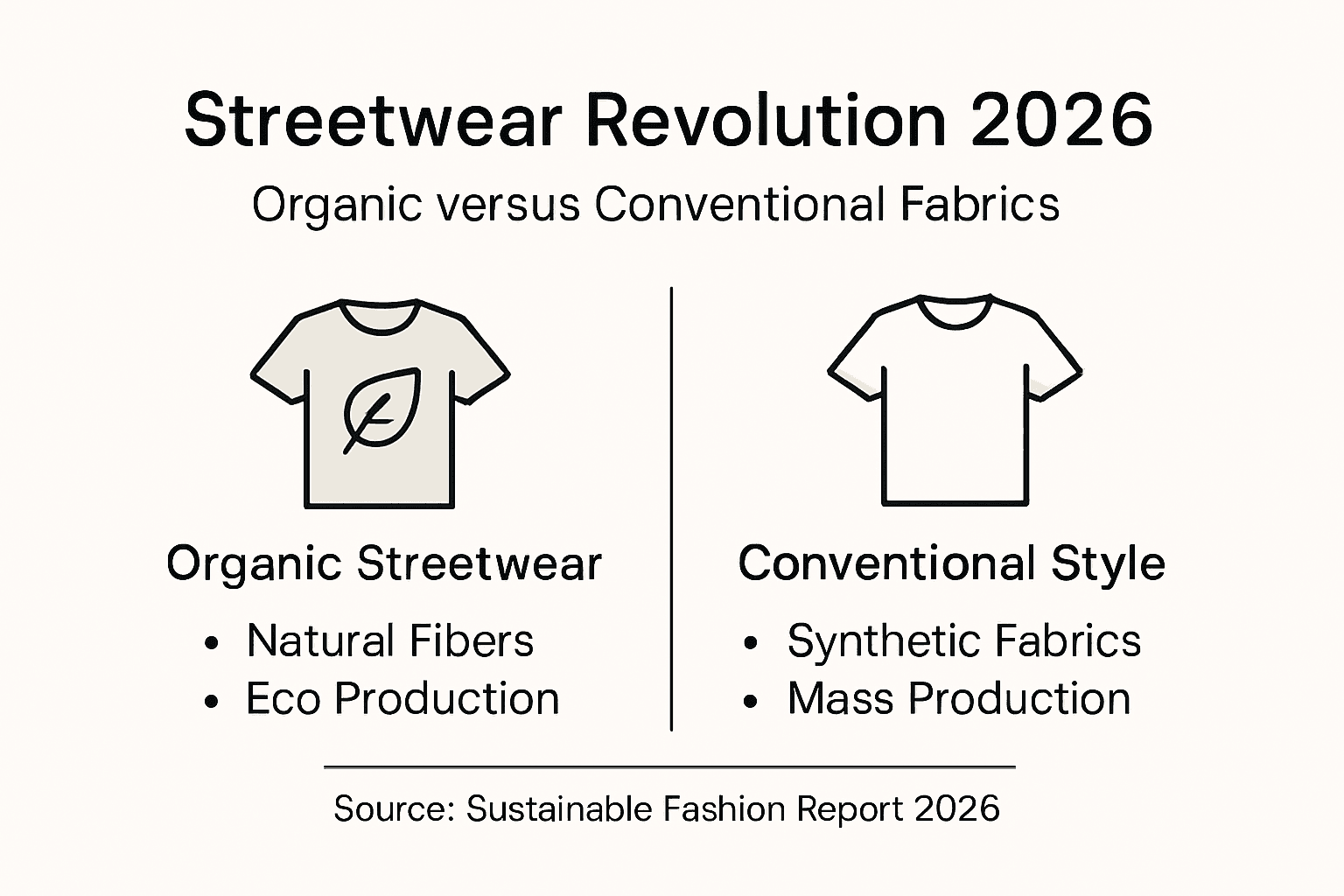
The fundamental distinction between organic and conventional streetwear extends far beyond surface-level aesthetics, representing a profound philosophical approach to fashion production. Why choose organic clothing reveals a critical difference in environmental impact, manufacturing processes, and long-term sustainability. Conventional streetwear typically relies on synthetic materials and chemical-intensive production methods, while organic streetwear prioritizes ecological integrity from fabric selection to final garment creation.
Material composition represents the most significant point of divergence between these two approaches. Conventional streetwear frequently utilizes petroleum-based synthetic fabrics like polyester and nylon, which contribute to microplastic pollution and require extensive fossil fuel resources. Organic streetwear, by contrast, employs natural fibers grown without harmful pesticides, processed using environmentally responsible techniques that minimize water consumption and chemical treatments. These materials not only reduce environmental strain but also offer superior breathability, durability, and skin-friendly characteristics.
The production ecosystem surrounding organic and conventional streetwear reveals stark contrasts in labor practices and supply chain transparency. While conventional manufacturing often involves opaque global supply chains with questionable labor standards, organic streetwear brands typically emphasize fair labor practices, local production, and comprehensive worker protections. This holistic approach transforms clothing from a mere commodity into a statement of ethical consumption, allowing consumers to align their fashion choices with broader social and environmental values.
Here’s a concise comparison of organic and conventional streetwear:
| Aspect | Organic Streetwear | Conventional Streetwear |
|---|---|---|
| Primary Materials | Organic cotton, hemp, recycled fabrics | Polyester, nylon, standard cotton |
| Environmental Impact | Low water, reduced chemicals, eco-friendly | High energy, chemical usage, pollution |
| Production Transparency | Emphasis on traceable, ethical sourcing | Often limited supply chain visibility |
| Worker Protections | Fair labor practices, local manufacturing | Occasional labor issues, outsourcing |
| Durability & Comfort | Breathable, durable, skin-friendly | May trap heat, risk of skin irritation |
Pro tip: Examine fabric labels closely and research brand sustainability reports to truly understand the ecological footprint of your streetwear choices.
Embrace the Future of Fashion with Organic Streetwear from MEXESS
The article highlights the urgent need for transparency, sustainable materials, and ethical production in streetwear. If you are seeking to align your style with values like eco-consciousness, fair labor, and cutting-edge sustainable fabrics such as organic cotton and recycled polyester, you are not alone. Many consumers are frustrated by unclear supply chains and harmful environmental impacts associated with conventional streetwear. At MEXESS, we understand this challenge and offer a thoughtfully curated collection designed to meet your desire for genuine sustainability and comfort.

Explore our latest organic and sustainable streetwear collections at MEXESS.com where every sweatshirt, T-shirt, and hoodie reflects a commitment to transparency, quality, and the planet’s well-being. Now is the perfect time to make a positive impact with your wardrobe. Visit organic streetwear at MEXESS and experience fashion that respects your values. Shop today and take advantage of our free shipping on multiple items and easy returns. Your next eco-friendly statement piece is just a click away.
Frequently Asked Questions
What is organic streetwear?
Organic streetwear is a style of clothing that focuses on environmentally friendly materials and ethical manufacturing practices. It uses fabric such as organic cotton, hemp, and recycled plastics, prioritizing sustainability over conventional production methods.
How does organic streetwear differ from conventional streetwear?
The main difference lies in the materials used and the manufacturing processes. Organic streetwear is made from natural, low-impact materials like organic cotton and hemp, while conventional streetwear often relies on synthetic fabrics like polyester that can harm the environment.
Why is sustainability important in fashion?
Sustainability is vital in fashion because it addresses the ecological impact associated with garment production. It helps reduce pollution, decreases waste, and promotes ethical labor practices, making fashion more responsible and aligned with consumer values.
What are the benefits of using sustainable materials in streetwear?
Sustainable materials, like hemp and recycled fabrics, provide several benefits including reduced environmental impact, better durability, and improved comfort. These materials also support ethical practices, appealing to consumers who prioritize social responsibility.
Leave a comment