

TL;DR:
- Genuine techwear emphasizes engineered functionality and minimalist street style, not dystopian aesthetics.
- Key fabrics include Gore-Tex for waterproofing and organic cotton for comfort and sustainability.
- Style involves layering, modular features, and matching fabrics to urban climate needs.
Techwear gets a bad reputation. Most people picture black-clad figures with cargo-heavy silhouettes pulled straight from a dystopian film set. But that image misses the point entirely. Real techwear, the kind worth wearing every day, is rooted in engineered function and minimalist street style, not science fiction aesthetics. It’s about clothing that adapts to your city life without demanding attention. This guide breaks down what techwear actually is, which fabrics make a real difference, what features to look for, and how to style it sustainably. Whether you’re commuting, working remotely, or just moving through the city with intention, this is the knowledge you need.
Key Takeaways
| Point | Details |
|---|---|
| Techwear defined | Techwear merges minimalist street style with functional materials and modular design. |
| Fabric choices matter | Weather resistance, breathability, and sustainability depend on picking the right material for your needs. |
| Practical features | Well-designed storage, weatherproofing, and adaptability are what set premium techwear apart. |
| Style meets sustainability | Modern techwear prioritizes both aesthetics and sustainable material choices for the urban lifestyle. |
What is techwear? Style, function, and urban mythbusting
Techwear didn’t start on a runway. It grew out of a practical need: urban dwellers wanted clothing that could handle unpredictable weather, long commutes, and constant movement without looking like they’d just stepped off a hiking trail. The result was a category of clothing built around adaptability, storage, and comfort, wrapped in clean, low-profile design.
The biggest myth? That techwear is synonymous with cyberpunk fashion. Drop the image of layered black tactical vests and neon-lit alleyways. While that aesthetic exists, it’s a subculture, not the definition. True techwear is much closer to minimalist streetwear inspiration than it is to cosplay. Think clean lines, neutral tones, and pieces that do more than they show.
The core design principles of techwear center on three ideas:
- Modularity: Pieces that layer, attach, or adapt to different situations
- Stealth functionality: Hidden pockets, adjustable fits, and integrated features that don’t disrupt the silhouette
- Adaptability: Clothing that transitions from morning rain to afternoon sun without a wardrobe change
Brands like Arc’teryx Veilance, Outlier, and Stone Island helped establish these standards. They proved that high performance and refined aesthetics aren’t opposites. You don’t need aggressive branding or exaggerated proportions to build a techwear wardrobe.
“Techwear combines engineered function with a minimalist aesthetic, prioritizing real-world utility over surface-level design.”
The takeaway is simple. If a piece looks technical but doesn’t actually perform, it’s not techwear. It’s costume. Genuine techwear earns its place in your wardrobe by solving real problems, quietly and effectively.
The materials that matter: Techwear fabrics from Gore-Tex to organic cotton
Fabric is where techwear either delivers or disappoints. The material determines how a piece performs in rain, how it feels against your skin after eight hours of wear, and how responsibly it was made. Understanding the key fabrics helps you shop with intention rather than hype.
The main techwear fabric categories:
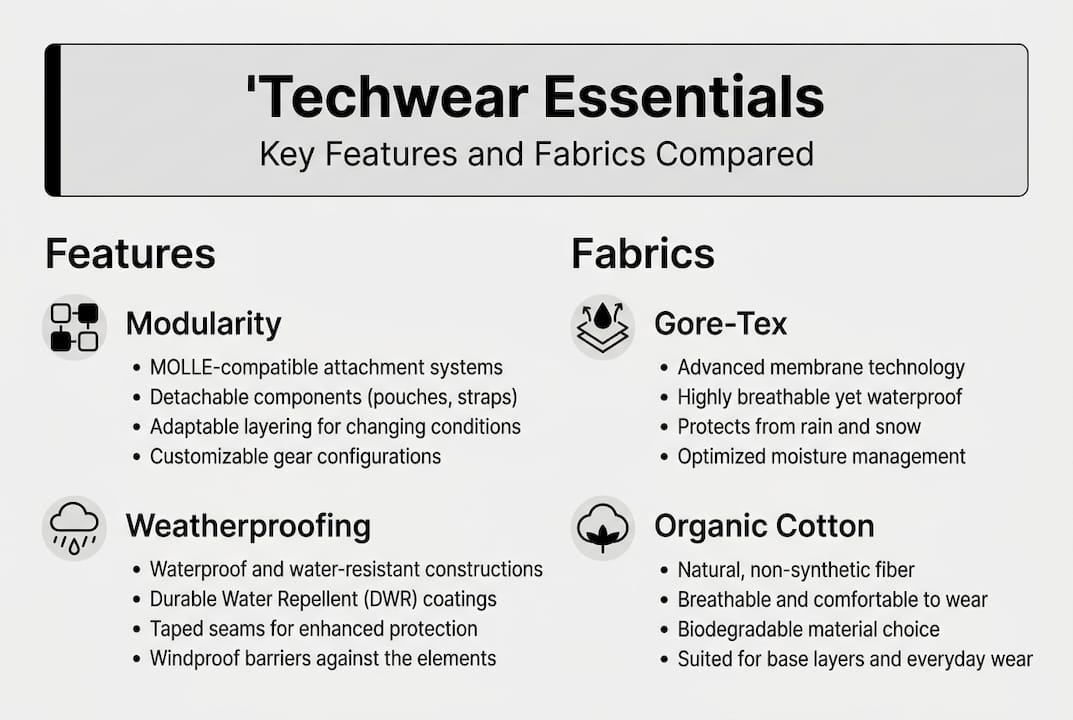
- Gore-Tex: The gold standard for waterproofing. Fully seam-sealed and windproof, but breathability can drop when DWR (durable water repellent) coatings fail or during high-exertion activity. Gore-Tex breathability drops if the DWR layer degrades or you’re pushing hard in the rain.
- Softshell synthetics: More flexible and breathable than Gore-Tex, but offer less waterproofing. Great for mild urban conditions.
- Organic cotton: Less weatherproof than synthetics but superior for everyday comfort, breathability, and sustainability in city environments.
- Recycled and PFC-free alternatives: Emerging as the sustainable future of techwear. PFC-free DWR coatings avoid harmful fluorocarbons while still repelling water effectively.
| Fabric | Weather resistance | Breathability | Sustainability |
|---|---|---|---|
| Gore-Tex (3-layer) | Excellent | Moderate | Improving |
| Softshell synthetic | Good | High | Moderate |
| Organic cotton | Low | Excellent | High |
| Recycled PFC-free | Moderate | High | High |
The Arc’teryx Gamma Hoody scores 9/10 for weather protection and 8.3/10 for breathability, with 3-layer constructions proving more durable than 2-layer options. Organic cotton, by contrast, is better suited for urban casual wear than storm protection.
Pro Tip: If you live in a mild urban climate and rarely face heavy rain, organic cotton techwear gives you the comfort and sustainability credentials without sacrificing daily wearability. Save the Gore-Tex for serious weather.
The smartest approach is matching fabric to your actual lifestyle. Explore the differences in depth between organic vs recycled cotton to make a choice that aligns with both your wardrobe needs and your values.
Key techwear features: Modularity, weatherproofing, and hidden function
Once you understand the materials, the next layer is features. This is where techwear separates itself from regular outerwear. The best pieces are engineered to solve specific problems without advertising that fact.
Here’s what genuinely defines high-performance techwear:
- Waterproof zippers: Fully sealed to prevent water infiltration at every opening
- Taped seams: Internal sealing along stitched lines so rain can’t sneak through needle holes
- Modular pockets: Positioned for real utility, not decoration. Chest pockets, internal document sleeves, and zippered side access all serve a purpose
- Packable hoods: Stow away cleanly without creating bulk when not in use
- Articulated fits: Cut to allow full range of motion during cycling, climbing stairs, or carrying a bag
Weatherproofing performance varies significantly between constructions. Gore-Tex Pro is stormproof while the Arc’teryx Gamma performs exceptionally well for abrasion resistance in demanding urban conditions.
| Feature | Entry-level techwear | Premium techwear |
|---|---|---|
| Seam sealing | Partial | Fully taped |
| Zipper type | Standard | Waterproof |
| DWR coating | PFC-based | PFC-free |
| Pocket system | Basic | Modular, multi-access |
| Sustainability | Limited | Recycled or organic options |
Sustainability is becoming a genuine feature, not just a marketing claim. More brands now offer streetwear with functional features built on recycled materials and PFC-free coatings, which means you don’t have to choose between performance and responsibility.
The real value of these features isn’t showing them off. It’s barely noticing them because everything just works. That’s the standard worth holding your techwear to.
How to style techwear: Minimalist layering and sustainability tips
Styling techwear well is less about following a formula and more about building a system. The goal is a wardrobe that moves with you, adapts to conditions, and never looks overthought.
Here’s a practical layering approach that works across climates:
- Base layer: A fitted organic cotton tee or long-sleeve. Breathable, moisture-managing, and the foundation of every outfit.
- Mid layer: A minimal hoodie or sweatshirt. This is your temperature control. Choose one with a clean silhouette and no unnecessary branding.
- Outer shell: A packable, weather-resistant jacket. Ideally with taped seams and a PFC-free DWR coating for sustainable protection.
- Bottoms: Slim or tapered pants with functional pockets. Avoid cargo overload. One or two extra pockets is utility. Six is costume.
- Footwear: Clean, low-profile sneakers or urban boots. Techwear doesn’t require tactical boots to be functional.
Organic cotton is better for urban casual wear and sustainability than most synthetics, making it the smart choice for base and mid layers where comfort matters most.
Pro Tip: Build your techwear wardrobe around neutral tones first. Black, slate, olive, and off-white create a cohesive system where every piece works with every other piece. Add texture and proportion variation instead of color.
For sustainable shopping, use this checklist before buying:
- Does it use organic, recycled, or PFC-free materials?
- Does it carry a credible eco certification (GOTS, bluesign, or similar)?
- Is the brand transparent about its supply chain?
- Will this piece work in at least three different outfit combinations?
Learning more about choosing sustainable materials gives you the foundation to make every purchase count, not just for your wardrobe but for your values.
Why most people misunderstand techwear (and what really matters)
Here’s the uncomfortable truth: most people buying techwear are buying the aesthetic, not the function. They want to look prepared without actually needing to be. That’s fine as a style choice, but it leads to wardrobes full of overbuilt pieces that don’t serve real life.
The brands that get techwear right aren’t chasing futurism. They’re solving problems. A jacket that packs into its own pocket. A hoodie that regulates temperature across a full workday. Pants that move without restriction and still look clean in a meeting. That’s the real standard.
The most durable techwear pieces we’ve seen prioritize three things above everything else: weather resistance when it’s needed, comfort when it’s not, and ethical production that holds up to scrutiny. The cyberpunk knockoffs fail on all three counts. They look intense and perform minimally.
Long-term value in techwear comes from true sustainability in techwear, modular design that adapts over years, and organic materials that age well without degrading quickly. Buy less. Choose better. That’s not a slogan, it’s a practical strategy for building a wardrobe that actually works.
Discover minimalist, sustainable techwear essentials
If this guide has shifted how you think about techwear, the next step is finding pieces that actually live up to the standard. At MEXESS, we build around exactly that principle: premium organic cotton essentials designed for the urban lifestyle, not the runway.

Our collections focus on clean silhouettes, sustainable materials, and versatile styling that works across every layer of your day. Explore premium organic cotton essentials built for real city living, or get inspired by our minimalist techwear styling guides to start building a wardrobe that performs as well as it looks. Free shipping, 30-day returns, and transparent product details make it easy to shop with confidence.
Frequently asked questions
What is the difference between techwear and regular streetwear?
Techwear combines engineered function with minimalist aesthetics through performance materials and modular features that regular streetwear typically skips, making it more adaptive and utility-focused for urban life.
Is organic cotton techwear weatherproof?
Organic cotton is less weatherproof than synthetic alternatives, but it excels in comfort and breathability, making it the smarter choice for everyday city wear over storm-specific outerwear.
Are PFC-free DWR and recycled materials common in techwear?
Yes. A growing number of techwear brands now use PFC-free DWR and recycled fabrics as the sustainable shift in materials becomes a baseline expectation rather than a premium add-on.
How do I choose the right techwear for my city lifestyle?
Match your fabric to your climate and daily routine. Pick fabrics based on climate and real-life needs, prioritizing comfort, weather protection, and sustainable materials over technical specs you’ll never use.
Leave a comment