


Most people think sustainable fashion ends with organic cotton or recycled polyester, but the dyes used to color your favorite hoodie can be just as harmful as fast fashion’s worst fabrics. Textile dyeing accounts for roughly 20% of global industrial water pollution, yet eco-friendly dyes remain poorly understood by most shoppers. This guide breaks down what actually makes a dye eco-friendly, which standards matter, and how to spot genuine sustainability in streetwear.
Key Takeaways
| Point | Details |
|---|---|
| Substance restrictions | Eco-friendly dyes exclude carcinogens, heavy metals, and other toxic substances based on strict standards. |
| Natural vs synthetic | Natural dyes are renewable and safer, but high-quality synthetics can also meet eco-criteria with new innovations. |
| Certifications matter | Global standards like GOTS and Nordic Swan Ecolabel ensure genuine eco-friendly credentials. |
| Performance trade-offs | Natural dyes may lack in fastness but use less water; new methods like bio-mordants improve both safety and results. |
| Informed choices | Look for third-party certifications to shop fashion that’s truly sustainable—not just greenwashed. |
How do we define eco-friendly dyes?
Eco-friendly dyes are characterized by low toxicity, biodegradability, and minimal water pollution. Unlike conventional dyes that release heavy metals and carcinogenic compounds, sustainable alternatives must meet strict chemical exclusion lists. The Global Organic Textile Standard (GOTS) and Nordic Swan Ecolabel set the bar by prohibiting over 100 hazardous substances.

Banned substances include carcinogenic azo dyes, heavy metals like chromium and lead, nanoparticles, and persistent organochlorines. GOTS restricts formaldehyde to trace levels and limits adsorbable organic halides (AOX) to less than 1%. PFAS chemicals, known for their environmental persistence, are also strictly controlled under Nordic Swan criteria.
These standards aren’t just guidelines. They require third-party verification, lab testing, and supply chain transparency. Brands claiming eco-friendly dyes without GOTS or equivalent certification should raise red flags. Check product tags for certification logos, not vague marketing language.
Pro Tip: Look for Manufacturing Restricted Substances List (MRSL) compliance on brand websites. This shows they’ve committed to eliminating hazardous chemicals at the production stage, not just in the final product.
| Standard | Key Restrictions | Verification |
|---|---|---|
| GOTS | Bans carcinogenic azo dyes, heavy metals, formaldehyde >75ppm, AOX >1% | Third-party lab testing |
| Nordic Swan | Excludes endocrine disruptors, PFAS, sets effluent quality limits | Annual audits + chemical analysis |
| Oeko-Tex | Restricts 300+ harmful substances, tests finished textiles | Independent certification |
For streetwear lovers, this means your graphic tee’s vibrant colors shouldn’t come at the cost of polluted rivers or worker health. Sustainable brands verify their dye sources and publish eco-label certifications openly. If you’re serious about conscious consumption, start by checking whether your favorite pieces meet these benchmarks. Our eco-friendly fabrics guide covers how materials and dyes work together for true sustainability.
Natural vs synthetic dyes: What’s truly greener?
The natural versus synthetic debate confuses many shoppers. Natural dyes come from plants, animals, or minerals. They’re biodegradable, renewable, and generally low in toxicity. Synthetic dyes, typically petroleum-based, dominate the industry because they’re cheap, efficient, and deliver consistent color.
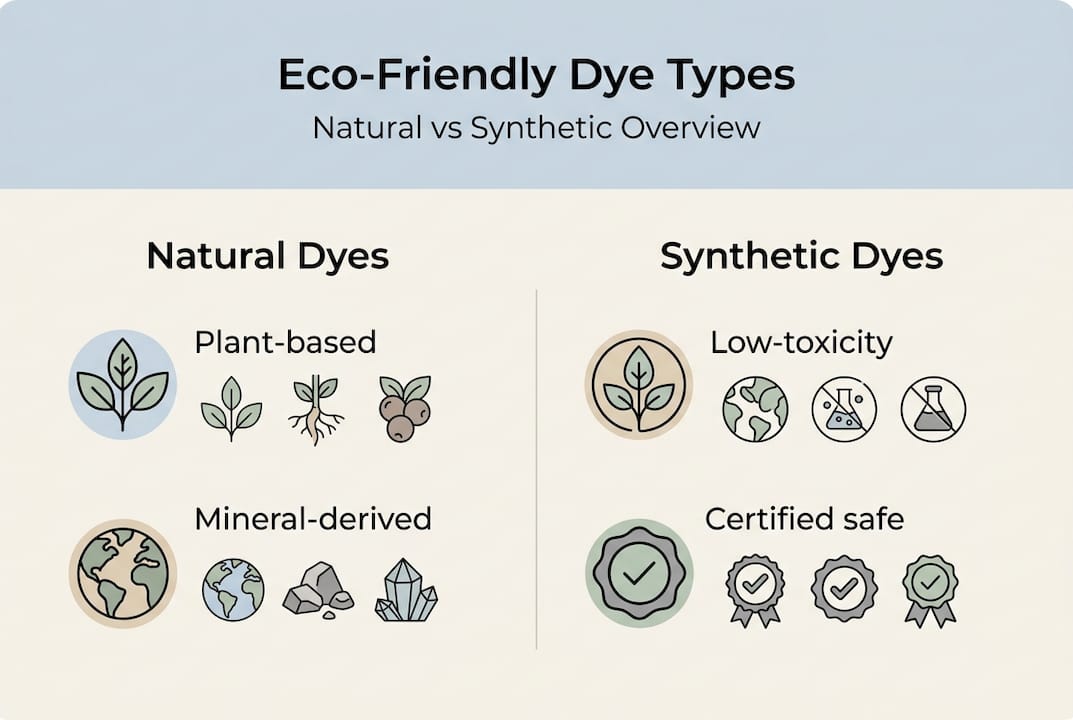
But here’s the catch: synthetic dye production leads to 10-15% untreated discharge, raising biochemical oxygen demand (BOD) and chemical oxygen demand (COD) in waterways. This untreated effluent harms aquatic ecosystems and contaminates drinking water sources. Natural dyes avoid this problem entirely when processed correctly.
Yet not all synthetics are environmental disasters. Modern azo dyes can be formulated to minimize risk, and some synthetic eco-dyes meet GOTS standards by eliminating toxic components. The real issue is transparency. Many brands use conventional synthetics and label them “eco” without proof.
Natural dyes offer:
- Renewable sourcing from plants like indigo, madder, and turmeric
- Biodegradability that reduces long-term pollution
- Lower toxicity for workers and ecosystems
- Unique, earthy color palettes that appeal to minimalist streetwear
Synthetic dyes provide:
- Vibrant, consistent colors across large production runs
- Better color fastness (resistance to fading)
- Lower costs that make sustainable fashion more accessible
- Scalability for mass production
The trade-off? Natural dyes often require mordants (fixatives) to bond with fabric. Traditional mordants like aluminum salts are safer than heavy metals, but bio-mordants from plant tannins offer even cleaner alternatives. Synthetic dyes skip this step but carry higher environmental costs upstream during petroleum extraction and chemical synthesis.
| Dye Type | Environmental Impact | Performance | Cost |
|---|---|---|---|
| Natural | Low water pollution, renewable | Lower fastness, limited palette | Higher |
| Synthetic (conventional) | High effluent load, toxic discharge | Excellent fastness, wide palette | Lower |
| Synthetic (eco-certified) | Reduced toxicity, controlled discharge | Good fastness, growing palette | Moderate |
For streetwear that lasts, you need dyes that won’t fade after three washes. This is where synthetic eco-dyes and microbial innovations shine. They deliver durability without the pollution. Our guide to 2026 sustainable fabrics explores how material choice impacts dye performance.
Bottom line: Neither natural nor synthetic is automatically greener. Look for certified options that balance performance, safety, and environmental impact. Research shows that the best choice depends on the specific dye chemistry, application method, and brand transparency.
How are eco-friendly dyes produced?
Sustainable dye production starts with sourcing. Natural dyes are extracted from renewable plant, animal, or mineral sources using safer solvents like water or ethanol instead of harsh petrochemicals. Indigo from the Indigofera plant, madder root for reds, and turmeric for yellows are common examples.
Application methods matter just as much as sourcing. Traditional dyeing uses metal-based mordants like aluminum or iron salts to fix colors. Eco-friendly alternatives rely on bio-mordants, plant extracts rich in tannins that bond dyes to fabric without toxic residues. Bio-mordants reduce toxicity while improving color strength.
Low-water and closed-loop dyeing systems represent the next frontier. CO2 dyeing uses supercritical carbon dioxide instead of water, eliminating liquid effluent entirely. Closed-loop systems recycle water and chemicals, cutting waste by up to 90%. These innovations make synthetic eco-dyes viable for brands committed to sustainability.
Microbial dyes are emerging as game-changers. Bacteria and fungi produce natural pigments through fermentation, offering vibrant colors without agricultural land use. Companies are scaling microbial dye production to compete with conventional synthetics on cost and performance.
Steps in eco-friendly dye production:
- Sourcing: Harvest renewable plant materials or cultivate microbial strains in controlled environments
- Extraction: Use water, ethanol, or enzymatic processes to isolate pigments without toxic solvents
- Mordanting: Apply bio-mordants like tannin-rich plant extracts to improve dye uptake and fastness
- Dyeing: Immerse fabric in dye baths at controlled temperatures, often below 100°C to save energy
- Finishing: Rinse with minimal water or use closed-loop systems to recycle effluent
Pro Tip: Ask brands about their dyeing process, not just their dye source. A natural dye applied with wasteful methods isn’t truly sustainable. Look for mentions of closed-loop systems or low-water techniques in product descriptions.
For long-lasting color, even natural dyes need improved fastness. Innovative dyeing techniques like plasma treatment and enzymatic pre-treatment enhance dye bonding without chemicals. These methods are especially important for streetwear, where durability and vibrant graphics define the aesthetic. Check our sustainable streetwear fabrics guide to see how production methods complement material choices.
Performance and limitations of eco-friendly dyes
Color fastness is the Achilles heel of natural dyes. Fastness measures how well colors resist fading from washing, light exposure, and friction. Natural dyes generally deliver lower fastness than synthetic alternatives, often rating class 3 on a scale where class 5 is excellent.
This matters for streetwear. You want your hoodie to look fresh after dozens of washes, not faded after five. Synthetic eco-dyes and microbial dyes offer fastness ratings of class 4 to 5, matching conventional synthetics without the pollution. Bio-mordants can double color strength (K/S values) and improve wash fastness by 20 to 30%.
“Mordanted natural dyes achieve twice the color strength of unmordanted alternatives, with significantly improved fastness to washing and light exposure.”
Cost and scalability remain barriers. Natural dyes require more labor, longer processing times, and yield smaller color batches. This drives up prices, making eco-friendly streetwear less accessible. Synthetic eco-dyes offer a middle ground, delivering performance at moderate cost increases.
Performance trade-offs:
- Natural dyes: Excellent biodegradability, lower energy use, but limited fastness and color range
- Synthetic eco-dyes: Good fastness, wider palette, but higher production costs than conventional synthetics
- Microbial dyes: High fastness potential, scalable production, but still emerging technology
Testing is critical for brands targeting durable, vibrant streetwear. ISO standards for wash fastness (ISO 105-C06) and light fastness (ISO 105-B02) provide objective benchmarks. Brands should publish these results, not just claim “eco-friendly” without data.
Pro Tip: If a brand doesn’t list fastness ratings or certification details, ask directly. Genuine sustainable brands are transparent about performance limitations and testing protocols.
For everyday wear, you need dyes that balance sustainability with durability. Our streetwear and sustainable fabrics guide explains how fabric choice impacts dye performance and longevity.
How do standards and certifications guarantee safety?
Certifications cut through greenwashing. GOTS restricts over 100 chemicals, including all carcinogenic azo dyes, heavy metals, and formaldehyde above 75 parts per million. Nordic Swan bans endocrine disruptors and PFAS while setting strict effluent quality limits for dye houses.
Third-party verification is non-negotiable. GOTS and Oeko-Tex require annual audits, lab testing, and supply chain documentation. Brands can’t self-certify. This ensures that eco-friendly claims are backed by evidence, not marketing spin.
What certifications guarantee:
- Chemical exclusion: No carcinogens, mutagens, or reproductive toxins in dyes or processing
- Effluent quality: Limits on BOD, COD, heavy metals, and pH in wastewater discharge
- Worker safety: Restrictions on hazardous substances that protect dye house employees
- Traceability: Documentation from raw material to finished garment
MRSL compliance aligns with Zero Discharge of Hazardous Chemicals (ZDHC) standards, which major brands use to eliminate toxic substances. If a streetwear brand lists MRSL compliance, they’ve committed to phasing out hazardous chemicals across their supply chain.
Pro Tip: Brands should list certification details on product pages, not just homepage claims. Look for certification numbers, expiration dates, and links to certifier databases. Vague “eco-dye” claims without specifics are red flags.
For conscious shoppers, certifications provide the only reliable way to verify sustainability. Our certified sustainable fabrics guide covers how to read labels and spot genuine eco-credentials. Check certification details directly from standard organizations to confirm brand claims.
Discover sustainable streetwear with verified eco-dyes
Armed with facts, you’re ready for your next conscious purchase. But where do you find genuinely sustainable streetwear with certified eco-dyes?
MEXESS offers streetwear using independently certified sustainable dyes that meet GOTS and Oeko-Tex standards. Every piece is designed for durability, comfort, and timeless style without compromising environmental values. From organic cotton tees to minimalist hoodies, our collections prove that sustainable fashion doesn’t mean sacrificing performance or aesthetics.

Learn more about eco-friendly dye processes and standards before you shop. Our in-depth dye guide covers everything from bio-mordants to closed-loop systems. Find fashion choices that align with your values and look great. Explore sustainable streetwear that’s built to last, backed by certifications you can trust.
Frequently asked questions
What makes a dye ‘eco-friendly’ in streetwear?
Eco-friendly dyes are defined by biodegradability, low toxicity, and compliance with standards like GOTS that restrict hazardous chemicals. They must exclude carcinogens, heavy metals, and persistent pollutants.
Are natural dyes always better for the environment?
Natural dyes are often safer and biodegradable, but require careful mordant selection for safe use. Some advanced synthetic eco-dyes offer better performance with lower environmental impact than poorly processed natural alternatives.
How can I check if clothing uses eco-friendly dyes?
Look for certifications like GOTS, Oeko-Tex, or Nordic Swan listed on product tags or descriptions. Brands should provide certification numbers and links to verifier databases.
Why is dye fastness important in sustainable fashion?
Dye fastness determines how well colors resist fading, which is critical for durable and long-lasting clothes. Higher fastness means fewer replacements, reducing overall environmental impact.
Do eco-friendly dyes cost more than conventional options?
Yes, eco-friendly dyes typically cost 20 to 40% more due to sustainable sourcing, safer processing, and certification requirements. However, improved durability and lower environmental costs offset the price difference over time.
Ostavite komentar