

Streetwear and sustainability feel like they’re pulling in opposite directions. The culture thrives on newness, drops, and constant rotation, while eco-conscious dressing demands restraint and intention. But here’s the thing: layering is actually one of the most sustainable practices in fashion. When you build outfits from versatile, quality basics, you wear more from less, cut down on impulse buys, and look sharper doing it. This guide walks you through every step, from choosing the right pieces and fabrics to caring for them long-term, so you can build layered streetwear looks that hold up in style and ethics.
Key Takeaways
| Point | Details |
|---|---|
| Three-layer system | Layer with organic cotton bases, mid fleece/hoodie, and recycled outers for the best style-to-sustainability ratio. |
| Capsule wardrobe focus | Build your closet from quality basics, keeping a compact selection for year-round outfits. |
| Smart care extends life | Cold wash, air dry, and proper rotation dramatically increase the longevity of your streetwear layers. |
| Prioritize certifications | Look for GOTS, recycled synthetics, and trusted eco-labels to ensure real sustainability. |
Why sustainable layering matters in streetwear
Fast fashion produces roughly 10% of global carbon emissions and is one of the most polluting industries on the planet. Conventional streetwear leans heavily on synthetic fabrics like virgin polyester, which sheds microplastics with every wash and takes hundreds of years to break down. The cycle of trend-driven buying and early disposal makes the problem worse.
Switching to better materials changes the equation. Organic cotton reduces pesticide and chemical use significantly compared to conventional cotton, and GOTS (Global Organic Textile Standard) certification ensures the entire supply chain meets strict environmental and social criteria. GSM (grams per square meter) is a useful benchmark here: heavier GSM fabrics tend to be more durable and structured, which means they last longer and hold their shape through repeated wear.
Here’s why this matters for your wardrobe specifically:
- Organic cotton basics last significantly longer than their fast-fashion counterparts
- GOTS-certified pieces guarantee ethical production from fiber to finished garment
- Higher GSM fabrics resist pilling, fading, and distortion over time
- Recycled synthetics (like recycled polyester) reduce reliance on virgin petroleum-based materials
“Sustainable layering maximizes wear from capsule wardrobes, prioritizing GOTS organic cotton over fast fashion.”
The smartest move you can make is building a streetwear capsule wardrobe around a small set of quality pieces that work in multiple combinations. Fewer items, more outfits, less waste. That’s the core logic of sustainable layering, and it starts with understanding what you actually need.
What you need: Building a sustainable streetwear layering kit
Layering works in three zones: base, mid, and outer. Each zone has a functional role and a style role. Getting the right pieces for each zone is what separates a thoughtful wardrobe from a cluttered closet.

For base layers, look for organic cotton tees or tanks in the 120 to 160 GSM range. These are lightweight, breathable, and sit closest to your skin. For mid layers, you want something in the 180 to 250 GSM range, think structured hoodies, crewneck sweatshirts, or overshirts. These add warmth and visual weight. For outer layers, the focus shifts to weather resistance and texture, with recycled shell jackets, bombers, or chore coats being strong options.
| Layer | Garment type | Recommended GSM | Key fabric |
|---|---|---|---|
| Base | Tee or tank | 120 to 160 | GOTS organic cotton |
| Mid | Hoodie or sweatshirt | 180 to 250 | Organic cotton fleece |
| Outer | Jacket or coat | Varies | Recycled poly or organic twill |
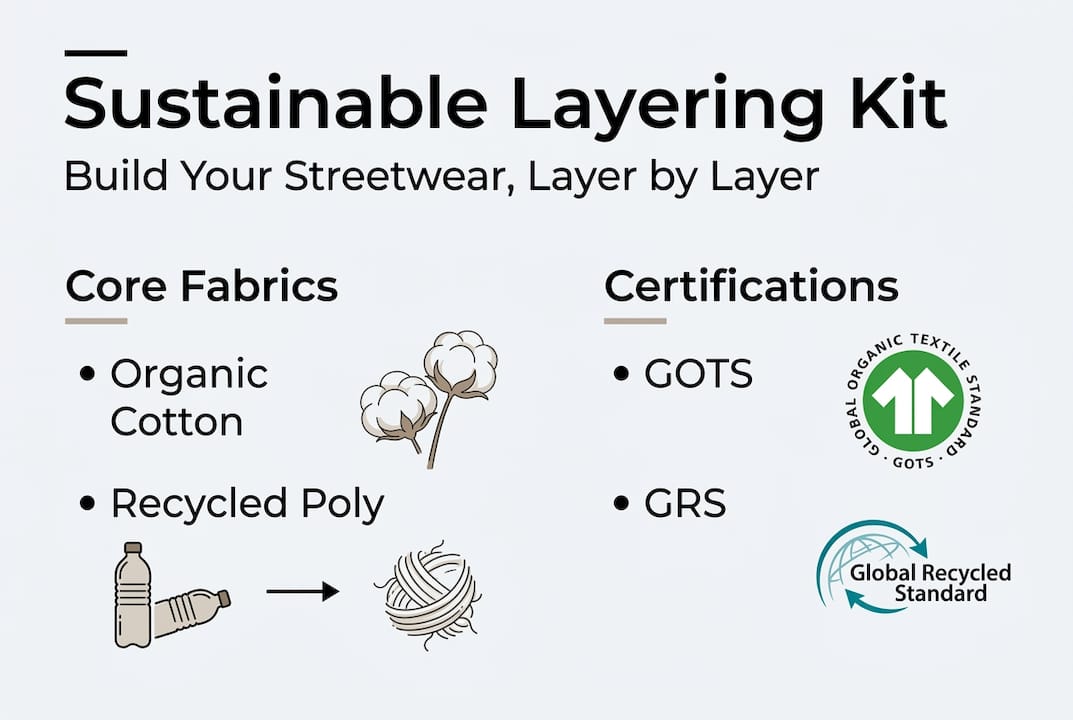
Certifications to look for include GOTS for organic cotton, the Global Recycled Standard (GRS) for recycled synthetics, and bluesign for responsible chemical use in production. Prioritizing premium organic cotton basics, specifically heavyweight tees at 250 GSM and above plus structured hoodies from certified brands, reduces how often you need to replace pieces and cuts long-term waste.
For color, stick to a neutral palette: black, white, ecru, gray, and olive. These tones work across all three layers without clashing, which means more combinations from fewer streetwear essentials for men.
Pro Tip: A capsule wardrobe of 10 to 14 versatile pieces creates more daily outfit options than a packed closet of 40 trend-driven items, and it dramatically cuts your environmental footprint.
Step-by-step guide: How to layer streetwear sustainably
Once you have the right pieces, the process of building a layered look becomes straightforward. Here’s the sequence that works every time.
- Start with your base layer. Put on a fitted or slightly relaxed organic cotton tee. This is your foundation. It should be clean in silhouette and neutral in color so it doesn’t compete with what goes on top.
- Add your mid layer. A heavyweight hoodie or crewneck sweatshirt goes on next. Let the hem of your tee peek out slightly below the hoodie for intentional layering. This small detail signals that the layering is deliberate, not accidental.
- Finish with your outer layer. A recycled shell jacket, chore coat, or bomber completes the look. Keep it open or zip it halfway to show the mid layer underneath.
- Check proportions. Each layer should be slightly looser than the one beneath it. Tight base, relaxed mid, oversized outer is a classic formula that avoids bulk.
- Edit, don’t add. If something feels off, remove a layer rather than adding another one.
The three-layer streetwear system works because it balances warmth, movement, and visual depth without overwhelming your silhouette. Mixing textures, like a smooth tee under a brushed fleece hoodie under a matte nylon shell, creates visual interest that makes simple pieces look intentional.
| Combination | Season | Vibe |
|---|---|---|
| Organic tee + fleece hoodie + recycled shell | Fall/Winter | Urban utility |
| Organic tee + overshirt + chore coat | Spring/Fall | Relaxed workwear |
| Tank + heavyweight tee + bomber | Summer/Fall | Clean street |
Pro Tip: Layer thin to thick as you move outward. This keeps movement natural and lets you peel off a layer without losing the look entirely. Check out eco-friendly streetwear tips for more outfit-building strategies.
Care and longevity: Keeping your layers looking good
Buying quality pieces is only half the equation. How you care for them determines how long they actually last. Most streetwear gets worn out prematurely not from use but from poor washing habits.
Here’s what actually works:
- Wash cold. Hot water breaks down fibers faster and causes shrinkage, especially in organic cotton. Cold washing preserves structure and color.
- Air dry whenever possible. Tumble drying degrades elastic fibers and causes pilling. Hanging or laying flat to dry extends the life of every piece.
- Spot clean between washes. If only one area of a garment is dirty, clean just that spot instead of running a full wash cycle. This reduces water use and wear on the fabric.
- Rotate your pieces. Wearing the same hoodie five days in a row accelerates wear. Rotating through your mid layers gives each piece time to recover its shape.
- Avoid harsh detergents. Use a mild, plant-based detergent. Enzyme-heavy formulas can break down natural fibers over time.
“Buy less, keep more: longevity always trumps trendiness.”
Care practices like cold washing, air drying, rotating pieces, and spot cleaning can double the functional lifespan of your garments. That means fewer replacements, less spending, and a smaller footprint. For more detail on sustainable care techniques, there’s a full breakdown worth reading.
Common mistakes and how to avoid them
Even with the right pieces and intentions, a few recurring errors can undermine both your style and your sustainability goals.
- Wearing too many layers. Three is the functional maximum. Beyond that, you lose silhouette definition, restrict movement, and create unnecessary bulk. The goal is visual depth, not volume.
- Mixing too many colors or oversized pieces at once. One oversized item per outfit is the rule. Stack two and proportions collapse. Stick to neutrals with one accent piece if you want to introduce color.
- Buying uncertified synthetics. Not all “eco” claims are equal. Without GOTS, GRS, or bluesign certification, a brand’s sustainability story is just marketing. Check labels before you buy.
- Skipping garment care. Ignoring washing instructions leads to shrinkage, fading, and premature wear. This is the fastest way to turn a quality investment into a throwaway item.
- Impulse buying based on trends. Layering mechanics emphasize proportion and texture over quantity. A trend-driven piece that doesn’t fit your existing palette just sits unused.
Pro Tip: Before buying anything new, lay out your current layers and identify the actual gap. If you can’t name three outfits the new piece would complete, skip it. Avoiding capsule wardrobe mistakes is as much about discipline as it is about taste.
The truth about sustainable streetwear layering: Beyond the basics
Here’s something most style guides won’t tell you: the biggest obstacle to sustainable layering isn’t finding the right organic hoodie. It’s the mindset that more options equal more style.
We’ve seen it repeatedly. Someone builds a solid 10-piece wardrobe, then slowly adds “just one more” piece every week until the capsule becomes a closet full of things they never wear. The restraint breaks down because the culture around streetwear constantly signals that the next drop is the one you need.
The real flex is curation. Real streetwear wardrobe examples consistently show that 14 pieces or fewer, chosen with intention, outperform bloated wardrobes in both daily utility and long-term satisfaction. You spend less time deciding, wear each piece more often, and actually notice when something needs replacing.
Trend-chasing fuels waste. It also produces short-lived style. A look built around certified organic basics and considered layering will look better in three years than anything assembled from seasonal drops. Long-term investment always outperforms fast-fashion turnover, in cost-per-wear, in environmental impact, and in personal style.
Ready to elevate your streetwear layering sustainably?
If this guide has shifted how you think about building outfits, the next step is putting it into practice with pieces that actually hold up.

At MEXESS, we build premium organic cotton basics specifically for this kind of wardrobe: clean silhouettes, certified materials, and weights that layer without bulk. Every piece is designed to work across multiple combinations so you get more from less. If you’re ready to start building or refining your kit, explore our shop capsule wardrobe staples guide to see exactly how our pieces fit together. Free shipping, 30-day returns, and no noise. Just quality basics that earn their place in your rotation.
Frequently asked questions
How many layers should I wear for sustainable streetwear?
Stick to 2 to 3 layers for comfort, style, and reduced bulk. This range maximizes outfit variety without creating excess or sacrificing clean silhouette lines.
What are the most sustainable fabrics for streetwear layering?
Organic cotton, hemp, Tencel, and certified recycled synthetics are the top choices. Organic cotton uses less water and fewer chemicals than conventional cotton, making it the most practical starting point.
How can I make my streetwear layers last longer?
Wash in cold water, air dry, spot clean between full washes, and rotate your pieces regularly. These care practices extend lifespan significantly and reduce how often you need to replace anything.
Do sustainable basics cost more up front?
They often do, but the durability reduces replacement frequency and lowers your cost-per-wear over time. A quality organic hoodie worn 200 times costs far less per use than a cheap one worn 20 times.
Lascia un commento