

Stepping into the city in fresh fits feels better when you know your clothes actually make a difference. For guys who care about both style and the planet, organic cotton sets a new standard in streetwear. It is grown with methods that protect soil health, local biodiversity, and water resources, so your look supports eco-conscious practices without sacrificing comfort or performance. Discover why this fabric matters and how it changes both your wardrobe and the environment.
Table of Contents
- What Is Organic Cotton and How It Differs
- Environmental Benefits of Organic Cotton Production
- Health and Comfort Advantages for Streetwear
- Ethical Supply Chain and Worker Welfare
- Conventional Cotton vs. Organic: Key Comparisons
Key Takeaways
| Point | Details |
|---|---|
| Organic Cotton Benefits | Organic cotton promotes environmental sustainability by avoiding synthetic chemicals, enhancing biodiversity, and improving soil health. |
| Health and Comfort | Organic cotton offers hypoallergenic properties, superior breathability, and reduced chemical exposure for better skin health and comfort. |
| Ethical Practices | Organic cotton production supports fair labor practices and prevents worker exploitation, making it a socially responsible choice. |
| Sustainable Farming Differences | Organic methods prioritize long-term ecological balance, while conventional farming focuses on short-term yields, often harming the environment. |
What Is Organic Cotton and How It Differs
Organic cotton represents a revolutionary approach to textile production that prioritizes environmental sustainability and ecological balance. Unlike conventional cotton, this specialized agricultural product follows stringent global standards that transform traditional farming practices. Organic cotton is grown using methods that protect both human health and natural ecosystems.
The key distinctions between organic and conventional cotton are profound and multifaceted. Ecological farming standards mandate that organic cotton production must avoid synthetic chemicals, genetically modified organisms, and destructive agricultural techniques. This means farmers utilize entirely different approaches compared to traditional cotton cultivation:
- No synthetic pesticides or fertilizers
- Emphasis on biological pest management
- Crop rotation to maintain soil health
- Natural seed varieties without genetic modifications
- Protection of local biodiversity
- Water conservation techniques
- Soil regeneration practices
The production process for organic cotton involves meticulous attention to ecological principles. Farmers work to create a holistic agricultural system that supports natural ecological cycles. Biological pest control methods replace chemical interventions, allowing beneficial insects to maintain natural crop balance.
Organic cotton represents more than a fabric choice - it’s a commitment to sustainable agricultural practices that respect both environmental and human systems.
Genetic diversity plays a crucial role in organic cotton cultivation. By avoiding genetically engineered seeds, farmers preserve natural plant genetic variations, which contribute to more resilient and adaptable crop systems. These practices not only protect the immediate agricultural environment but also support long-term ecological sustainability.
Pro tip: When shopping for organic cotton, look for certifications from recognized global standards to ensure authentic sustainable production practices.
Environmental Benefits of Organic Cotton Production
Organic cotton production represents a transformative approach to agriculture that goes far beyond traditional farming methods. Sustainable agricultural practices are designed to create a holistic ecosystem that protects environmental integrity while producing high-quality textile materials. By prioritizing ecological balance, organic cotton farmers are reshaping our understanding of responsible textile production.
The environmental benefits of organic cotton cultivation are substantial and multifaceted:
- Significant reduction in chemical pesticide usage
- Preservation of soil microbiome and fertility
- Dramatic decrease in water contamination risks
- Enhanced biodiversity in agricultural landscapes
- Lower carbon emissions compared to conventional cotton farming
- Protection of local ecosystems and wildlife habitats
- Improved water conservation techniques
Carbon footprint reduction emerges as a critical advantage of organic cotton production. Unlike conventional methods that rely heavily on synthetic inputs, organic farming implements regenerative practices that actively sequester carbon and improve soil health. Sustainable industry trends demonstrate that these ecological approaches are becoming increasingly important in mitigating climate change impacts.
Organic cotton farming is not just about producing fabric - it’s about creating a sustainable agricultural model that respects planetary boundaries and supports ecological resilience.
Water management represents another crucial environmental benefit. Organic cotton farmers utilize advanced techniques that minimize water consumption and prevent chemical runoff. These practices protect local water systems, reduce soil erosion, and maintain the delicate balance of regional ecosystems. By prioritizing natural water management strategies, organic cotton production serves as a model for sustainable agricultural development.
The following table summarizes the main environmental benefits associated with organic cotton farming:
| Environmental Benefit | Impact on Ecosystem | Long-Term Benefit |
|---|---|---|
| Reduced chemical pollution | Protects water and soil quality | Maintains healthy resources |
| Soil fertility enhancement | Improves crop yield sustainability | Prevents land degradation |
| Higher biodiversity | Supports pollinators and wildlife | Stabilizes local ecosystems |
| Lower carbon emissions | Decreases greenhouse gases | Slows climate change |
Pro tip: Research brands that provide transparent organic cotton certifications to ensure you’re supporting genuinely sustainable textile production practices.
Health and Comfort Advantages for Streetwear
Organic cotton has revolutionized streetwear comfort by offering unprecedented textile performance that goes beyond traditional fabric expectations. Textile comfort performance demonstrates that organic cotton provides superior breathability and skin-friendly characteristics that modern fashion enthusiasts demand.
The key health advantages of organic cotton streetwear include:
- Naturally hypoallergenic fabric composition
- Enhanced moisture-wicking capabilities
- Reduced chemical exposure during wear
- Optimal temperature regulation
- Superior softness against skin
- Minimal risk of skin irritation
- Improved overall wearing comfort
Skin sensitivity plays a crucial role in fabric selection for streetwear. Unlike synthetic materials that can cause allergic reactions, organic cotton fibers are inherently gentle and free from harsh chemical treatments. Cotton fiber characteristics reveal that these natural fibers adapt seamlessly to body temperature and movement, making them ideal for dynamic urban lifestyles.
Streetwear isn’t just about looking good - it’s about feeling comfortable and protecting your body’s largest organ: your skin.
Breathability emerges as a standout feature of organic cotton streetwear. The fabric’s natural structure allows air circulation, preventing moisture buildup and reducing the potential for bacterial growth. This makes organic cotton garments perfect for high-intensity urban environments, where comfort and performance are equally important.

Pro tip: Always check the fabric composition and look for certified organic cotton to ensure maximum health and comfort benefits in your streetwear.
Ethical Supply Chain and Worker Welfare
Ethical production in the textile industry goes far beyond creating sustainable fabrics - it represents a fundamental commitment to human dignity and fair labor practices. Sustainable cotton initiatives are transforming global supply chains by implementing comprehensive worker welfare programs that prioritize human rights and economic empowerment.
The core principles of ethical cotton production include:
- Prohibition of child labor
- Fair and consistent wage structures
- Safe working environment standards
- Transparent employment practices
- Worker health and medical support
- Community development investment
- Educational opportunities for farm workers
Labor exploitation remains a significant challenge in traditional textile manufacturing. By contrast, organic cotton supply chains actively work to dismantle systemic inequalities. Global labor rights reporting highlights how certification programs create accountability mechanisms that protect workers from unfair treatment and economic vulnerability.
Ethical supply chains are not just about compliance - they represent a profound commitment to human dignity and social justice.
Certification programs play a crucial role in ensuring worker welfare. These rigorous standards go beyond basic compliance, creating comprehensive frameworks that support worker education, health, and economic stability. By choosing organic cotton, consumers directly contribute to improving working conditions and supporting sustainable community development.
Pro tip: Look for transparent certification labels that detail the specific worker welfare practices behind your clothing.
Conventional Cotton vs. Organic: Key Comparisons
The textile industry stands at a critical crossroads where production methods dramatically impact environmental and human health. Agricultural production methods reveal stark differences between conventional and organic cotton farming that extend far beyond simple cultivation techniques.
Key distinctions between conventional and organic cotton include:
- Chemical input levels
- Environmental impact
- Soil health preservation
- Biodiversity support
- Worker exposure to toxins
- Long-term sustainability
- Production cost structures
Farming practices represent the most fundamental difference between these two approaches. Conventional cotton farming relies heavily on synthetic fertilizers, pesticides, and genetically modified seeds designed to maximize short-term yield. Comparative agricultural studies demonstrate that while conventional methods produce higher immediate outputs, they compromise long-term ecological balance.
Choosing between conventional and organic cotton is more than a fabric decision - it’s a choice about the future of our planet’s agricultural ecosystems.
Yield and economic considerations present another critical comparison point. Organic cotton typically requires more land and labor, resulting in lower production volumes. However, the environmental and health benefits significantly outweigh these short-term economic challenges. By eliminating harmful chemical inputs, organic cotton farming supports soil regeneration, protects local biodiversity, and reduces toxic chemical exposure for agricultural workers.
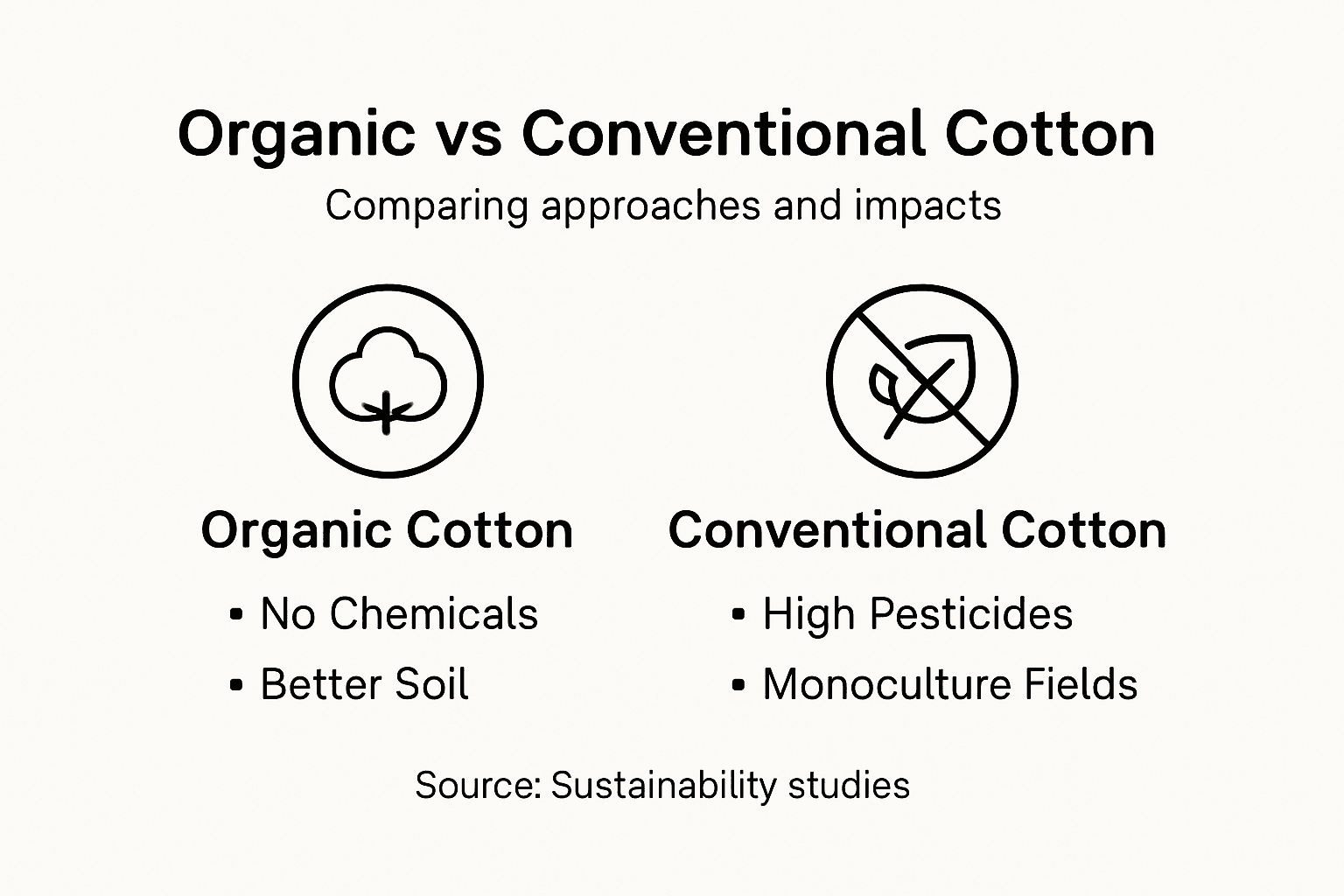
Here’s a side-by-side comparison that highlights key differences between organic and conventional cotton:
| Aspect | Organic Cotton Approach | Conventional Cotton Approach |
|---|---|---|
| Seed Selection | Only uses natural seeds | Frequently uses genetically modified |
| Pest Management | Relies on biological controls | Heavy use of synthetic pesticides |
| Soil Health | Focus on crop rotation, cover crops | Often uses chemical fertilizers |
| Water Usage | Emphasizes conservation methods | Tends to require more irrigation |
| Worker Health | Reduces chemical exposure | Higher risk of toxin exposure |
| Biodiversity Impact | Supports local wildlife | Often reduces biodiversity |
| Certification | Requires third-party verification | Rarely certified for sustainability |
Pro tip: When evaluating cotton products, look beyond price and consider the comprehensive environmental and social costs of production.
Choose Organic Cotton Streetwear That Respects the Planet and Your Skin
The article highlights the crucial challenges of conventional cotton farming such as harmful chemical exposure, environmental degradation, and unethical labor practices. If you are someone who cares about sustainable agricultural practices, worker welfare, and long-term ecological balance, you understand the urgent need to support organic cotton choices. Organic cotton offers superior comfort with natural breathability and skin-friendly properties while dramatically reducing environmental impact and protecting biodiversity.
At MEXESS, we bring you a curated collection of streetwear crafted exclusively from organic and sustainable fabrics. Our sweatshirts, T-shirts, and hoodies embody the very principles discussed in the article, prioritizing health, comfort, and ethical supply chains. Now is the time to switch to fashion that truly respects your skin and the planet.
Discover our latest organic cotton arrivals designed for the eco-conscious urban lifestyle.

Shop at MEXESS today and enjoy free shipping, a 30-day return policy, and products backed by customer reviews. Make a positive impact with every purchase and join a growing community that values sustainability and style. Visit our landing page now to explore how your fashion choices can protect the environment while keeping you comfortable.
Frequently Asked Questions
What is organic cotton and how does it differ from conventional cotton?
Organic cotton is grown using methods that avoid synthetic chemicals, genetically modified organisms, and harmful agricultural techniques. This ensures a more sustainable and environmentally friendly farming process compared to conventional cotton, which relies on synthetic inputs.
What are the environmental benefits of choosing organic cotton?
Choosing organic cotton results in several environmental benefits, including reduced chemical pesticide usage, improved soil fertility, enhanced biodiversity, lower carbon emissions, and better water management practices, all contributing to a healthier ecosystem.
How does organic cotton promote better health and comfort in clothing?
Organic cotton is naturally hypoallergenic, offers excellent moisture-wicking capabilities, and lacks harmful chemical treatments. This results in superior comfort, reduced skin irritation, and an overall better wearing experience compared to synthetic fabrics.
Why is ethical supply chain important in organic cotton production?
Ethical supply chains in organic cotton production prioritize fair labor practices, safe working environments, and community development. This commitment helps improve worker welfare and ensures that the benefits of production extend beyond just the fabric to support social justice and economic empowerment.
Deixa um comentário