

Streetwear’s oversized hoodies and relaxed joggers might seem like the perfect solution for size inclusivity, but the reality is far more complex. While these loose silhouettes naturally accommodate diverse body types, achieving true inclusivity requires sophisticated grading, thoughtful design, and authentic representation. For Gen Z and Millennials who prioritize both sustainability and inclusivity, understanding these nuances shapes smarter shopping choices. This article unpacks why size inclusivity extends beyond baggy fits, explores the business case driving this shift, and reveals practical strategies brands use to deliver genuinely inclusive streetwear that aligns with your values.
Table of Contents
- Key takeaways
- How streetwear’s style supports and challenges size inclusivity
- Why size inclusivity is a business and cultural imperative for Gen Z and Millennials
- How brands achieve size inclusivity in streetwear design and production
- Nuances, challenges, and the road ahead for size inclusivity in streetwear
- Explore sustainable and size-inclusive streetwear collections
- FAQ
Key Takeaways
| Point | Details |
|---|---|
| Grading complexity | Oversized streetwear requires precise grading across sizes to preserve the silhouette. |
| Returns and waste | Inadequate grading drives unpredictable fits, increasing returns and waste unless inclusive design is used. |
| Younger shoppers demand inclusivity | 66% see size inclusivity as a dealbreaker and many intentionally buy from inclusive brands. |
| Market growth for inclusivity | The plus size market is large and growing, offering revenue opportunities for brands that invest in authentic inclusive design. |
How streetwear’s style supports and challenges size inclusivity
StreetWear’s signature relaxed cuts create a natural foundation for size inclusivity. Oversized hoodies, wide-leg pants, and joggers bypass many of the fit complications that plague tailored clothing. Streetwear’s loose silhouettes naturally accommodate diverse body types, fitting the 38.37% casual plus-size market share. This alignment between style and inclusivity isn’t accidental. The culture emerged from skate parks and hip-hop communities where comfort and movement mattered more than restrictive fits.
Yet this aesthetic advantage masks real manufacturing challenges. Grading an oversized hoodie across sizes demands more than simply scaling up measurements. Each size jump requires recalculating sleeve length, shoulder width, torso proportion, and hem placement to maintain the intended silhouette. A 3XL hoodie graded poorly might hang awkwardly or bunch in unexpected places, defeating the purpose of the relaxed fit. These proportion shifts become exponentially complex as size ranges expand.
“Oversized hoodies, wide-leg pants, and joggers exemplify authentic inclusivity when manufacturers invest in proper grading techniques rather than assuming loose fits solve everything.”
The consequences of inadequate grading ripple through the entire customer experience. Returns spike when garments fit unpredictably despite generous sizing. Shoppers lose trust in brands that claim inclusivity but deliver inconsistent fits. This creates a sustainability problem too, as returned items generate transportation emissions and often cannot be resold. Smart brands recognize that streetwear’s casual aesthetic provides opportunity, not a shortcut.
Consider how sustainable streetwear explained connects inclusive design with environmental responsibility. Key considerations include:
- Grading systems that account for body diversity across all size ranges
- Testing protocols using models with varied body types and proportions
- Fabric selection that maintains structure without restricting movement
- Quality control processes that catch fit inconsistencies before shipping
The streetwear industry stands at a crossroads. Brands can either leverage the style’s natural inclusivity through thoughtful manufacturing or perpetuate exclusion through lazy scaling. Your purchasing choices signal which approach wins.
Why size inclusivity is a business and cultural imperative for Gen Z and Millennials
Younger consumers don’t just prefer inclusive brands; they actively reject exclusionary ones. 66% of Gen Z see size inclusivity as a dealbreaker, while 76% value diverse advertising and 67% intentionally buy from inclusive brands. These aren’t passive preferences. They represent fundamental values shaping purchase decisions across fashion categories. When a brand launches without extended sizing, Gen Z notices and shares that observation across social platforms instantly.
The financial opportunity matches the cultural demand. The global plus-size clothing market valued at $311.44B in 2023, projected to reach $323.24B in 2024, driven by body acceptance movements and increasing purchasing power. Streetwear brands capturing even a fraction of this market gain substantial revenue while building loyal communities. Inclusivity isn’t charity; it’s smart business strategy aligned with demographic shifts.
| Consumer priority | Gen Z percentage | Impact on brand loyalty |
|---|---|---|
| Size inclusivity as dealbreaker | 66% | High abandonment of exclusive brands |
| Value diverse advertising | 76% | Increased emotional connection and sharing |
| Actively buy from inclusive brands | 67% | Direct revenue impact and repeat purchases |
| Sustainability concerns | 73% | Preference for ethical production methods |
This data reveals intersecting values. The same consumers demanding size inclusivity also prioritize sustainability and ethical production. They understand that sustainable fashion workflow streetwear guide principles apply to inclusive manufacturing. Reducing waste through proper grading, choosing durable fabrics that last across body changes, and transparent supply chains all matter equally.
Brands ignoring these preferences face tangible consequences:
- Lost market share to competitors offering extended sizing
- Negative social media coverage amplifying exclusionary practices
- Reduced brand advocacy among influential younger demographics
- Missed opportunities in the fastest-growing apparel segment
The cultural shift runs deeper than market statistics suggest. Gen Z and Millennials grew up seeing body diversity normalized online. Instagram, TikTok, and YouTube feature creators of all sizes styling streetwear confidently. This visibility creates expectations that retail must match digital representation. When runway shows and brand campaigns fail to reflect this diversity, younger consumers recognize the disconnect immediately.
Authenticity matters intensely to this audience. Performative inclusivity, where brands add a single extended size without proper fit testing, generates more backlash than offering no extended sizes at all. You can spot genuine commitment through transparent sizing charts, diverse model representation, and customer reviews mentioning consistent fit across size ranges.
How brands achieve size inclusivity in streetwear design and production
True inclusivity starts at the pattern block stage, long before garments reach production. Neutral base pattern blocks, intelligent grading, fit testing on diverse models, and structured fabrics form the foundation of inclusive manufacturing. These technical elements might sound abstract, but they directly determine whether a hoodie fits comfortably across a 20-inch size range or only works for a narrow body type.
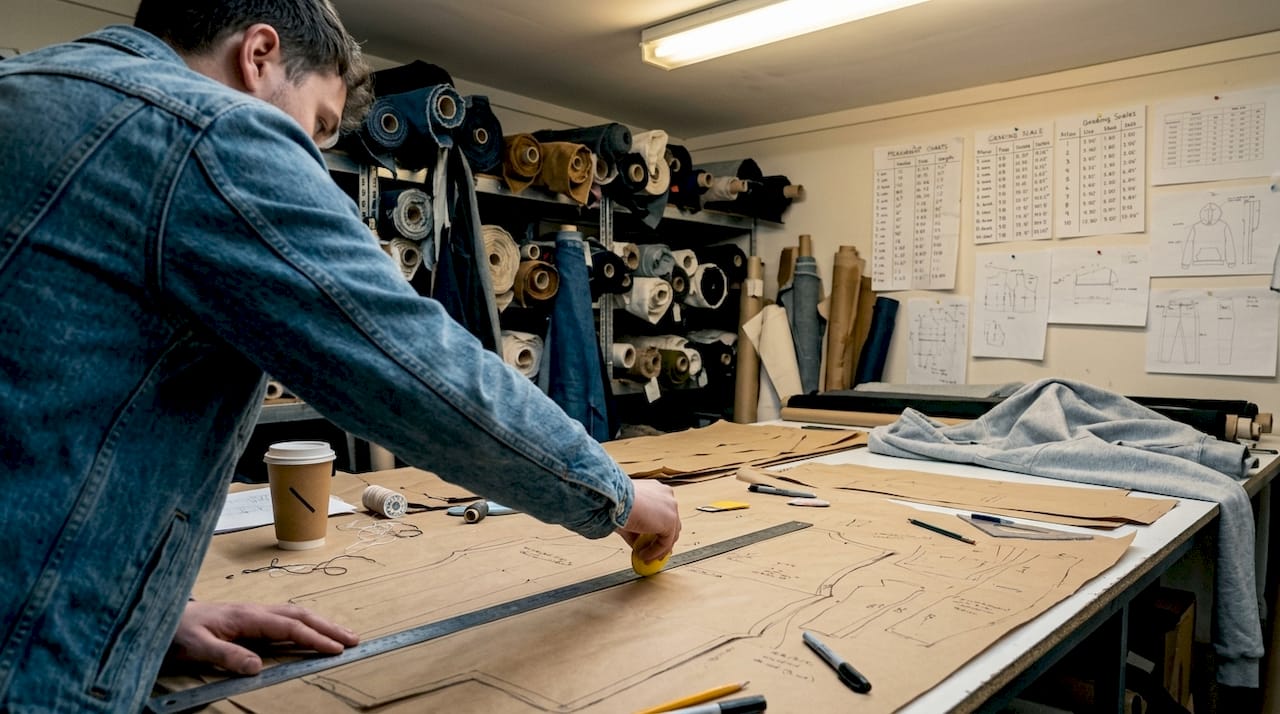
Intelligent grading uses 1-2 inch increments between sizes rather than uniform scaling. This approach recognizes that bodies don’t grow proportionally. Someone wearing 3XL might need more torso length but similar sleeve proportions to someone wearing XL. Smart grading systems account for these variations through careful measurement adjustments at each size point. The process requires extensive data collection from fit testing sessions with diverse body types.
Fabric selection impacts inclusive fit more than most shoppers realize. Mid-weight structured fabrics maintain intended silhouettes across sizes while allowing comfortable movement. Flimsy materials might drape well on smaller frames but cling awkwardly on larger bodies. Conversely, overly rigid fabrics restrict movement and create unflattering bunching. The ideal fabric weight varies by garment type, but consistency across size ranges remains critical.
| Inclusive design element | Implementation method | Impact on fit quality |
|---|---|---|
| Neutral pattern blocks | Unisex base designs avoiding gender assumptions | Accommodates diverse body proportions efficiently |
| Intelligent grading | 1-2 inch increments with proportion adjustments | Maintains silhouette integrity across all sizes |
| Diverse fit testing | Models representing varied body types and heights | Identifies real-world comfort and movement issues |
| Structured fabric selection | Mid-weight materials balancing drape and support | Consistent appearance and durability across sizes |
Pro Tip: When evaluating a brand’s size inclusivity, check whether they provide detailed measurements for each size rather than just S-3XL labels. Brands serious about inclusive fit publish chest, waist, hip, and length measurements, allowing you to compare against your own body dimensions accurately.
Emerging technologies accelerate inclusive manufacturing without sacrificing quality. AI and 3D technologies improve grading efficiency and reduce resource waste by simulating fit across sizes digitally before cutting fabric. These tools allow designers to test proportion adjustments virtually, catching problems that would otherwise surface only after production. The result is fewer samples, less waste, and faster iteration toward optimal inclusive fits.
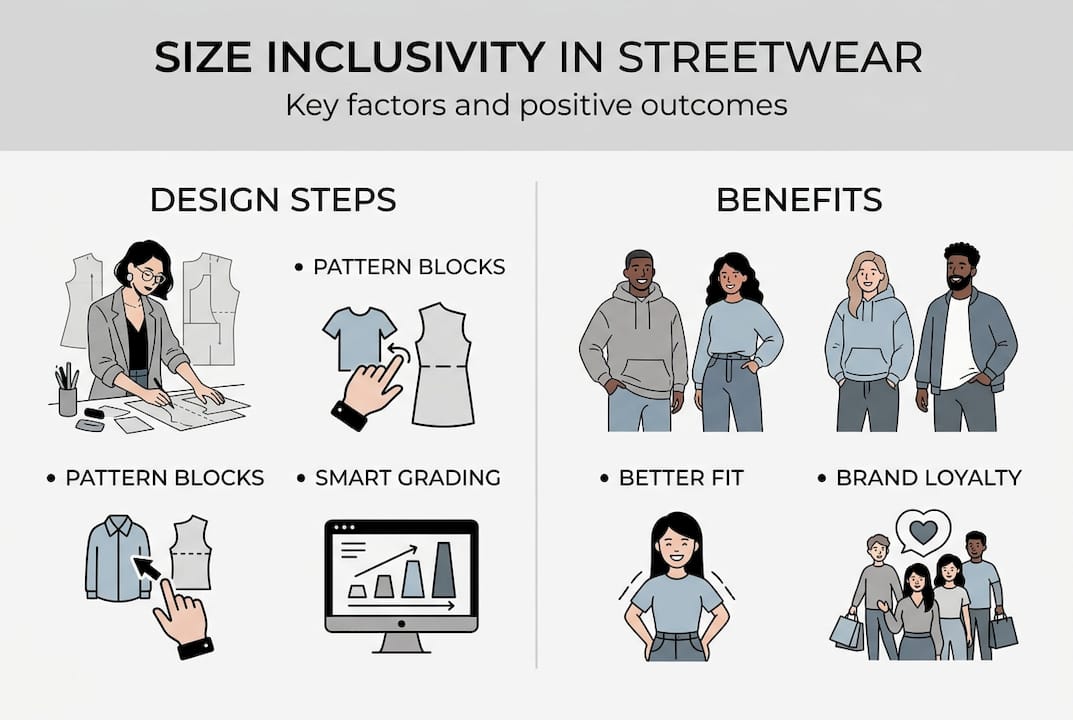
Implementing these methods requires investment, but the payoff extends beyond sales. Brands known for consistent inclusive sizing build communities of loyal advocates who share positive experiences. These customers become repeat buyers and recommend the brand to friends facing similar fit challenges elsewhere. The sustainable fashion workflow streetwear guide connects these manufacturing choices with broader sustainability goals.
Practical steps brands take to ensure inclusive production:
- Hiring fit models across the full size range, not just standard sizing
- Conducting wear testing over multiple days to assess comfort and durability
- Gathering customer feedback systematically and adjusting patterns accordingly
- Training production teams on the specific requirements of inclusive grading
- Publishing transparent sizing guides with multiple measurement points
The technical complexity explains why some brands struggle with inclusive sizing despite good intentions. Manufacturing truly inclusive streetwear demands expertise, investment, and commitment to ongoing refinement. Brands cutting corners produce inconsistent fits that damage trust and increase returns.
Nuances, challenges, and the road ahead for size inclusivity in streetwear
While consumer demand for inclusivity surges, industry representation lags dramatically. Runway representation of plus-size models remains at 0.3-0.9%, alienating 74% of plus-size shoppers who see no reflection of themselves in high-fashion presentations. This disconnect between street-level diversity and runway homogeneity signals deeper structural issues. Luxury streetwear brands especially struggle to reconcile aspirational marketing with inclusive reality.
Performative inclusivity creates another minefield. Brands announcing extended sizing without investing in proper grading face swift backlash when customers receive ill-fitting garments. The announcement generates positive press initially, but negative reviews accumulate as shoppers discover the sizing exists in name only. This phenomenon proves more damaging than never offering extended sizes, as it signals dishonesty rather than limitation.
“Authentic inclusivity requires brands to acknowledge when they lack expertise and partner with specialists rather than rushing poorly executed size expansions to market.”
Controversy erupts when brands publicly discuss size range decisions. Some brands face backlash for excluding plus sizes citing health or logistics concerns, sparking polarized debates about representation, business viability, and social responsibility. These conflicts reveal tensions between operational realities and cultural expectations. Brands navigating this terrain must balance transparency about manufacturing challenges with commitment to expanding access.
The sustainability angle adds another layer of complexity. Quality grading and authentic sizing reduce returns and environmental waste, supporting ethical fashion goals. However, expanding size ranges initially increases sample production and testing requirements. Forward-thinking brands view this as necessary investment rather than prohibitive cost. The long-term benefits of reduced returns, increased customer lifetime value, and positive brand reputation outweigh upfront expenses.
Challenges brands must address for genuine inclusivity:
- Technical grading expertise across extended size ranges
- Retail space allocation for displaying diverse sizing in physical stores
- Marketing imagery that authentically represents size diversity
- Supply chain flexibility to produce varied size distributions
- Customer service training on inclusive sizing conversations
The path forward requires systemic change beyond individual brand efforts. Industry-wide standards for inclusive grading would reduce confusion and set baseline expectations. Educational programs training designers and manufacturers in inclusive techniques would expand expertise. Retail partnerships prioritizing diverse brand representation would increase visibility for inclusive streetwear options.
Technology offers promising solutions. Virtual fitting rooms using body scanning reduce return rates by helping customers select accurate sizes before purchase. AI-powered recommendation engines learn from return patterns to suggest better fits. These tools work best when combined with fundamentally sound inclusive grading, not as substitutes for proper manufacturing.
Steps toward authentic industry-wide inclusivity:
- Establish transparent sizing standards with detailed measurement charts
- Invest in diverse fit model programs representing actual customer demographics
- Implement customer feedback loops that directly inform pattern adjustments
- Partner with inclusive design consultants during collection development
- Commit to gradual, sustainable size range expansion rather than rushed announcements
The sustainable fashion workflow streetwear guide demonstrates how inclusive practices integrate with broader sustainability commitments. Brands treating inclusivity as core value rather than marketing trend build lasting competitive advantages. Your choices as a consumer accelerate or slow this transformation.
Explore sustainable and size-inclusive streetwear collections
Finding brands that authentically deliver on both sustainability and inclusivity requires research, but the effort pays off in garments that fit well and align with your values. Mexess embodies these principles through minimalist urban designs manufactured with inclusive grading and organic materials. The collections feature the oversized silhouettes and clean lines that define modern streetwear, engineered to fit diverse body types consistently.
When you choose brands transparent about their sustainable streetwear explained practices and sizing methodologies, you support the industry shift younger consumers demand. Mexess publishes detailed sizing information and sources materials ethically, connecting inclusive design with environmental responsibility. The sustainable fashion workflow streetwear guide reveals how these commitments work together practically.
Explore the Mexess sustainable streetwear collection to experience how inclusive grading and minimalist design create versatile pieces for contemporary urban lifestyles. Pro Tip: Look for brands offering free returns and detailed measurement guides, as these policies indicate confidence in their inclusive sizing accuracy.
FAQ
What is size inclusivity in streetwear?
Size inclusivity in streetwear means offering a wide range of sizes designed to fit diverse body types authentically, not just scaling standard sizes up. It involves thoughtful grading that maintains intended silhouettes across all sizes, proper fit testing on varied body types, and representation in marketing that reflects customer diversity. True inclusivity requires technical expertise in pattern making and commitment to quality across the entire size range.
How does size inclusivity affect sustainability in fashion?
Properly graded inclusive sizes reduce returns and waste, supporting ethical and sustainable fashion by lowering the carbon footprint associated with shipping and processing returned items. Inclusive sizing encourages longer-lasting garments because better fit increases wear frequency and emotional attachment. When customers find pieces that fit well initially, they keep them longer and buy more thoughtfully, reducing overall consumption and waste.
What challenges do brands face implementing size inclusivity?
Sizing grading is complex, runway representation remains minimal, and some brands face backlash when choosing to exclude sizes for stated logistical or health reasons. Manufacturing grading and fit testing across extended ranges demands technical expertise and higher upfront costs. Retail practices often lack physical space and systems to display diverse sizing effectively. Brands must balance authenticity with operational realities while navigating polarized public debates about representation and business viability.
How can consumers support size-inclusive streetwear brands?
Shop from brands transparent about extended sizing methodologies and sustainable manufacturing practices, prioritizing those publishing detailed measurement charts and diverse model representation. Engage with brands through feedback and social media to advocate for continued inclusivity improvements and hold companies accountable for performative claims. Choose quality pieces that fit well to reduce waste and returns, and share positive experiences to help others discover genuinely inclusive options in a crowded market.
Αφήστε ένα σχόλιο