

Finding streetwear that matches your style and commitment to sustainability can feel like a challenge. Fast fashion’s environmental footprint is often underestimated, and not every brand is upfront about their true impact. For those who want clothing that looks sharp without sacrificing their principles, discovering the truth about sustainable streetwear reveals options that combine trend-setting style with ethical practices. This guide clears up common misconceptions and shows how eco-friendly fashion fits your urban lifestyle.
Table of Contents
- Defining Sustainable Streetwear And Misconceptions
- Core Materials And Eco-Friendly Production Methods
- Design Longevity And Functional Characteristics
- Economic And Social Impact Of Sustainable Streetwear
- Challenges, Costs, And Common Pitfalls
- Alternatives And How To Shop Responsibly
Key Takeaways
| Point | Details |
|---|---|
| Sustainable Streetwear Redefines Fashion | It combines style and environmental consciousness, proving that eco-friendly clothing can be stylish without compromising quality. |
| Eco-Friendly Materials Matter | Key materials like Organic Cotton and Recycled Polyester significantly reduce environmental impact while enhancing garment performance. |
| Long-Lasting Design is Essential | Emphasizing design longevity reduces waste and transforms clothing into sustainable, versatile investments. |
| Consumer Choices Drive Change | Research brands’ supply chain transparency and ethical practices to support impactful sustainable fashion decisions. |
Defining Sustainable Streetwear and Misconceptions
Sustainable streetwear represents more than just trendy clothing - it’s a conscious approach to fashion that challenges traditional industry practices. At its core, sustainable streetwear focuses on minimizing environmental impact while creating stylish, high-quality apparel that resonates with socially aware consumers. Sustainable fashion practices are fundamentally about reimagining how clothing is produced, consumed, and ultimately disposed of.
The fashion industry has long operated under harmful models of mass production and rapid consumption. Sustainable streetwear disrupts these traditional approaches by prioritizing several key principles:
- Ethical material sourcing that reduces environmental harm
- Responsible manufacturing with fair labor practices
- Circular design enabling clothing recycling and reuse
- Minimalist production that reduces waste
- Transparent supply chains that hold brands accountable
Many consumers harbor misconceptions about sustainable fashion, often believing it means sacrificing style for environmental consciousness. However, contemporary sustainable streetwear proves that eco-friendly clothing can be both aesthetically compelling and functionally superior. Environmental impact assessments demonstrate that strategic shifts in production can dramatically reduce fashion’s carbon footprint.
Contrary to popular belief, sustainable streetwear isn’t about limiting fashion choices but expanding them through innovative design and responsible manufacturing. The movement challenges fast fashion’s disposable culture by creating clothing that’s built to last, look good, and minimize environmental damage.
Pro tip: Research brands that provide transparent information about their manufacturing processes and material sourcing to make more informed sustainable fashion choices.
Core Materials and Eco-Friendly Production Methods
Sustainable streetwear’s foundation lies in carefully selected eco-friendly materials that dramatically reduce environmental impact. Sustainable fabric technologies have revolutionized how designers approach textile production, moving beyond traditional resource-intensive methods. Modern streetwear brands now prioritize materials that minimize ecological damage while maintaining superior style and performance.
Key sustainable materials transforming streetwear production include:
- Organic cotton with reduced water and pesticide usage
- Recycled polyester made from reclaimed plastic bottles
- Hemp fabric requiring minimal water and no pesticides
- Tencel/Lyocell derived from sustainably harvested wood pulp
- Bamboo textiles grown without chemical interventions
Textile industry sustainability initiatives demonstrate that eco-friendly production isn’t just an environmental choice - it’s becoming a technological and economic imperative. Innovative manufacturers are developing production methods that significantly reduce carbon emissions, water consumption, and chemical waste while creating high-performance streetwear.
The most advanced sustainable production methods focus on circular design principles, ensuring that clothing can be recycled, repurposed, or biodegraded at the end of its lifecycle. This approach challenges traditional linear fashion models by creating garments that minimize waste and maximize resource efficiency.
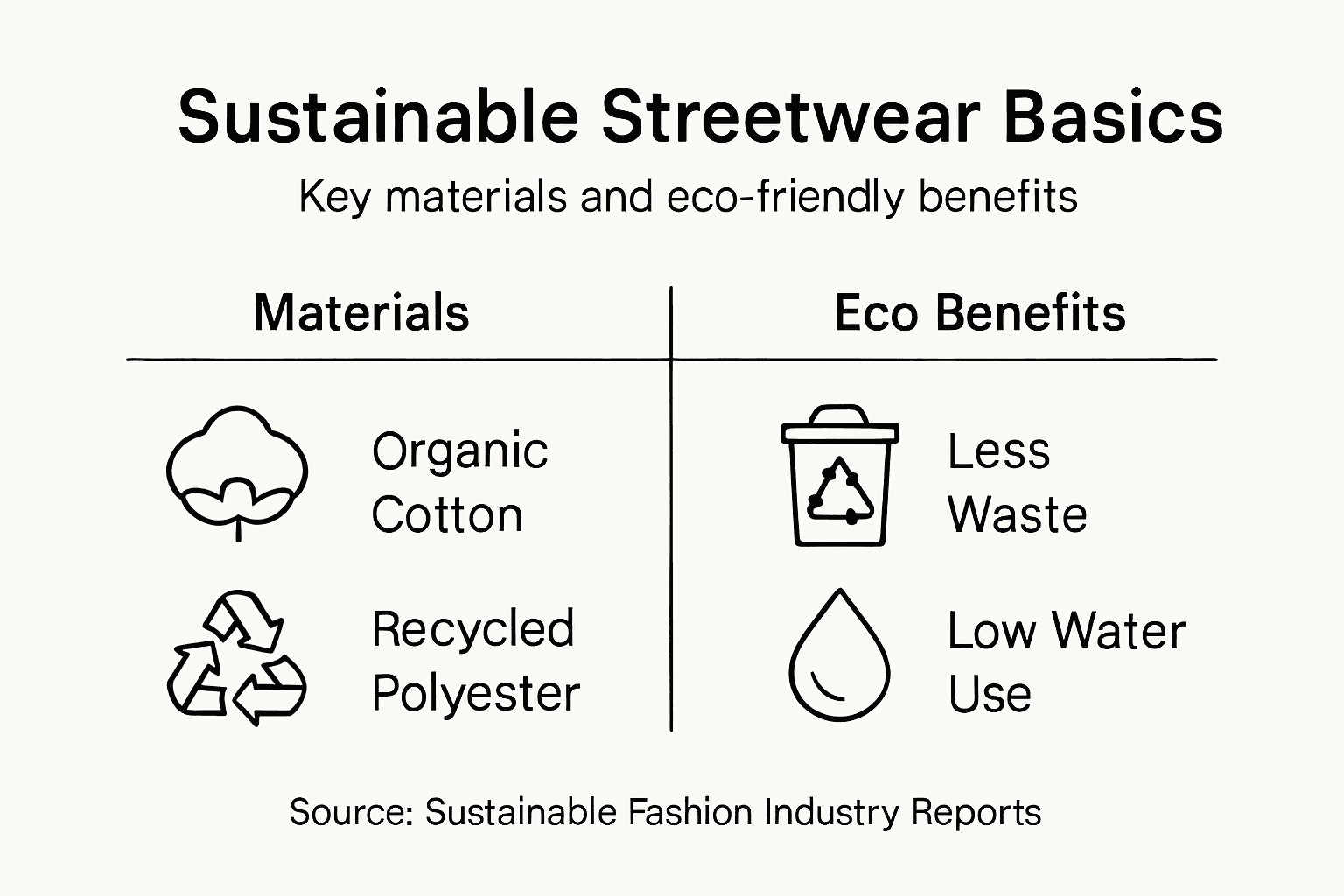
Here’s how common sustainable streetwear materials compare in environmental impact and textile performance:
| Material | Environmental Benefit | Textile Performance | Unique Consideration |
|---|---|---|---|
| Organic Cotton | Minimal pesticide, less water usage | Soft, breathable, long-lasting | May be higher cost than regular cotton |
| Recycled Polyester | Reduces landfill waste, lower emissions | Strong, wrinkle-resistant | Potential for microplastic shedding |
| Hemp | Little water, no pesticides needed | Durable, antimicrobial | Coarse texture in untreated form |
| Tencel/Lyocell | From renewable wood pulp, biodegradable | Smooth, moisture-wicking | Requires advanced processing |
| Bamboo Textile | Rapidly regenerative, no chemicals | Silky, lightweight, absorbent | May be chemically intensive to process |
Pro tip: Look for certifications like Global Organic Textile Standard (GOTS) or Bluesign when purchasing sustainable streetwear to ensure authentic eco-friendly production.
Design Longevity and Functional Characteristics
Sustainable streetwear transcends transient fashion trends by emphasizing design longevity that challenges the disposable nature of traditional clothing. Sustainable design principles focus on creating garments that remain stylish and functional across multiple seasons, effectively reducing waste and environmental impact.
Key functional characteristics of long-lasting streetwear include:
- Modular design allowing multiple styling configurations
- Reinforced construction with durable seam techniques
- Adaptable layering for versatile wear across different conditions
- Timeless aesthetic that resists quick trend obsolescence
- Performance-enhanced fabrics with superior durability
Sustainable fabric selection strategies demonstrate that longevity isn’t just about material quality, but also about creating clothing that maintains its form, function, and aesthetic appeal through repeated wear and wash cycles. This approach transforms streetwear from a disposable commodity into a long-term wardrobe investment.

Advanced sustainable streetwear designers are developing innovative techniques that blend durability with aesthetic flexibility. By prioritizing multifunctional design, they create pieces that can be styled differently, repaired easily, and ultimately extend the lifecycle of each garment far beyond traditional fashion expectations.
Pro tip: Invest in versatile pieces with neutral color palettes and classic cuts that can be mixed and matched across multiple outfits to maximize your sustainable streetwear wardrobe.
Economic and Social Impact of Sustainable Streetwear
Sustainable streetwear represents a powerful movement that extends far beyond fashion, driving significant economic transformation and social change. Sustainable fashion strategies demonstrate how conscious clothing choices can create meaningful impact across global supply chains, empowering workers and communities.
Key economic and social benefits of sustainable streetwear include:
- Fair labor practices that ensure living wages
- Transparent supply chains promoting worker dignity
- Local economic development through ethical manufacturing
- Reduced environmental healthcare costs
- Skill development for marginalized communities
Consumer awareness research reveals that educated consumers are increasingly driving demand for socially responsible fashion. This shift creates economic incentives for brands to prioritize ethical production, worker welfare, and sustainable practices.
By supporting sustainable streetwear, consumers participate in a broader economic ecosystem that values human dignity, environmental preservation, and long-term social innovation. Each purchasing decision becomes a vote for a more equitable and sustainable global fashion industry, challenging traditional exploitative manufacturing models.
Pro tip: Research brands’ supply chain transparency and social impact reports to make informed purchasing decisions that support ethical fashion ecosystems.
Challenges, Costs, and Common Pitfalls
Sustainable streetwear confronts significant challenges that often deter brands and consumers from fully embracing eco-conscious fashion. Sustainability claims in fashion reveal a complex landscape where good intentions frequently clash with economic realities and production limitations.
Key challenges in sustainable streetwear include:
- Higher production costs increasing retail prices
- Complex supply chain transparency
- Limited scalability of sustainable manufacturing
- Consumer perception of compromised style
- Greenwashing by unethical brands
Environmental production barriers demonstrate that transitioning to sustainable practices requires substantial financial investment and technological innovation. Brands must navigate intricate trade-offs between environmental responsibility, economic feasibility, and maintaining competitive product quality.
The most significant pitfall remains the marketing disconnect between sustainable claims and actual environmental impact. Many brands leverage superficial green messaging without implementing meaningful systemic changes, creating consumer skepticism and undermining genuine sustainability efforts in streetwear.
Pro tip: Always verify sustainability claims through third-party certifications and detailed supply chain documentation before supporting a supposedly eco-friendly streetwear brand.
Alternatives and How to Shop Responsibly
Responsible streetwear consumption goes beyond simply buying sustainable brands - it requires a holistic approach to fashion that prioritizes conscious decision-making. Sustainable lifestyle guidelines emphasize the importance of strategic purchasing that minimizes environmental impact while supporting ethical fashion ecosystems.
Practical alternatives for responsible streetwear shopping include:
- Secondhand clothing platforms reducing textile waste
- Clothing rental services for occasional wear
- Capsule wardrobe with versatile, high-quality pieces
- Local and small-batch designer collections
- Repair and upcycling workshops
Ethical brand evaluation strategies provide consumers with critical tools for making informed purchasing decisions. Shoppers should look beyond marketing claims and investigate brands’ actual sustainability practices, including material sourcing, manufacturing processes, and labor conditions.
Ultimately, responsible streetwear shopping is about developing a mindful relationship with clothing. This means prioritizing quality over quantity, understanding the true cost of fashion, and supporting brands that demonstrate genuine commitment to environmental and social responsibility.
Here is a comparison of sustainable streetwear shopping approaches and their impact:
| Approach | Advantages | Limitations | Best For |
|---|---|---|---|
| Secondhand Platforms | Reduces waste, lower cost | Limited sizes and styles | Budget-conscious shoppers |
| Clothing Rental | Rotating styles, lower impact | Access only for short term | Occasional wear needs |
| Capsule Wardrobe | Minimizes overconsumption | Fewer outfit choices | Minimalist stylists |
| Local/Small Batch Designers | Supports local economy | Premium pricing | Unique fashion choices |
| Repair & Upcycling Workshops | Extends garment lifespan | Time investment needed | Creative consumers |
Pro tip: Develop a personal inventory of your clothing, assess actual wear frequency, and invest in versatile pieces that can be styled multiple ways to reduce overall consumption.
Discover Sustainable Streetwear That Makes a Difference
The article highlights the challenge of finding streetwear that truly combines style with genuine sustainability. Many face the frustration of sorting through greenwashed brands or sacrificing fashion for eco-consciousness. If you are looking for authentic sustainable fabrics like organic cotton and recycled materials designed for lasting wear and ethical production, you are not alone. Your goals to support fair labor, reduce environmental impact, and own timeless pieces align perfectly with what thoughtful streetwear should offer.
At MEXESS, we understand these pain points and deliver a curated collection of organic streetwear crafted to meet your values without compromising style or comfort. Explore our newest organic clothing range of sweatshirts, hoodies, and tees made with care for the planet and its people. From transparent material sourcing to durable designs built for longevity, each piece is an opportunity to make a conscious statement.
Elevate your wardrobe with fashion that drives change today.

Experience effortlessly stylish and truly sustainable streetwear at MEXESS. Take advantage of our exclusive new arrivals and special offers for first-time buyers to make your eco-friendly transition seamless. Click now to explore our collections and become a changemaker in streetwear fashion while stocks last.
Frequently Asked Questions
What is sustainable streetwear?
Sustainable streetwear is a fashion movement that emphasizes environmentally friendly practices and ethical manufacturing. It focuses on minimizing environmental impact while creating stylish and high-quality apparel that appeals to socially conscious consumers.
What materials are commonly used in sustainable streetwear?
Sustainable streetwear typically uses eco-friendly materials such as organic cotton, recycled polyester, hemp, Tencel/Lyocell, and bamboo textiles. These materials are chosen for their reduced environmental impact and sustainability during production.
How does sustainable streetwear differ from fast fashion?
Sustainable streetwear differs from fast fashion by prioritizing ethical labor practices, reducing waste through circular design, and focusing on quality over quantity. It promotes longer-lasting garments that minimize the environmental footprint, unlike fast fashion’s model of mass production and rapid consumption.
What are the benefits of investing in sustainable streetwear?
Investing in sustainable streetwear benefits both the environment and society. It supports fair labor practices, reduces waste, and encourages the use of renewable resources. Moreover, these garments are often designed for longevity, making them a more durable choice than typical fast fashion items.
Leave a comment