

Walking into a sustainable streetwear shop, you quickly notice how terms like “organic” and “carbon-neutral” seem everywhere but rarely get explained. Sorting out what these phrases mean matters, especially when your purchases reflect your commitment to the environment and fair treatment for workers. Sustainable fashion is more than a buzzword—it is about cutting emissions, reducing waste, and ensuring fair wages across the industry. This guide breaks down the most common eco-friendly clothing terms so you can spot what truly makes a brand sustainable and avoid falling for empty marketing.
Table of Contents
- Eco-Friendly Clothing Terms Explained Clearly
- Types of Sustainable Fabrics and Materials
- Certifications and Their Real Significance
- Greenwashing: Spotting Misleading Claims
- Choosing Truly Conscious Streetwear Brands
Key Takeaways
| Point | Details |
|---|---|
| Understand Sustainable Terms | Familiarize yourself with eco-friendly clothing terminology to avoid greenwashing and make informed purchasing decisions. |
| Prioritize Certifications | Look for third-party certifications like GOTS and Fair Trade to verify a brand’s sustainability claims. |
| Evaluate Material Impact | Assess the environmental and ethical implications of materials like organic cotton and recycled polyester when choosing garments. |
| Seek Transparency | Choose brands that openly share their supply chain practices and are committed to continuous improvement in sustainability. |
Eco-Friendly Clothing Terms Explained Clearly
Walking into the sustainable fashion space feels like stepping into a new world with its own vocabulary. You’ll encounter terms like organic, biodegradable, and carbon-neutral thrown around constantly, but what do they actually mean? Understanding these concepts matters because they directly influence what you’re buying and why. Eco-friendly clothing terminology exists for real reasons, not just marketing appeal, and grasping the difference between terms helps you make purchases that align with your values rather than falling for greenwashing tactics.
Sustainable fashion represents a broad movement focused on reducing environmental harm throughout the entire clothing lifecycle. Sustainable fashion encompasses cutting CO2 emissions, reducing waste, and ensuring fair wages and safe working conditions for factory workers. When a brand claims to be sustainable, they’re theoretically addressing multiple aspects: the materials used, how those materials are produced, the manufacturing process itself, labor practices, and what happens to the garment after you’re done wearing it. This multi-faceted approach distinguishes genuine sustainable brands from companies simply slapping eco-friendly labels on conventional products.
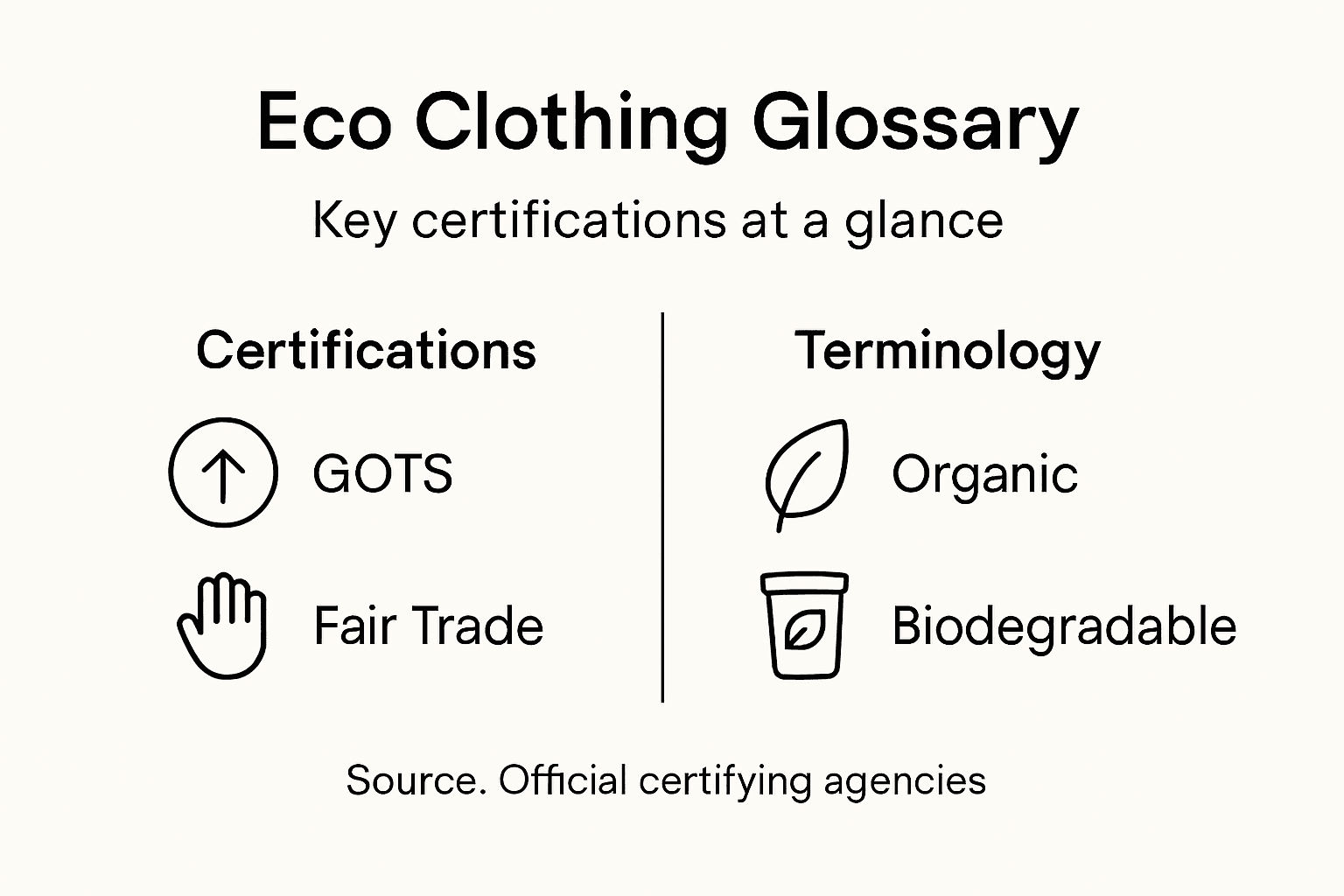
Specific terminology breaks down further into tangible concepts you can actually evaluate. Organic fabrics are grown without synthetic pesticides or fertilizers, meaning the cotton or linen used in your streetwear didn’t rely on harmful chemicals that damage soil and water systems. Biodegradable materials decompose naturally without leaving toxic residue, making them a stark contrast to synthetic fabrics that persist in landfills for decades. Fair trade certification guarantees workers received equitable wages and worked in safe conditions, addressing the human element often overlooked in sustainability conversations. Understanding how sustainable fabrics are manufactured and their environmental impact gives you concrete knowledge about what differentiates a $40 organic tee from a $15 conventional one.
The terminology extends to production methods and environmental metrics as well. Carbon-neutral means a brand has calculated their emissions and offset them through verified environmental projects, though this approach has critics who argue it avoids addressing emissions at their source. Upcycled clothing transforms existing garments or textile scraps into new products, preventing perfectly good material from entering landfills. Dead stock refers to unsold inventory that brands convert into new pieces rather than discarding. Supply chain transparency means you can actually trace where your garment came from, which threads matter far more than vague claims about being eco-conscious. Young adults shopping for sustainable streetwear should focus on brands that openly share these details rather than those hiding behind buzzwords.
Pro tip: Check brand websites for specific certifications like GOTS (Global Organic Textile Standard) or Fair Trade Certified labels rather than relying on self-created environmental claims, since third-party certifications provide independent verification of what the brand actually does.
Types of Sustainable Fabrics and Materials
Not all eco-friendly fabrics are created equal. Your streetwear choices depend heavily on understanding which materials actually deliver on sustainability promises versus those just riding the green wave. The fabric you choose determines water usage during production, chemical pollution, durability of your garment, and ultimately how long before it hits a landfill. When you’re scrolling through sustainable brands, knowing the difference between organic cotton and recycled polyester transforms you from a casual shopper into someone making informed decisions.
Organic cotton remains one of the most recognizable sustainable options, grown without synthetic pesticides or fertilizers that damage soil ecosystems. Unlike conventional cotton, which accounts for roughly 16 percent of global insecticide use despite occupying only 2.5 percent of cultivated land, organic varieties protect agricultural workers and surrounding communities from toxic chemical exposure. Hemp emerges as an increasingly popular choice for streetwear because it requires minimal water, grows without pesticides, and produces fiber quickly without depleting soil nutrients. Linen offers similar benefits, thriving with minimal intervention and creating durable garments that age beautifully rather than degrading after a few washes. Recycled polyester takes discarded plastic bottles and synthetic textiles, transforming waste into wearable material while reducing demand for virgin petroleum-based production. Sustainable fabrics made from renewable materials reduce landfill waste and carbon emissions, addressing multiple environmental concerns simultaneously.
Innovative materials push sustainability boundaries further. Tencel (also called lyocell) derives from wood pulp processed using a closed-loop system that recycles 99 percent of solvents, meaning minimal chemical discharge into waterways. Bamboo fabric grows rapidly without fertilizers or pesticides, though manufacturing processes vary significantly in environmental impact. Cork fabric upcycles cork waste from wine production, creating unique textures perfect for accessories. Mylo represents next-generation biotech materials, growing leather-like fabric from mushroom mycelium in labs rather than relying on animal agriculture or petroleum. The catch? Many innovative fabrics remain expensive and limited in availability, which is why you’ll still encounter them primarily in premium sustainable brands rather than mainstream streetwear. Fabrics to avoid include conventional cotton, polyester, and synthetic fibers due to their high environmental impact, though recycled versions of these materials present viable alternatives.

When evaluating materials, consider the complete picture. A sustainably produced garment should balance environmental impact with durability, ethical labor practices, and chemical safety. Dead stock fabrics use existing inventory, eliminating the environmental cost of new production while preventing waste. Blended fabrics combine organic cotton with recycled polyester or hemp, creating garments with balanced performance characteristics. The reality is that perfect sustainability doesn’t exist yet. Every fabric choice involves tradeoffs between water usage, carbon emissions, chemical safety, and durability. Your job as a conscious consumer involves understanding these tradeoffs rather than searching for mythical zero-impact clothing. Prioritize brands that transparently discuss their material choices, acknowledge tradeoffs, and invest in continuous improvement rather than those claiming absolute environmental perfection.
Here’s a quick overview of popular sustainable fabrics and their sustainability features:
| Fabric Type | Main Environmental Benefit | Common Drawback |
|---|---|---|
| Organic Cotton | Minimal pesticide use | Still uses significant water |
| Hemp | Low water, pesticide-free cultivation | Can be less soft initially |
| Linen | Requires few chemicals to produce | Wrinkles easily |
| Recycled Polyester | Reduces plastic waste | Microfiber shedding |
| Tencel (Lyocell) | Closed-loop chemical process | Higher cost |
| Bamboo | Fast-growing, renewable | Some processes use harsh chemicals |
| Cork | Upcycles wine industry byproduct | Mostly used in accessories |
| Mylo (Mushroom) | Grown from renewable mycelium | Expensive, not yet widespread |
Pro tip: Check product tags and brand websites for specific fiber composition and third-party certifications like GOTS or OEKO-TEX, since material combinations and manufacturing standards dramatically affect the actual sustainability of your purchase.
Certifications and Their Real Significance
You’ve probably seen certification labels scattered across sustainable clothing websites. There’s GOTS, Fair Trade, OEKO-TEX, B Corp, and countless others that promise environmental or ethical compliance. But here’s the uncomfortable truth: not all certifications carry equal weight, and some exist primarily to make brands feel legitimate without requiring substantial changes. Understanding which certifications actually matter separates genuine sustainability efforts from sophisticated marketing plays that exploit your desire to shop responsibly.
Third-party certifications function as accountability mechanisms that independent organizations implement to verify brand claims. When a certification comes from an external auditor rather than the brand itself, it carries legitimacy because someone other than the profit-driven company is checking compliance. The Global Organic Textile Standard (GOTS) represents one of the most credible options, setting widely recognized requirements for organic textiles from raw material harvesting through production to labeling. GOTS includes independent audits and ongoing monitoring, meaning a brand can’t simply claim organic status without verification. Fair Trade certification ensures workers received equitable compensation and worked in safe conditions, addressing the human rights dimension often buried beneath environmental buzzwords. OEKO-TEX Standard 100 certifies that textiles were tested for harmful substances, protecting your skin from chemical residues that conventional manufacturing leaves behind. These certifications require documented processes, transparent supply chains, and willingness to submit to inspection, which costs brands significant money and operational complexity.
The challenge emerges when certifications become commodified or when brands cherry-pick certifications for specific products while maintaining questionable practices elsewhere. Sustainability certifications face challenges such as greenwashing, free riding, and resistance to disruptive innovations, meaning the certification landscape requires your critical evaluation rather than blind trust. Some certifications apply only to specific aspects of production, creating gaps in overall sustainability. A brand might hold Fair Trade certification for labor practices while using pesticide-heavy conventional cotton, or maintain organic fabric certification while shipping products globally with massive carbon footprints. Greenwashing occurs when companies obtain a single certification, then market themselves as fully sustainable based on that partial credential. Real sustainable brands typically pursue multiple certifications across different aspects of production because they’ve genuinely addressed various environmental and social concerns.
When shopping, prioritize brands displaying multiple complementary certifications rather than relying on a single badge. Check whether certifications cover the specific aspects you care about: environmental impact, labor rights, chemical safety, or waste reduction. Visit certification websites directly to verify that brands actually maintain current status rather than displaying outdated or expired credentials. B Corp certification indicates rigorous performance standards across social and environmental impact, though it remains expensive and primarily available to established brands. Look for certifications that require ongoing compliance and regular audits rather than one-time approvals. The most transparent sustainable brands prominently display which certifications they hold, why they chose specific certifications, and which areas they’re still improving. Absence of certification doesn’t necessarily indicate unsustainability, but presence of rigorous third-party verification suggests a brand committed to accountability beyond marketing rhetoric.
This table summarizes leading fashion certifications and what they actually verify:
| Certification | Verifies | Best For |
|---|---|---|
| GOTS | Organic materials, sustainability | Organic textiles, transparency |
| Fair Trade | Fair wages, safe conditions | Labor rights, ethical sourcing |
| OEKO-TEX | No harmful chemicals | Skin safety, chemical compliance |
| B Corp | Social and environmental impact | Holistic business practices |
Pro tip: When evaluating a brand, check if their certifications appear on the official certification body websites and verify current status directly rather than trusting brand websites alone, since expired or falsified credentials are surprisingly common in sustainable fashion.
Greenwashing: Spotting Misleading Claims
Walking through a sustainable fashion website, you’ll see promises everywhere. Eco-friendly. Natural. Conscious. Responsible. Green. The language feels reassuring, creating an impression that you’re making an ethical choice. The problem? These buzzwords often mean absolutely nothing without concrete evidence backing them up. Greenwashing refers to false or misleading environmental claims that deceive consumers about the sustainability of products or companies, and it’s become increasingly sophisticated as brands recognize that eco-conscious shoppers represent a profitable market segment. Spotting greenwashing requires skepticism, specific knowledge, and willingness to dig deeper than marketing copy suggests.
Greenwashing operates through several predictable tactics that once you recognize them, become obvious across brands. Vague terminology tops the list, with brands using words like “eco-friendly” or “natural” without explaining what those terms actually mean or proving compliance. A shirt labeled “sustainable” tells you nothing about water usage, chemical processing, or labor conditions. Hidden trade-offs occur when brands emphasize one legitimate environmental attribute while ignoring larger sustainability issues. A company might highlight organic cotton sourcing while using non-recyclable synthetic dyes and packaging, creating a false impression of comprehensive sustainability. Misleading imagery uses green colors, leaf logos, or nature photography to suggest environmental responsibility without actual proof. False certifications mimic legitimate third-party seals, sometimes so convincingly that casual shoppers can’t distinguish authentic certifications from fabricated ones. Selective disclosure reveals positive sustainability metrics while hiding damaging information, like publicizing carbon-neutral shipping while ignoring their overseas manufacturing emissions. Greenwashing can be intentional or accidental and slows genuine sustainability progress by confusing consumers, meaning well-intentioned brands might accidentally mislead through imprecise language.
The most effective greenwashing targets your emotions rather than your logic. Brands craft narratives about their sustainability journey, use authentic-feeling language, and feature real workers in photographs, all while maintaining practices that contradict their messaging. They highlight modest improvements as revolutionary changes, claiming a 20 percent emissions reduction as groundbreaking progress while the industry standard is 35 percent. They pursue the easiest, most visible certifications while ignoring harder-to-achieve standards that would genuinely transform their impact. Real sustainable brands instead provide specific data: exact water usage reduction percentages, documented supply chain transparency with factory names and locations, third-party audit results, and honest acknowledgment of areas where they’re still improving. They explain their certifications and what those specific credentials verify rather than displaying a collection of badges without context.
To protect yourself, demand concrete evidence rather than accepting surface-level claims. Request specific information about materials, production methods, labor conditions, and certifications. Check whether certifications actually exist by visiting the official certification website independently. Search for independent reviews or articles analyzing the brand’s actual practices rather than trusting their marketing materials. Compare claimed sustainability against competitors in the same price range, as greenwashing thrives through comparison bias. Look for brands that acknowledge limitations and challenges rather than claiming perfection. Most importantly, recognize that perfect sustainability doesn’t exist yet, so genuine brands admit their environmental impact and explain what they’re doing to reduce it rather than claiming they’ve already solved the problem. The brands worth supporting are those transparent enough to admit what they don’t yet do well.
Pro tip: When a brand makes sustainability claims, ask them directly via email or social media to provide specific certifications, third-party audit results, or measurable data points, since genuine brands eagerly share documentation while greenwashers often provide vague non-answers.
Choosing Truly Conscious Streetwear Brands
Finding a genuinely conscious streetwear brand feels like searching for a needle in a haystack filled with marketing buzzwords and greenwashing. You want pieces that reflect your values, fit your aesthetic, and actually deliver on sustainability promises. The good news? Real conscious brands exist, and they stand out dramatically once you know what signals to look for. They’re transparent about their supply chains, willing to share uncomfortable truths about their environmental impact, and constantly pushing themselves to improve rather than claiming perfection.
Conscious streetwear brands prioritize specific, verifiable practices across multiple dimensions. Sustainable fabric selection matters first, which means choosing brands that incorporate recycled and organic materials rather than relying on virgin synthetics. Brands worth supporting use organic cotton, hemp, Tencel, or recycled polyester as their core materials rather than occasionally featuring sustainable options in limited drops. Fair labor practices separate genuine brands from those exploiting workers while claiming ethical production. Real conscious brands publish factory names, worker wages, and working conditions rather than hiding behind vague supply chain claims. They pursue Fair Trade certification or similar third-party verification specifically to prove labor standards rather than self-certifying their ethics. Supply chain transparency means you can actually trace where your hoodie came from, which specific factories produced it, and what certifications those facilities maintain. Brands displaying this information prominently understand that transparency builds trust, while secretive brands typically have something to hide. Look for companies sharing sustainability reports, impact data, and honestly addressing areas where they’re still struggling.
Beyond production practices, conscious brands embrace circular business models that extend garment lifecycles. Some offer repair services, recognizing that a $60 sweatshirt lasting five years instead of two dramatically reduces environmental impact per wear. Others facilitate resale programs or take-back initiatives, acknowledging that their responsibility extends beyond the initial sale. Brands establishing upcycling programs or incorporating deadstock materials into new collections demonstrate commitment to reducing waste rather than endlessly producing new inventory. The cultural element matters too. Wearing eco-conscious streetwear signals commitment to sustainability and social impact in urban culture, transforming individual purchases into broader cultural movements. Young adults choosing conscious brands aren’t just buying clothes; they’re voting with their wallets for the kind of industry they want to see. Brands that understand this dynamic celebrate customer values rather than positioning sustainability as guilt-driven obligation.
When evaluating specific brands, ask direct questions before purchasing. Where are the fabrics sourced? Which factories produce the garments? What certifications do those facilities maintain? How many people work there and what are their wages? What’s the brand’s actual carbon footprint and what are they doing to reduce it? Brands genuinely committed to consciousness answer these questions with specificity and documentation rather than vague marketing language. Start with brands you already admire and research their practices, or explore community recommendations on social media platforms where young adults discuss sustainable fashion. Remember that perfect sustainability doesn’t exist, so look for brands demonstrating genuine effort, transparency about limitations, and commitment to continuous improvement. The most conscious brands are those constantly asking themselves how to do better rather than claiming they’ve already solved sustainability.
Pro tip: Follow sustainable streetwear brands on social media and sign up for their newsletters to track their transparency practices over time, since brands genuinely committed to consciousness regularly share production updates, sustainability challenges, and progress reports rather than only posting aesthetic product photos.
Make Informed Sustainable Choices with MEXESS
Understanding eco-friendly clothing terminology like organic fabrics, biodegradable materials, and fair trade certification is key to making conscious streetwear purchases. You deserve apparel that matches your values without falling for vague “eco-friendly” claims or greenwashing. At MEXESS, we curate a thoughtful collection of streetwear made from certified sustainable fabrics and transparent supply chains. Our focus is on honesty and quality so you can confidently build a wardrobe that supports the environment and fair labor.
Explore our organic and sustainable streetwear designed to help you translate eco-friendly terms into real impact.

Discover new arrivals crafted from materials like organic cotton and recycled polyester paired with fair labor practices. Shop now at MEXESS to join the next wave of conscious consumers who demand transparency, quality, and style without compromise.
Frequently Asked Questions
What does sustainable fashion mean?
Sustainable fashion refers to a movement aimed at reducing environmental harm throughout the entire lifecycle of clothing, including material sourcing, production processes, labor practices, and end-of-life disposal.
How is organic cotton different from conventional cotton?
Organic cotton is grown without synthetic pesticides or fertilizers, which helps protect soil ecosystems and agricultural workers from harmful chemicals, whereas conventional cotton often uses these chemicals extensively.
What are biodegradable materials, and why are they important?
Biodegradable materials are substances that break down naturally without leaving toxic residue, making them essential for reducing landfill waste and minimizing environmental impact when compared to synthetic fabrics that can persist for decades.
How can I identify genuine sustainable certifications for clothing?
Look for third-party certifications like GOTS (Global Organic Textile Standard) and Fair Trade, as these indicate independent verification of sustainable and ethical practices rather than self-proclaimed eco-friendly claims.
Recommended
- How Sustainable Fabrics Are Made – Impact On Fashion – MEXESS
- How Sustainable Fabrics Are Made – Impact On Fashion – MEXESS
- How Sustainable Fabrics Are Made – Impact On Fashion – MEXESS
- How Sustainable Fabrics Are Made – Impact On Fashion – MEXESS
- Organic Hair Conditioner: Everything You Need to Know | MyHair
Leave a comment