

Finding streetwear that actually reflects your values can feel like searching for authenticity in a fast-moving trend cycle. Many urban fashion fans want their style to support both the planet and its people, but headlines about greenwashing and labor exploitation make trust hard to find. In this guide, you’ll get clarity on sustainable fashion, uncover its roots, and see how conscious choices can fuel creative self-expression while promoting real change in global fashion.
Table of Contents
- Defining Sustainable Fashion and Its Roots
- Core Principles: Ethics, Environment, Equity
- Streetwear, Fast Fashion, and Greenwashing
- Environmental Impact and Social Responsibility
- The Role of Consumers in Shaping Change
Key Takeaways
| Point | Details |
|---|---|
| Sustainable Fashion Principles | Sustainable fashion focuses on environmental responsibility, social justice, and economic equity, pushing for a holistic change in the industry. |
| Consumer Influence | Consumers play a vital role in shaping sustainable practices by demanding transparency and supporting ethical brands. |
| Avoiding Greenwashing | It’s crucial for consumers to research brands and their sustainability claims to avoid misleading marketing tactics. |
| Long-Term Impact | Investing in durable, high-quality pieces contributes to reduced waste and promotes sustainable consumption patterns in the fashion industry. |
Defining Sustainable Fashion and Its Roots
Sustainable fashion represents a transformative approach to clothing production and consumption that goes far beyond aesthetic considerations. Complex social-ecological dynamics reveal fashion’s profound environmental and social impacts, challenging traditional industry practices.
At its core, sustainable fashion seeks to minimize negative consequences throughout the entire fashion lifecycle. This holistic perspective encompasses multiple critical dimensions:
- Reducing carbon emissions from textile production
- Minimizing water pollution and waste
- Ensuring fair labor practices and worker rights
- Promoting eco-friendly material sourcing
- Creating durable, long-lasting garments
The roots of sustainable fashion emerge from growing global awareness about fashion’s substantial environmental footprint. The industry currently contributes significantly to global carbon emissions, with fast fashion accelerating unsustainable consumption patterns. Systemic transformative approaches are essential for meaningful change.
Sustainable fashion transcends simple definitions, representing an ongoing commitment to responsible production and consumption. It requires continuous adaptation, innovative thinking, and collaborative efforts across industries, policymakers, and consumers.
Pro tip: Start your sustainable fashion journey by investing in versatile, high-quality pieces that will remain stylish and functional for multiple seasons.
To clarify how sustainable fashion compares to conventional fashion, see the table below:
| Aspect | Sustainable Fashion | Conventional Fashion |
|---|---|---|
| Production Approach | Eco-friendly and ethical | Mass production, low cost |
| Labor Practices | Fair wages, safe conditions | Often exploitative, unsafe |
| Environmental Impact | Reduced emissions, less waste | High pollution, excess waste |
| Product Longevity | Durable, long-lasting | Trend-driven, disposable |
| Transparency | Open supply chain information | Opaque supply chains |
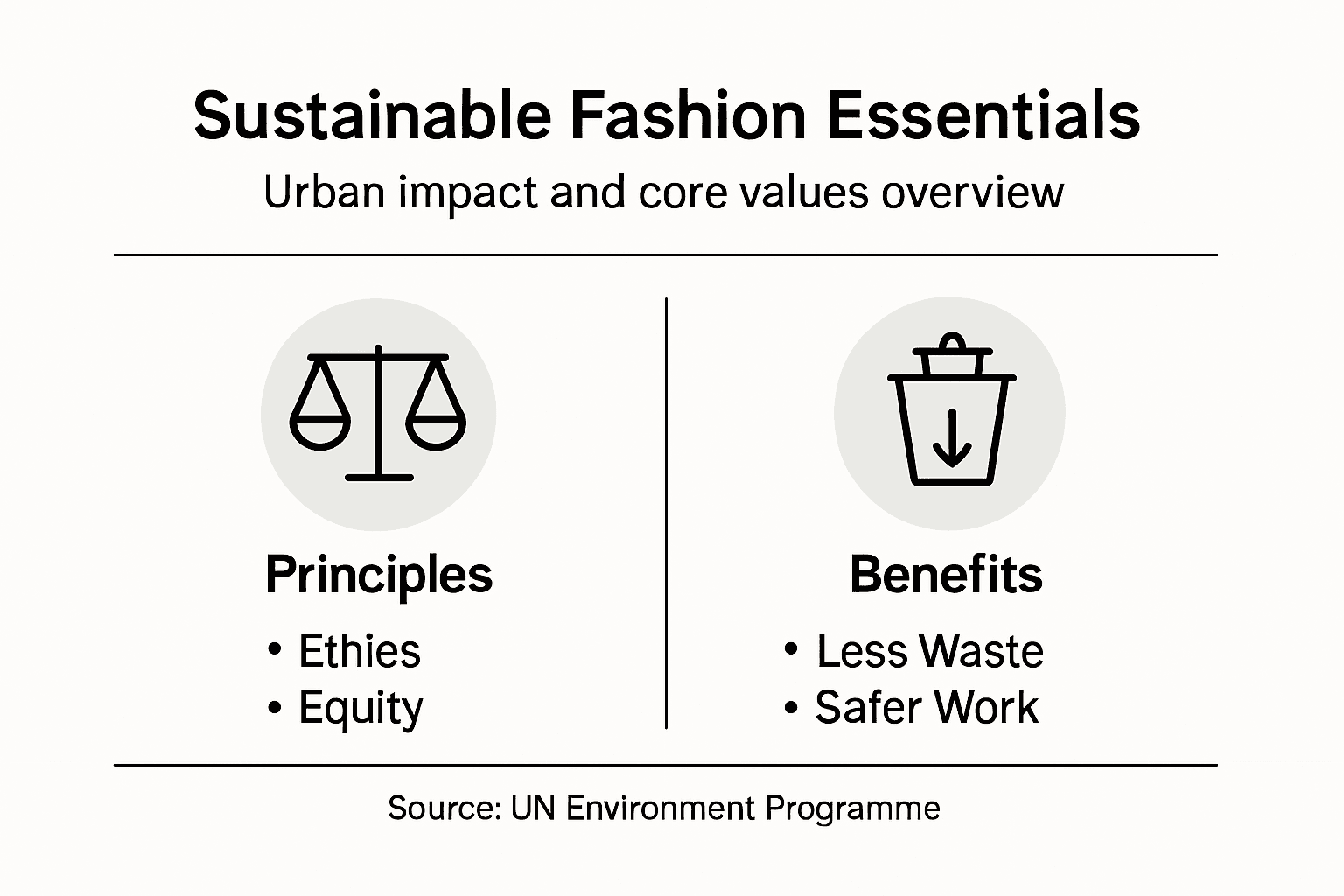
Core Principles: Ethics, Environment, Equity
Sustainable fashion is fundamentally rooted in three interconnected principles that redefine the industry’s approach to clothing production and consumption. Ethical perspectives critically examine the complex social dynamics underlying fashion’s global impact.
The core principles of sustainable fashion encompass multiple transformative dimensions:
- Environmental Responsibility: Minimizing ecological footprint through sustainable production
- Social Justice: Ensuring fair labor practices and worker dignities
- Economic Equity: Creating transparent, equitable supply chains
- Consumer Awareness: Promoting conscious consumption and informed choices
- Circular Design: Developing products with lifecycle sustainability in mind
Ethical considerations are paramount in sustainable fashion. Core values supporting global responsibility involve addressing systemic challenges like resource exploitation, labor inequities, and environmental degradation. These principles demand a holistic reimagining of fashion’s fundamental mechanisms.
The intersection of ethics, environment, and equity requires continuous innovation and collaborative transformation. Sustainable fashion is not a static concept but a dynamic journey towards more responsible, transparent, and inclusive industry practices.
Pro tip: Research brands’ sustainability certifications and supply chain transparency before making purchasing decisions to support truly ethical fashion.
Streetwear, Fast Fashion, and Greenwashing
Streetwear culture sits at a critical intersection of style, sustainability, and social responsibility. Fast fashion’s environmental consequences expose the darker side of trendy, low-cost clothing production that prioritizes rapid consumption over ecological impact.
The key challenges in contemporary streetwear include:
- Rapid Production Cycles: Constant demand for new styles
- Low-Cost Manufacturing: Compromising worker conditions and environmental standards
- Marketing Deception: Misleading sustainability claims
- Consumer Psychological Manipulation: Creating artificial urgency
- Global Supply Chain Complexity: Obscuring true production practices
Greenwashing tactics have become increasingly sophisticated. Consumer perceptions of misleading sustainability claims reveal a growing skepticism toward brands attempting to appear environmentally responsible without substantive changes. Urban consumers are becoming more discerning, demanding genuine transparency and meaningful sustainable practices.
The streetwear landscape demands a radical reimagining of fashion consumption. Authentic sustainability requires moving beyond superficial marketing narratives and implementing comprehensive, systemic changes that prioritize ethical production, environmental stewardship, and social responsibility.
Pro tip: Research clothing brands’ actual sustainability certifications and supply chain transparency before purchasing to avoid falling prey to greenwashing tactics.
Environmental Impact and Social Responsibility
The fashion industry represents a critical battleground for environmental sustainability and social justice. Corporate Social Responsibility transforms global fashion practices by addressing systemic challenges of resource consumption, waste generation, and human exploitation.
Key areas of environmental and social impact include:
- Resource Consumption: Excessive water and raw material usage
- Waste Generation: Textile disposal and microplastic pollution
- Labor Conditions: Worker exploitation and unsafe manufacturing environments
- Carbon Emissions: Significant greenhouse gas contributions
- Chemical Pollution: Toxic dyes and industrial waste streams
Sustainable transformation requires comprehensive strategies. Consumer behavior drives industry accountability by demanding transparent supply chains, ethical production methods, and environmentally responsible practices. Urban consumers increasingly recognize their power to influence systemic change through conscious purchasing decisions.

Authentic social responsibility transcends marketing rhetoric. It demands holistic approaches that integrate environmental stewardship, fair labor practices, and economic sustainability into every stage of fashion production and consumption.
Pro tip: Prioritize brands that provide detailed sustainability reports and third-party certifications demonstrating genuine environmental and social commitments.
The Role of Consumers in Shaping Change
Consumers are the driving force behind sustainable fashion transformation, wielding unprecedented power to influence industry practices. Consumer behaviors directly impact sustainability by creating demand for ethical, environmentally responsible clothing production.
Key strategies for consumer-driven change include:
- Conscious Purchasing: Prioritizing brands with transparent supply chains
- Circular Fashion Participation: Engaging in repair, reuse, and recycling
- Education and Awareness: Understanding true environmental impacts
- Supporting Sustainable Brands: Investing in ethical production models
- Demanding Transparency: Challenging greenwashing and misleading claims
Post-purchase behaviors are critically important. Social norms influence sustainable consumption by creating collective momentum for systemic change. Urban consumers increasingly recognize their collective ability to reshape fashion industry practices through intentional choices and collective action.
The power of consumer agency extends beyond individual purchases. It represents a fundamental reimagining of fashion as a collaborative ecosystem where individual choices create ripple effects of meaningful environmental and social transformation.
Pro tip: Build a sustainable wardrobe by investing in versatile, high-quality pieces from brands committed to transparent, ethical production practices.
The following table highlights the role of consumers in driving sustainability:
| Consumer Action | Impact on Fashion Industry | Long-Term Benefit |
|---|---|---|
| Research brands | Forces transparency and ethics | Improved industry standards |
| Buy durable products | Reduces waste and overconsumption | Environmental preservation |
| Support certified brands | Encourages responsible practices | More ethical supply chains |
| Participate in recycling | Less landfill and pollution | Resource conservation |
Make Your Urban Wardrobe Truly Sustainable Today
The challenge of navigating fast fashion’s environmental toll and greenwashing claims calls for real solutions that match your values. This article highlights the crucial need for transparency, ethical production, and conscious consumer choices in streetwear styles. You want durable, eco-friendly apparel crafted with organic fabrics and fair labor practices that reflect your commitment to sustainable urban living.
MEXESS specializes in streetwear made from organic and sustainable materials designed exactly for fashion-forward consumers like you. Explore their curated collection of sweatshirts, T-shirts, and hoodies that combine style with a deep respect for the planet and social equity.
Discover MEXESS’s latest arrivals and take advantage of free shipping offers and a 30-day return policy. Make your next purchase count toward meaningful change in the fashion industry by choosing transparency and authenticity.
Shop now at MEXESS and transform your wardrobe into an expression of your values.
Explore sustainable streetwear at MEXESS and join the movement toward responsible urban fashion.
Frequently Asked Questions
What is sustainable fashion?
Sustainable fashion refers to a responsible approach to clothing production and consumption that minimizes negative impacts on the environment and society. It focuses on reducing carbon emissions, ensuring fair labor practices, promoting eco-friendly materials, and creating durable garments.
How can consumers contribute to sustainable fashion?
Consumers can contribute by making conscious purchasing decisions, supporting brands with transparent supply chains, participating in circular fashion practices like recycling and repairing, and educating themselves about the true environmental impacts of their clothing choices.
What are the core principles of sustainable fashion?
The core principles of sustainable fashion include environmental responsibility, social justice, economic equity, consumer awareness, and circular design. These principles work together to promote ethical production methods and responsible consumption patterns in the fashion industry.
How does fast fashion impact the environment?
Fast fashion significantly contributes to environmental degradation through excessive resource consumption, high waste generation, harmful carbon emissions, and chemical pollution. It promotes a cycle of overconsumption, leading to considerable social and ecological consequences.


0 comments